
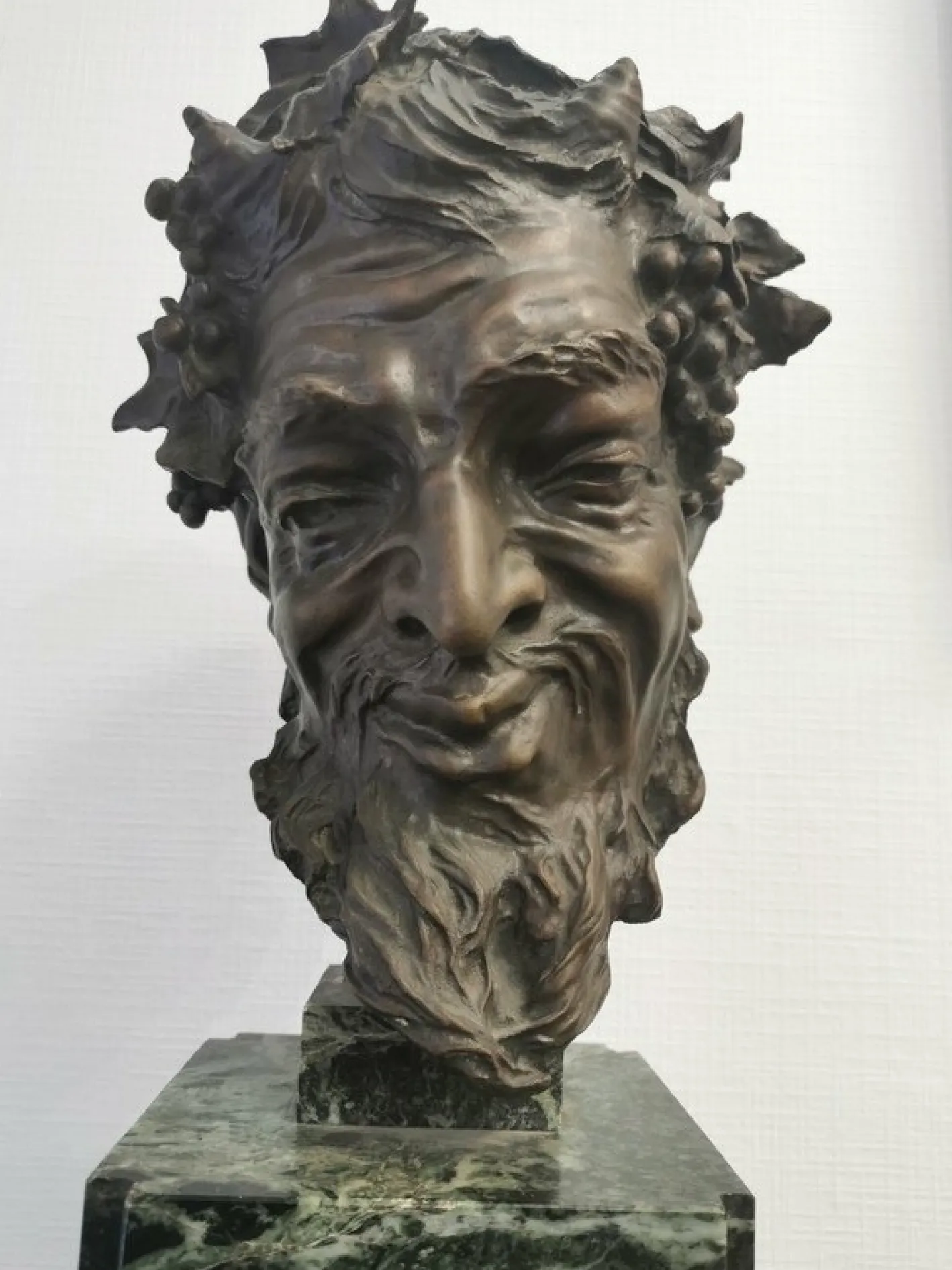
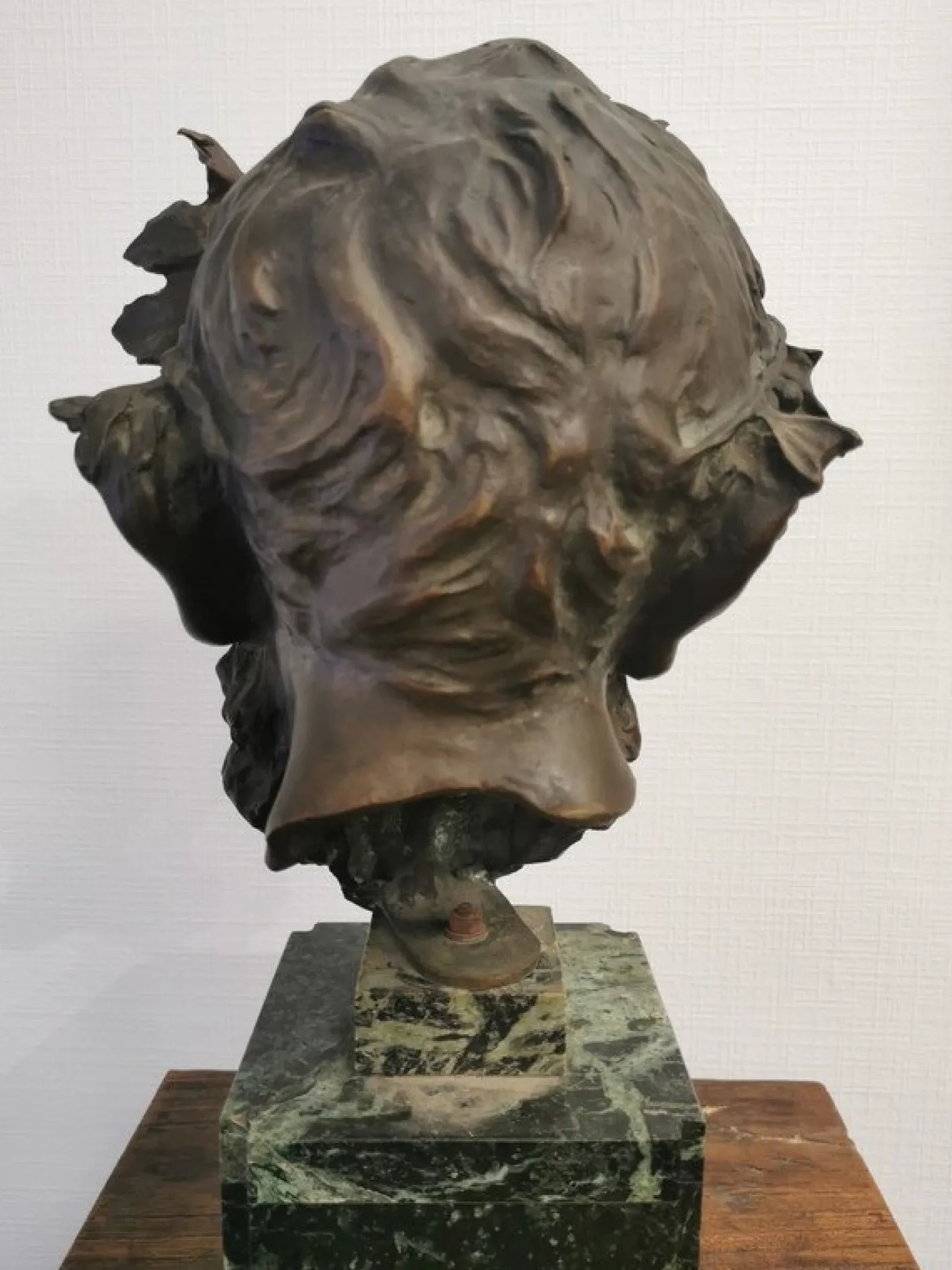
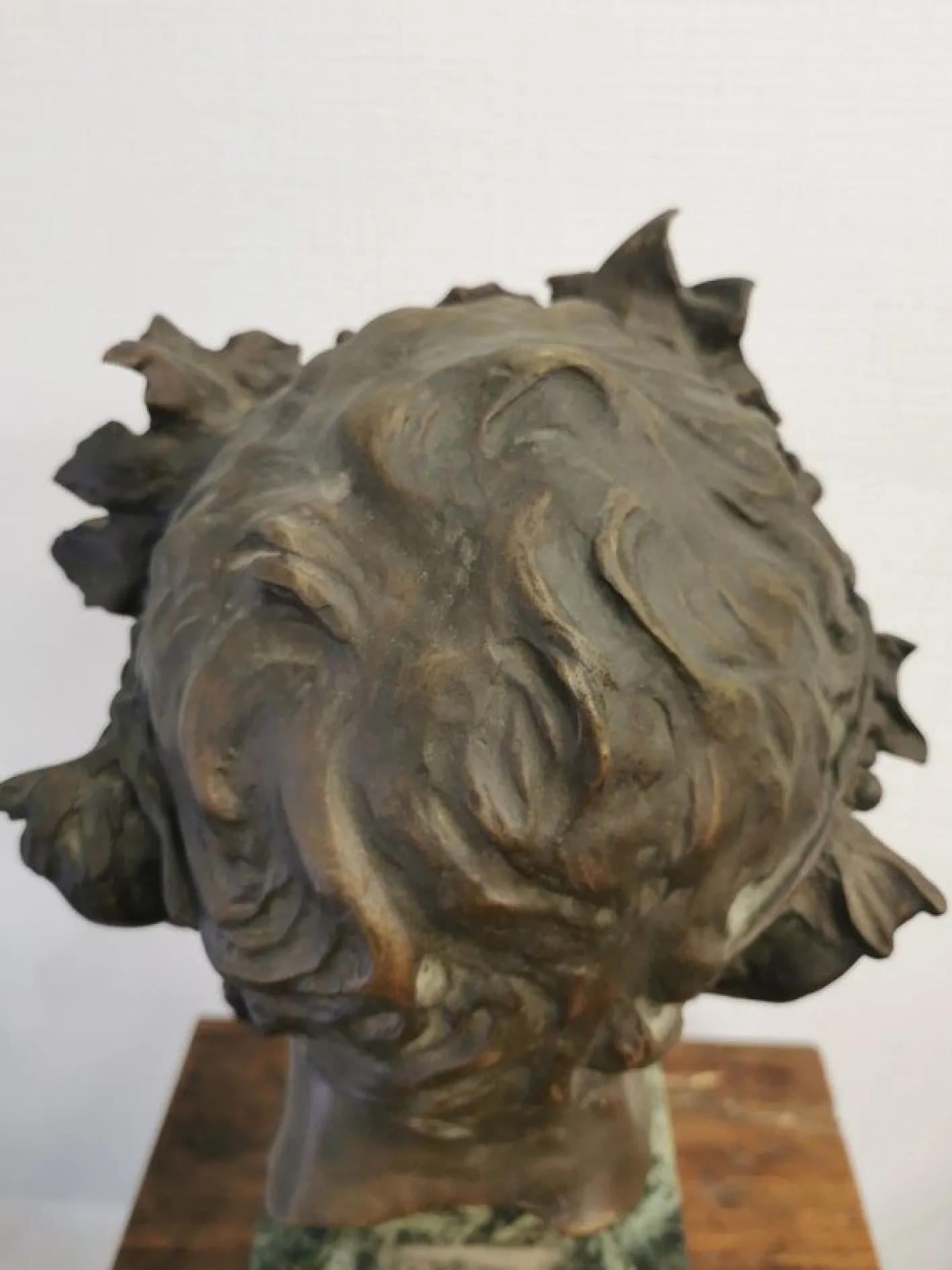
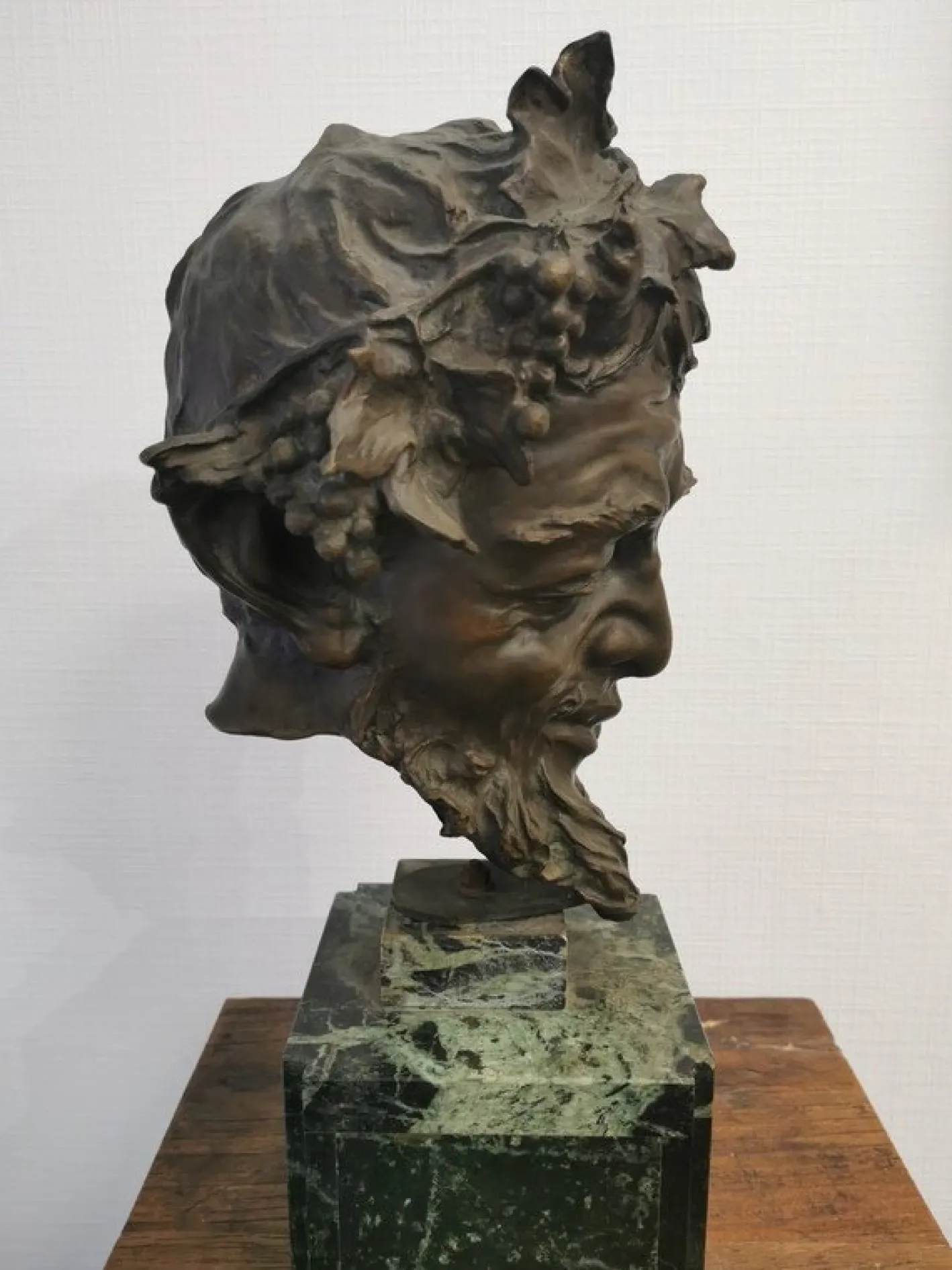
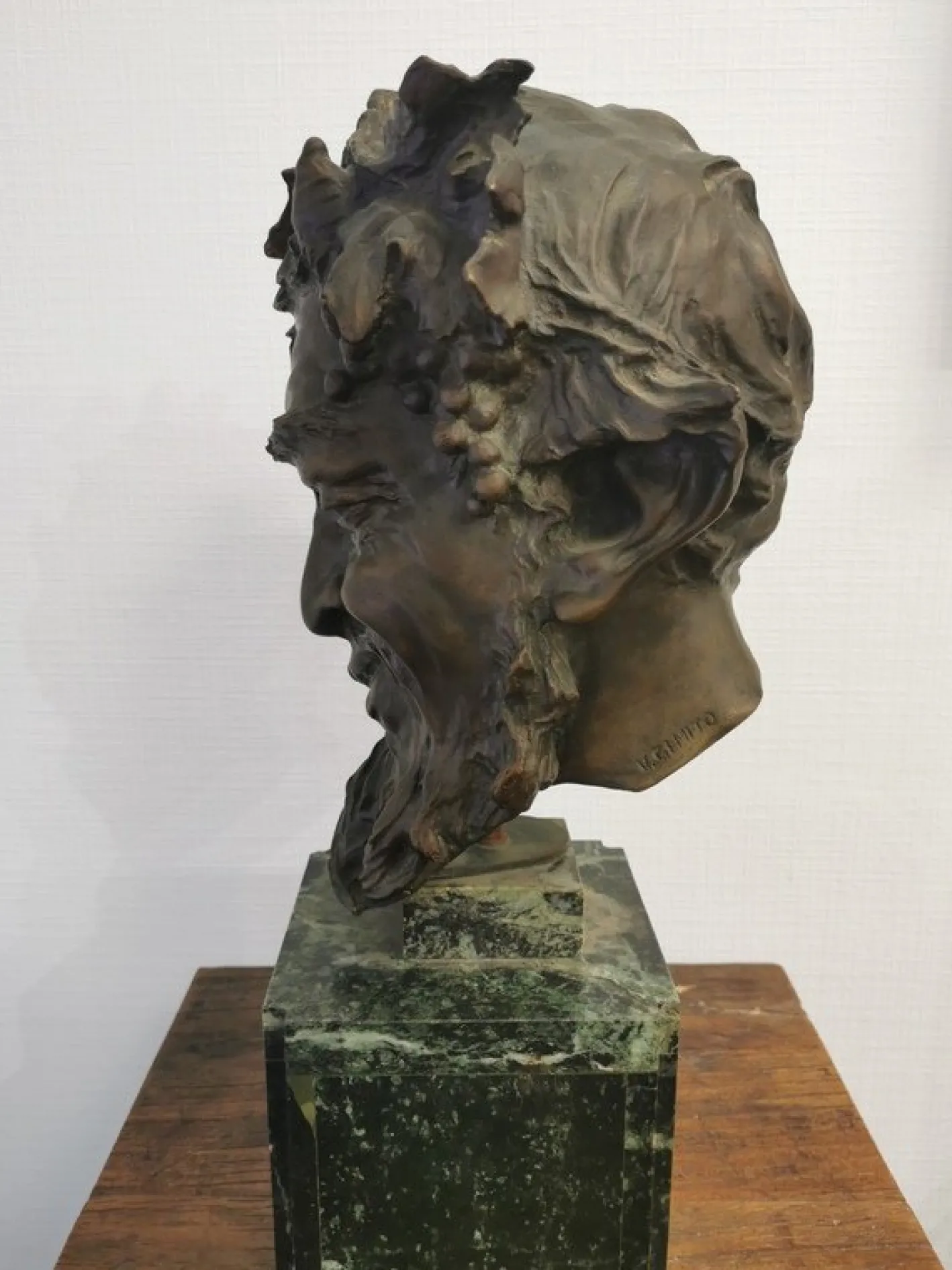
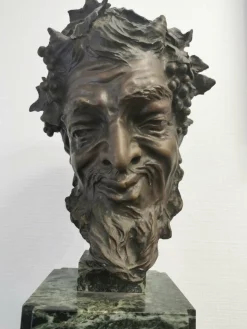
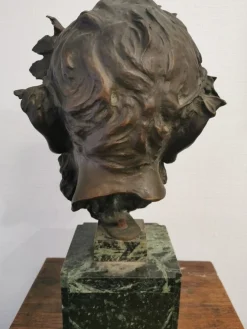
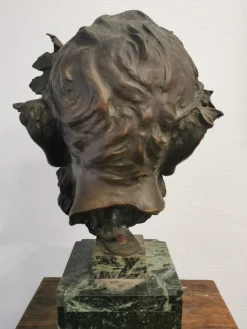
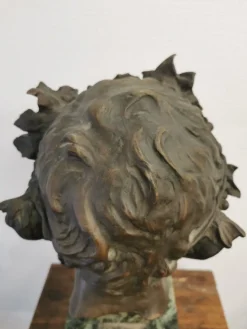
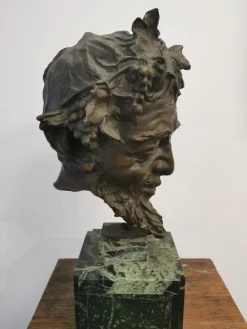
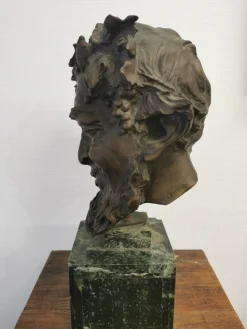
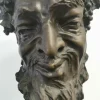
Vincenzo, Satyrkopf, 1890er-1910er, Bronze
€107.41
VINCENZO GEMITO
Naples 1852 – 1929
“Satyr Head”
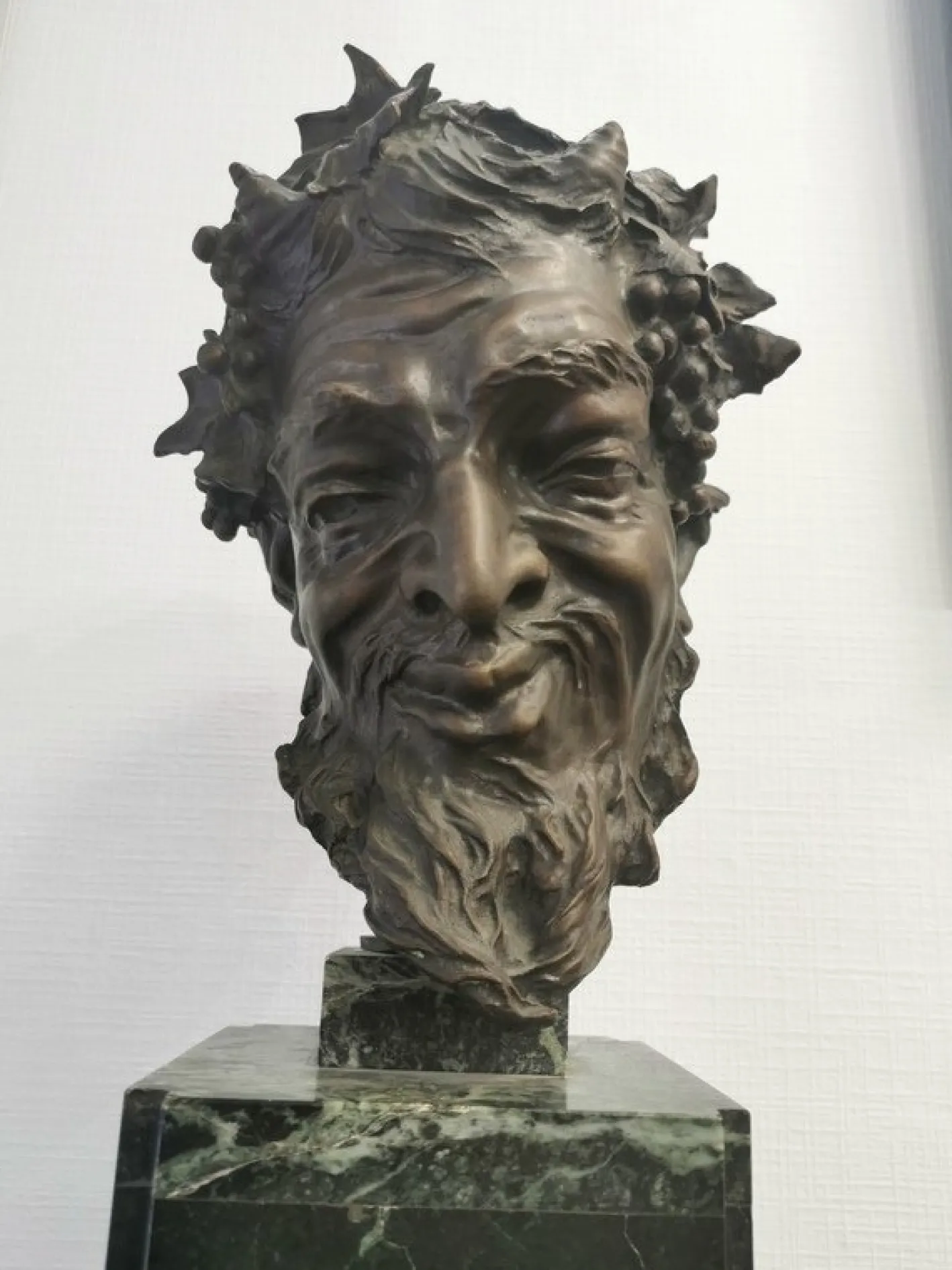
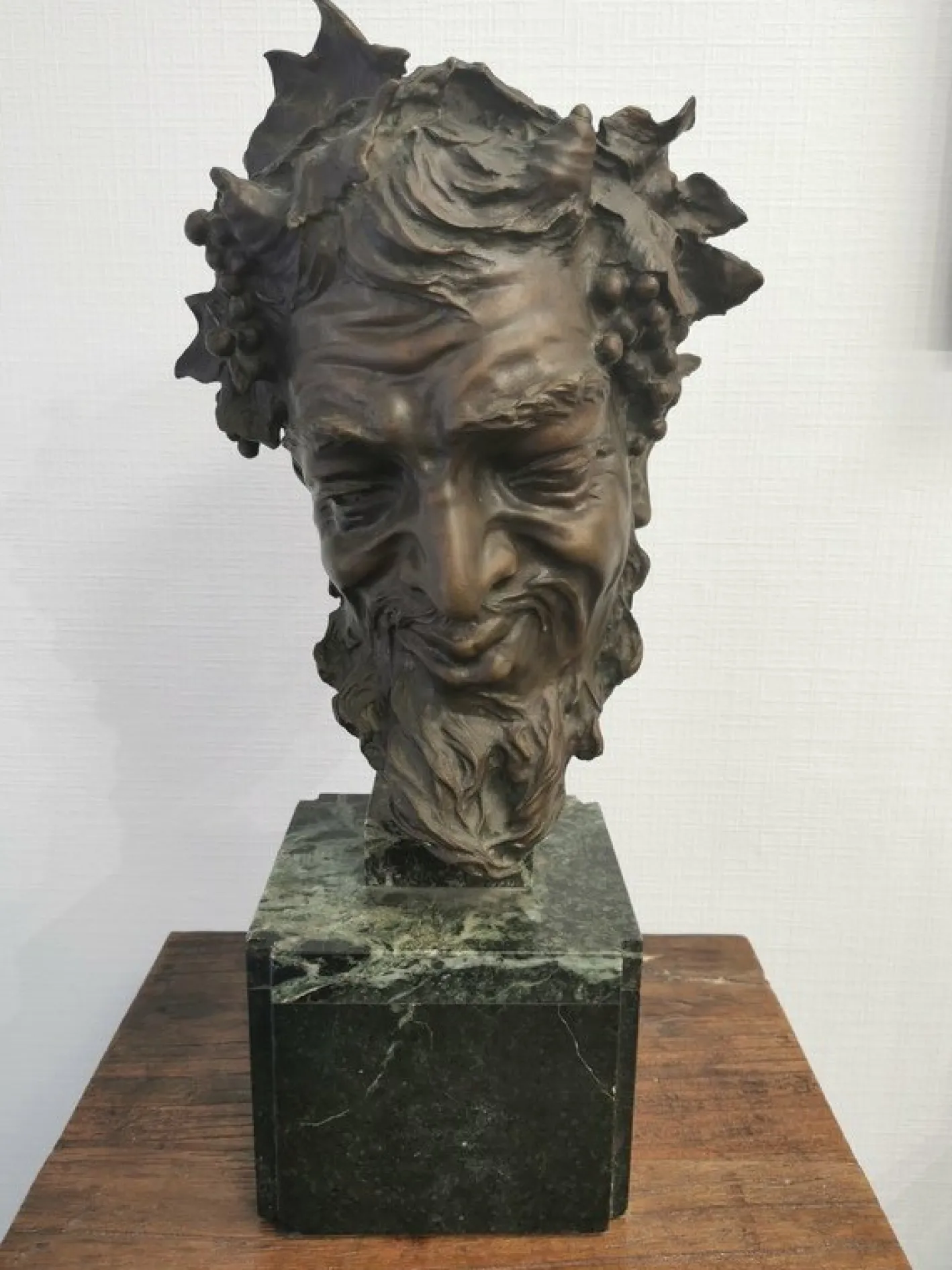
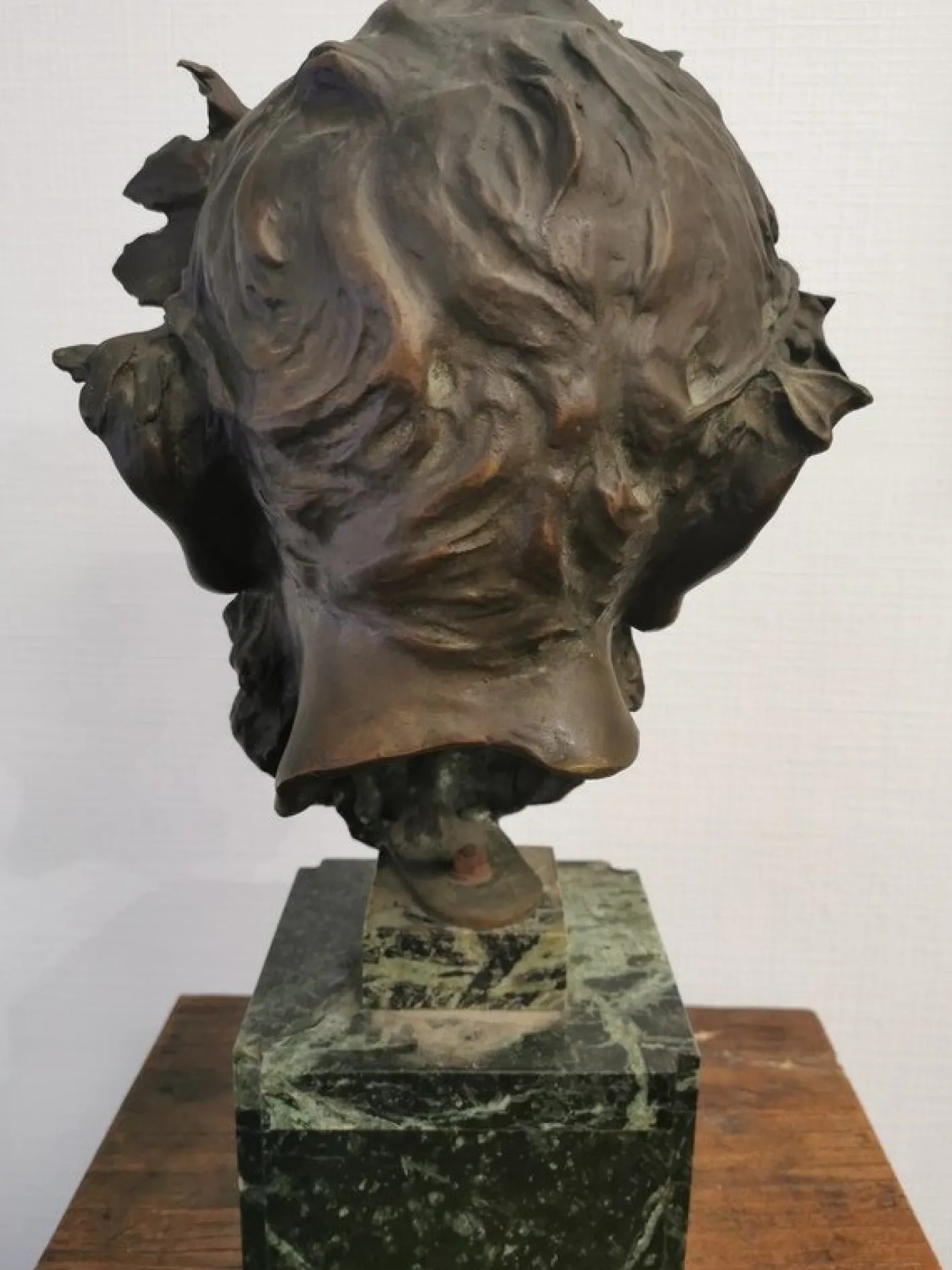
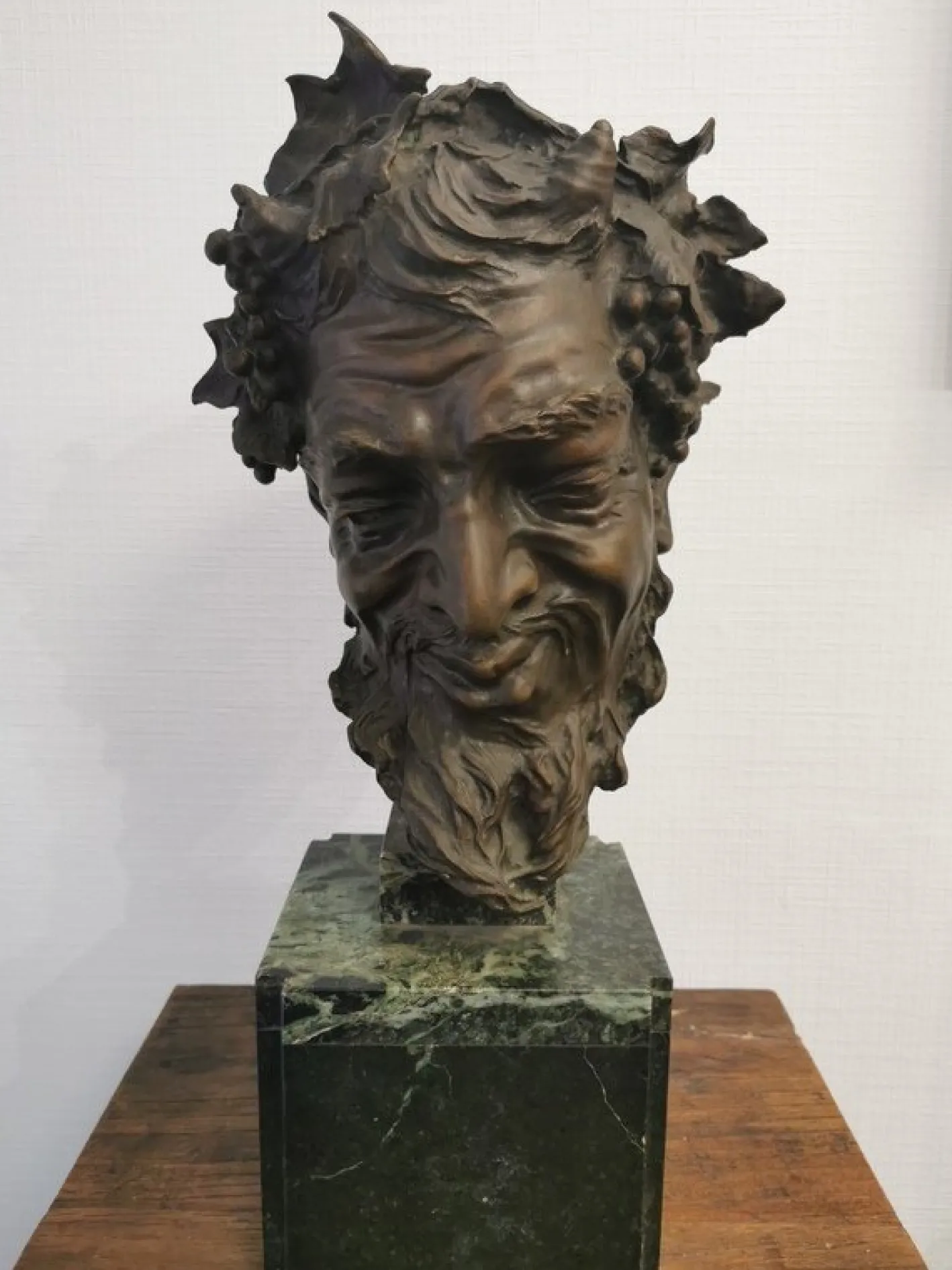
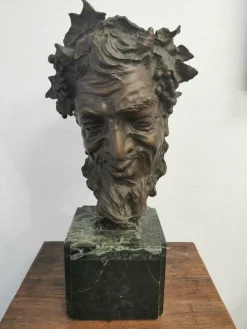
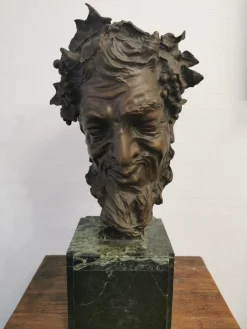
Bronze sculpture measuring 30x24x18 on original marble base
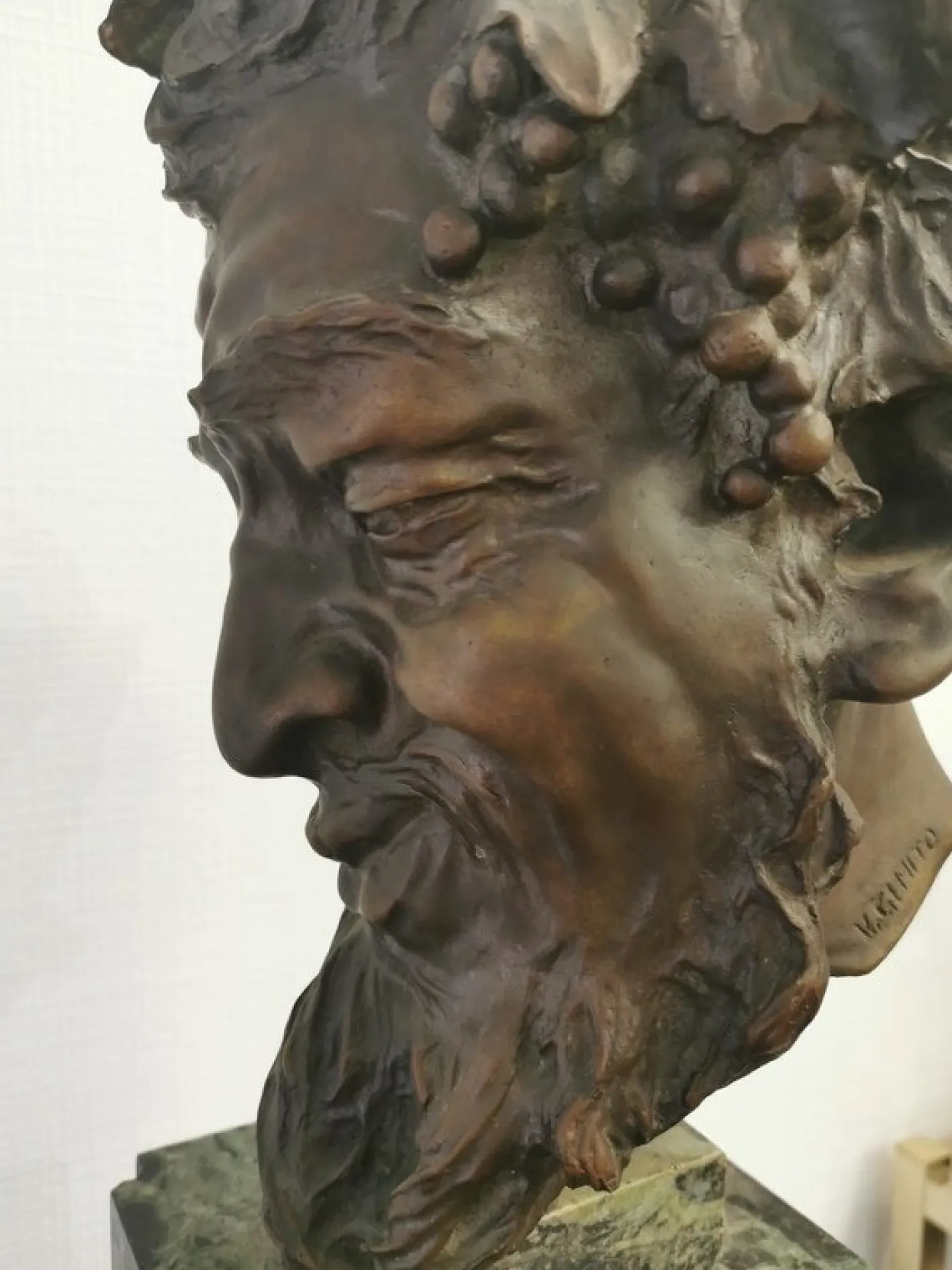
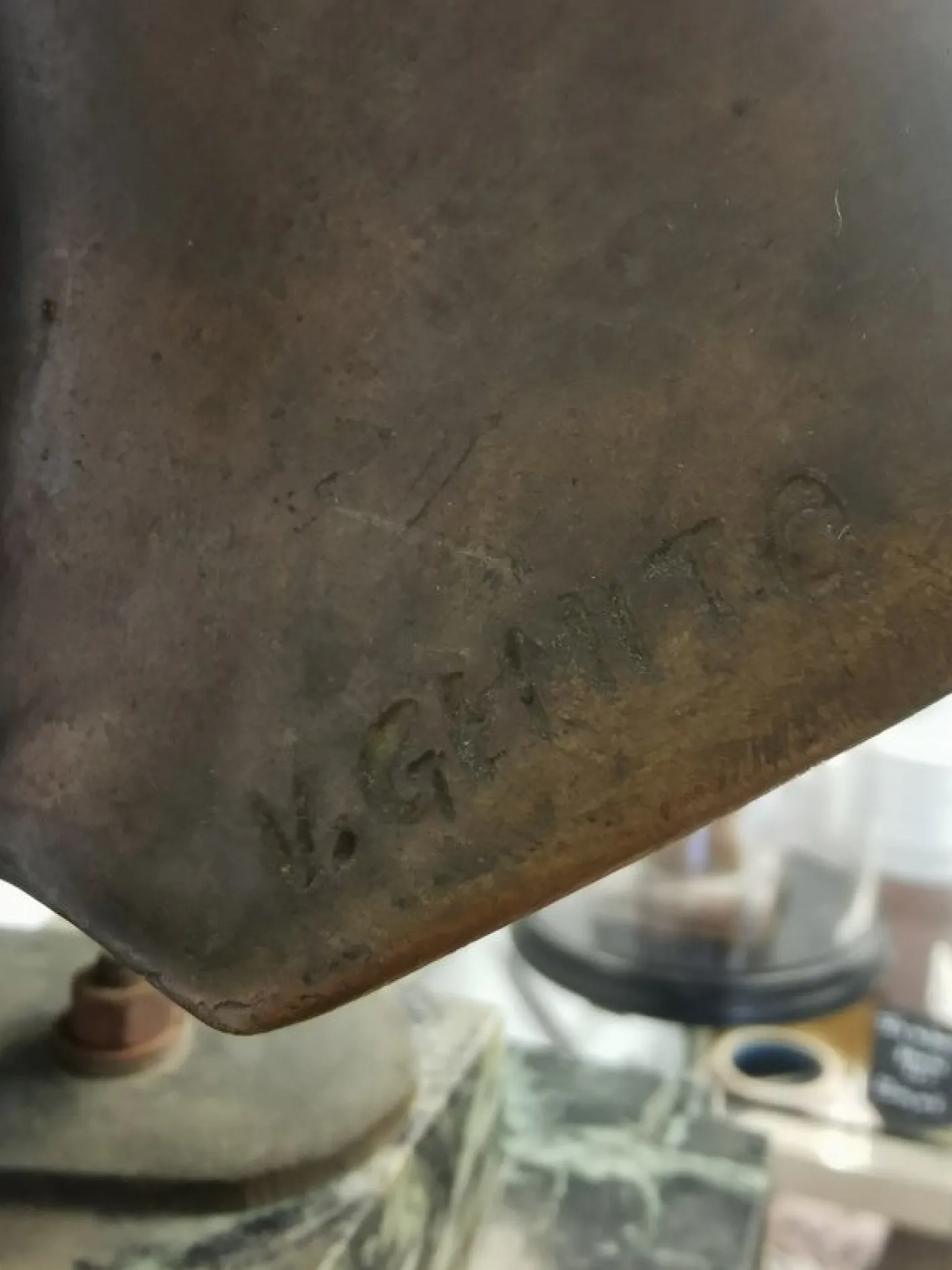
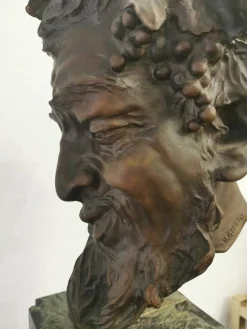
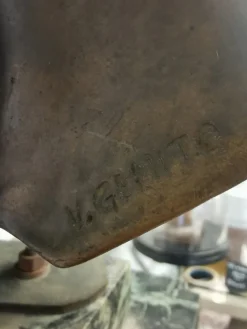
Signed Gemito (on the side)
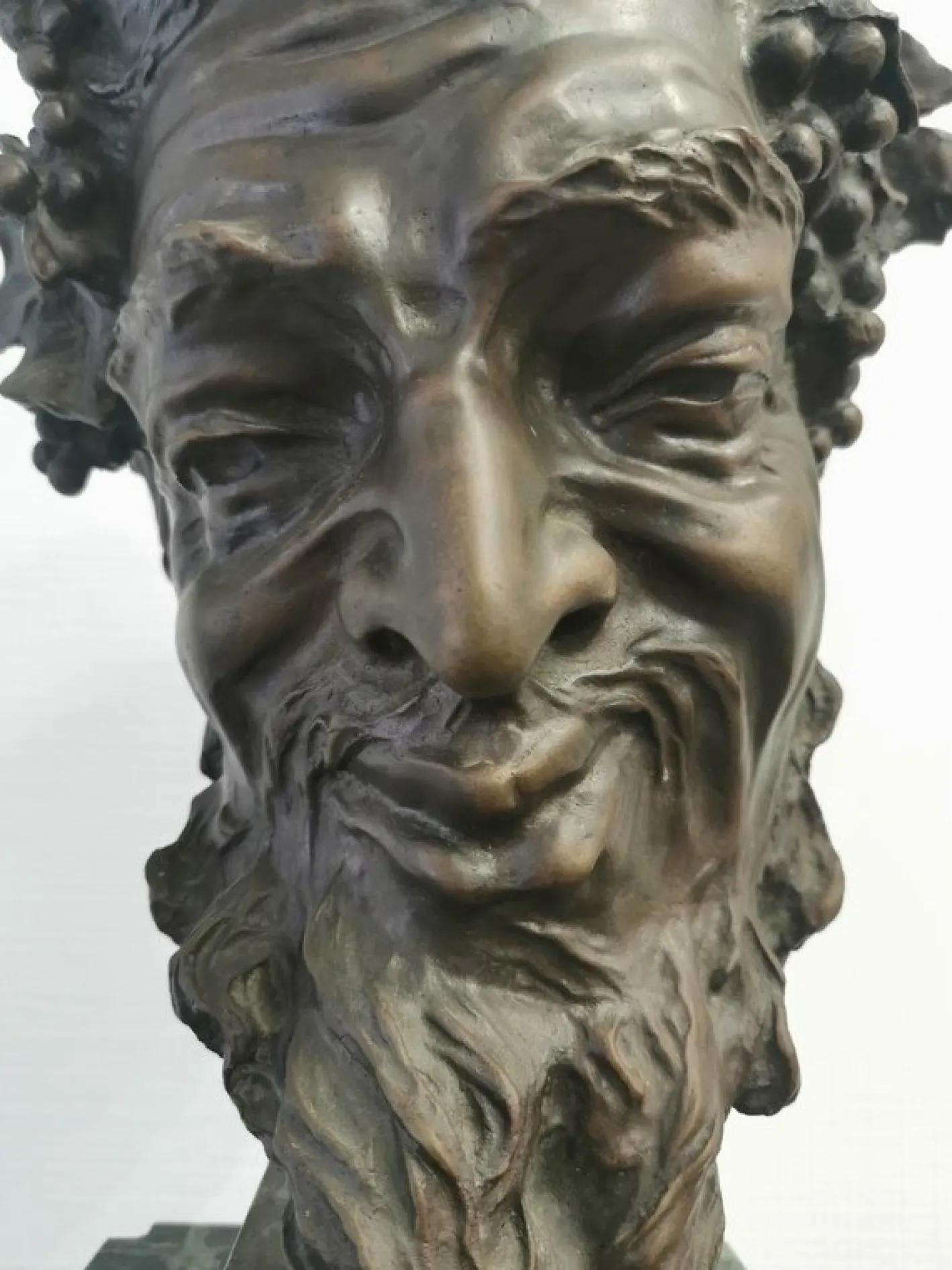
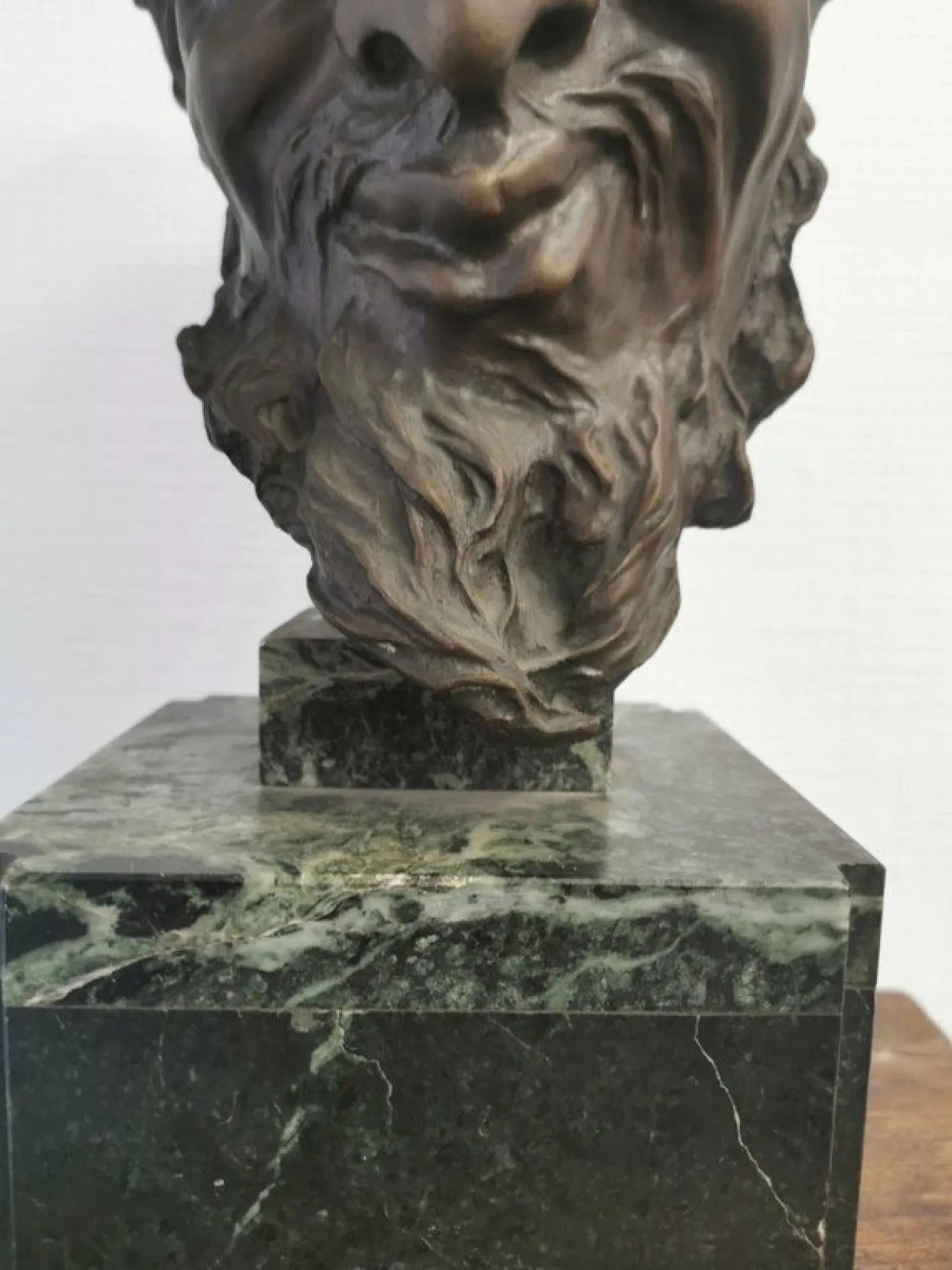
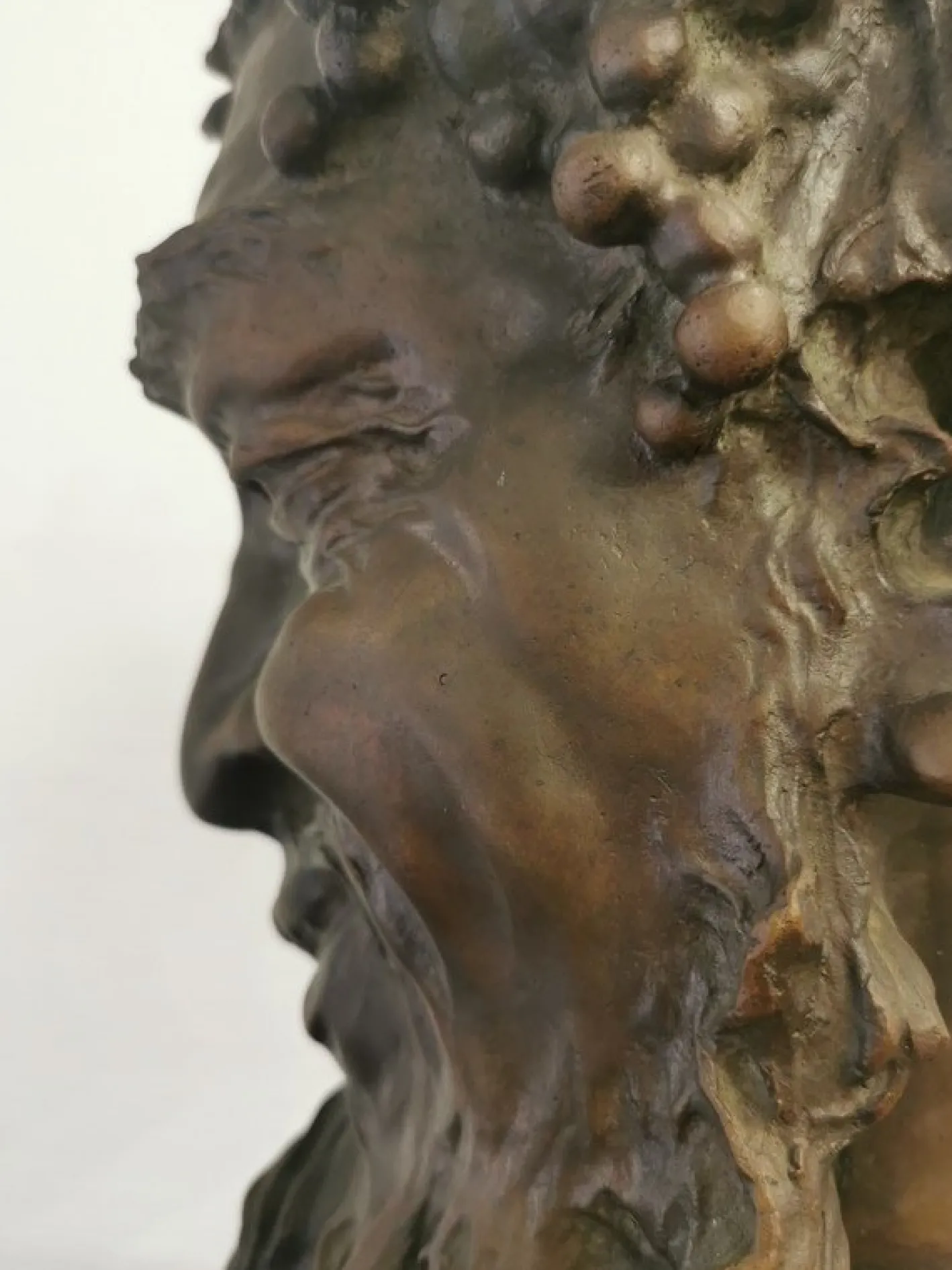
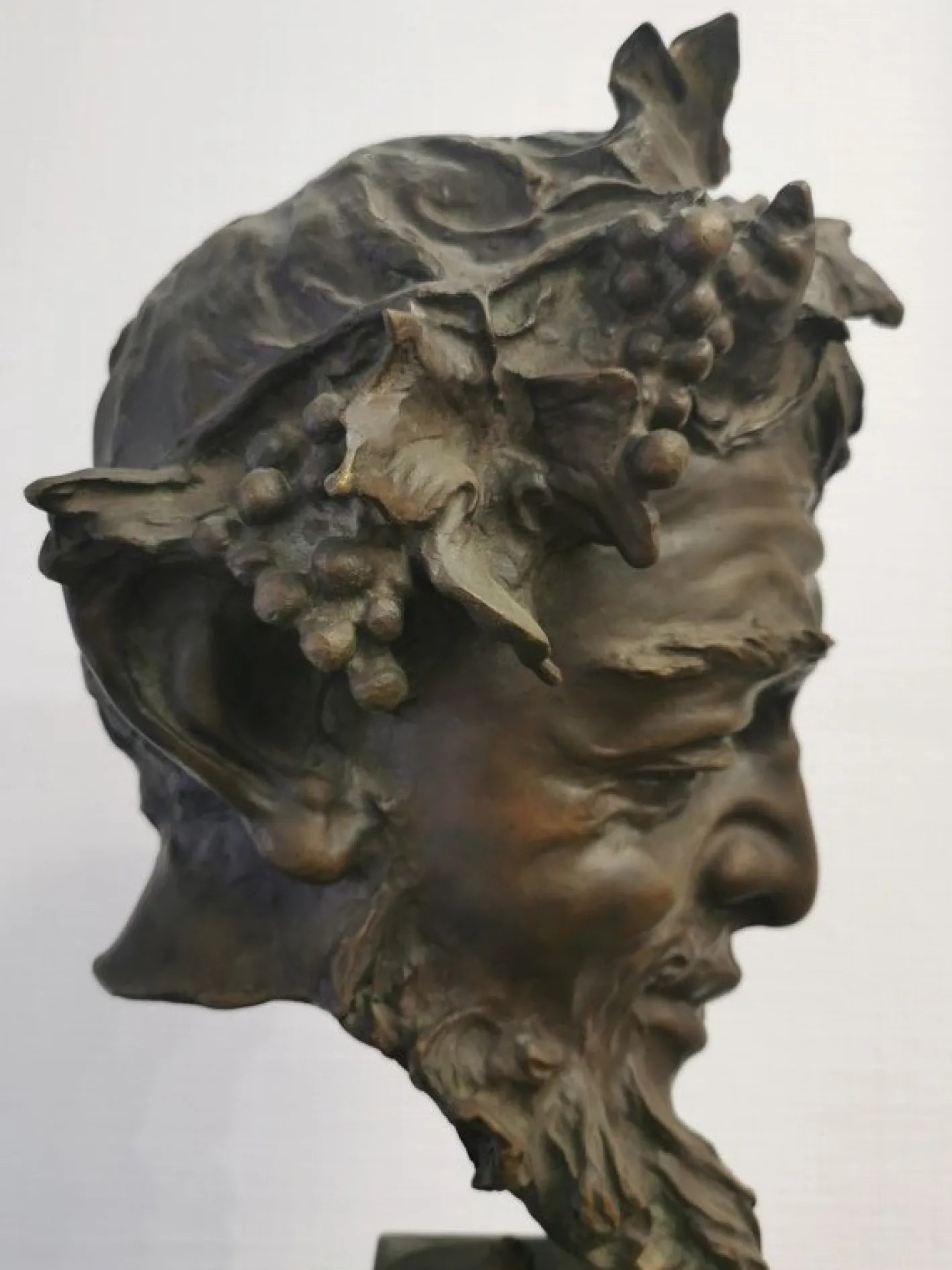
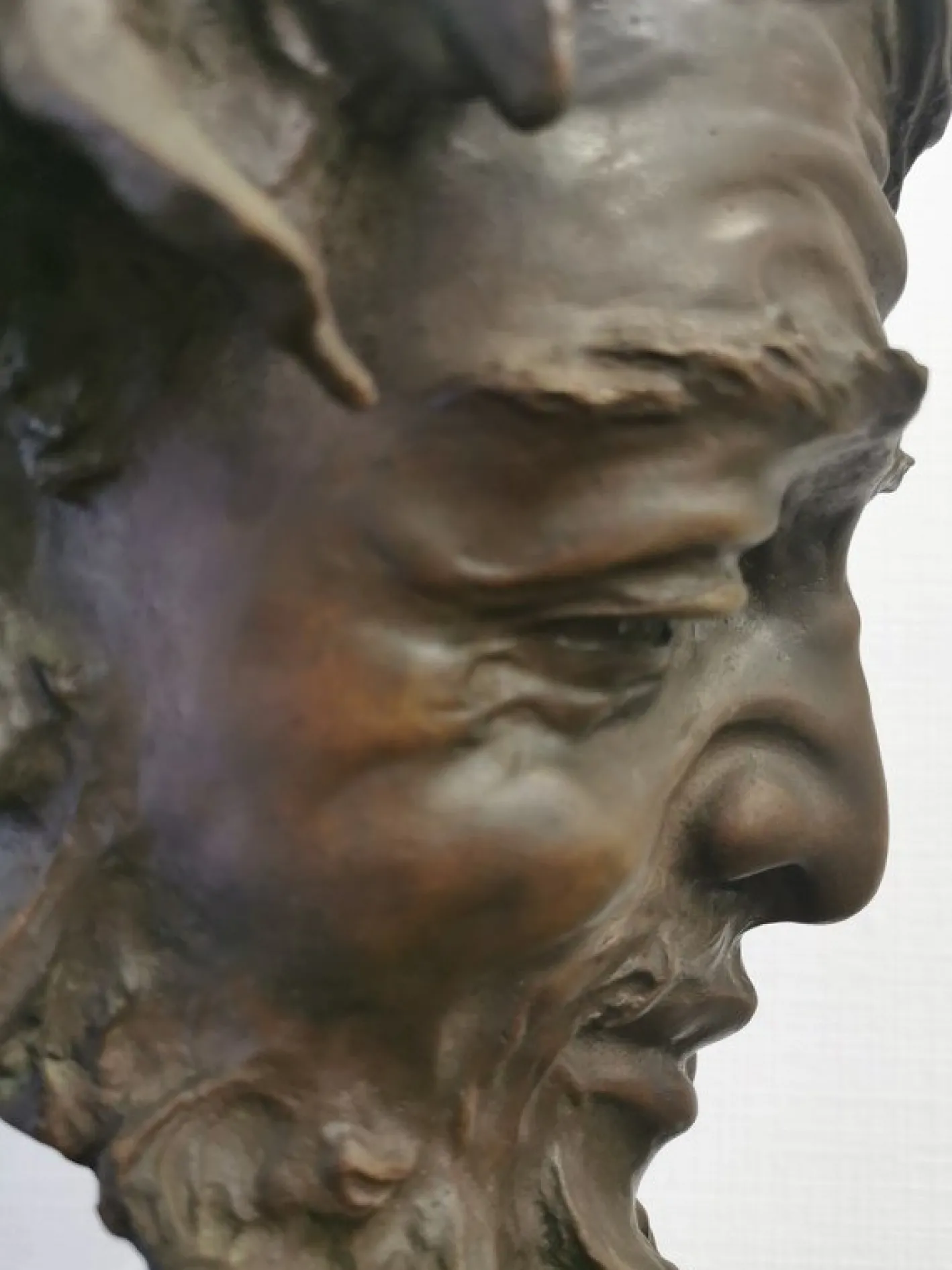
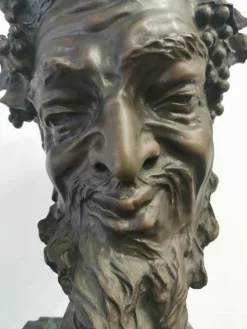
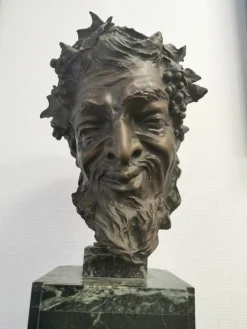
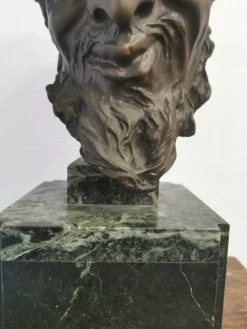
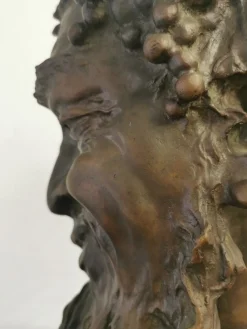
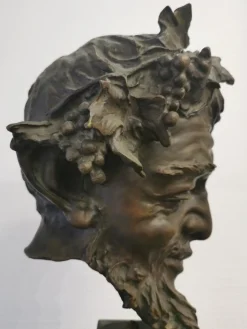
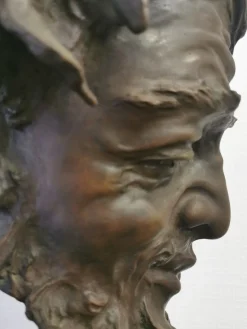
This beautifully detailed bronze bust by Vincenzo Gemito (Italian 1852-1929) depicts the satyr of Greco-Roman mythology, a god of the woods and disciple of Dionysus, known for his erotic desires and excessive consumption of wine. Yes, our satyr has a mischievous and lustful smile that the artist was able to capture with a great sense of personality. Wearing a crown of vine leaves and grapes weathered in a greener color, we notice the rudimentary horns and pointed ears. Gracefully placed near the edge of the marble base, the satyr’s beard covers the base with great sculptural effect.
Vincenzo Gemito was an Italian sculptor and artist. Intolerant of academic art, he associated himself with other „rebel“ artists, such as Antonio Mancini, Giovanni Battista Amendola, Achille D’Orsi and Ettore Ximenes. Between 1877 and 1880, he stayed in Paris and participated in three editions of the Universal Exhibition. Returning to Naples, he received important commissions but, following a mental breakdown, he remained locked up in a psychiatric hospital until 1909, when he began to sculpt, devoting himself, during the last years of his life, to the art of goldsmithing. Among his most important works are Il Malatiello (1870), The Neapolitan Fisherman (1877), The Statue of Carlo V (1887) and The Portrait of the Painter Jean Louis I.I. Meissonier (18
VINCENZO GEMITO Neapel 1852–1929
„Satyrkopf” Bronzeskulptur mit den Maßen 30 x 24 x 18 cm auf originalem Marmorsockel Signiert Gemito (seitlich) Diese wunderschön detaillierte Bronzebüste von Vincenzo Gemito (italienisch, 1852–1929) stellt den Satyr aus der griechisch-römischen Mythologie dar, einen Gott der Wälder und Schüler des Dionysos, bekannt für seine erotischen Begierden und seinen übermäßigen Weinkonsum. Ja, unser Satyr hat ein schelmisches und lüsternes Lächeln, das der Künstler mit viel Gespür für Persönlichkeit einzufangen wusste. Er trägt eine Krone aus Weinblättern und Trauben, die zu einem grüneren Farbton verwittert sind, und wir bemerken die rudimentären Hörner und spitzen Ohren. Anmutig am Rand des Marmorsockels platziert, bedeckt der Bart des Satyr den Sockel mit großartiger skulpturaler Wirkung.
Vincenzo Gemito war ein italienischer Bildhauer und Künstler. Da er akademische Kunst nicht tolerierte, schloss er sich anderen „rebellischen” Künstlern wie Antonio Mancini, Giovanni Battista Amendola, Achille D’Orsi und Ettore Ximenes an. Zwischen 1877 und 1880 hielt er sich in Paris auf und nahm an drei Ausgaben der Weltausstellung teil. Nach seiner Rückkehr nach Neapel erhielt er wichtige Aufträge, doch nach einem Nervenzusammenbruch blieb er bis 1909 in einer psychiatrischen Klinik eingesperrt, bis er begann, sich der Bildhauerei zu widmen und sich in seinen letzten Lebensjahren der Goldschmiedekunst verschrieb. Zu seinen wichtigsten Werken zählen Il Malatiello (1870), Der neapolitanische Fischer (1877), Die Statue von Karl V. (1887) und Das Porträt des Malers Jean Louis I.I. Meissonier (18
Klicken Sie hier für die vollständige BeschreibungSchließen
| Epoche | 1890 bis 1919 |
|---|---|
| Produktionszeitraum | Unbekannt |
| Hergestellt in | Italien |
| Stil | Klassisch |
| Zustand | Ausgezeichnet — Dieses Vintage/antike Objekt ist in nahezu originalem Zustand. Es kann minimale Gebrauchsspuren und/oder kleinere Restaurierungen aufweisen. |
| Artikelnummer | OZE-2071915 |
| Material | Bronze, Marmor |
| Farbe | Schwarz |
| Breite | 23 cm 23 cm |
| Tiefe | 23 cm 23 cm |
| Höhe | 43 cm 43 cm |
Be the first to review “Vincenzo, Satyrkopf, 1890er-1910er, Bronze”
Related products
Arbeiten Auf Papier
Mikhail Larionov, Rayonist Composition, 1910, Gouache auf Papier
Druckgraphiken Und Multiples
Abstraction
Druckgraphiken Und Multiples
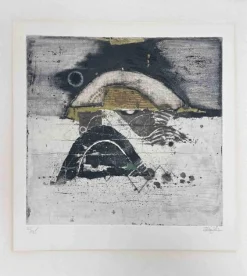
Johnny Friedlaender, Edition von 135 ohne Titel, 1970er, Radierung

Impressionismus
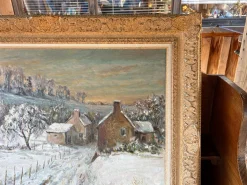
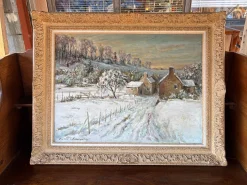
Großes Victor Zolnierowicz, Winterlandschaft, 1950er Ölgemälde auf Leinwand, gerahmt
Abstrakte Notizen


Reviews
There are no reviews yet.