
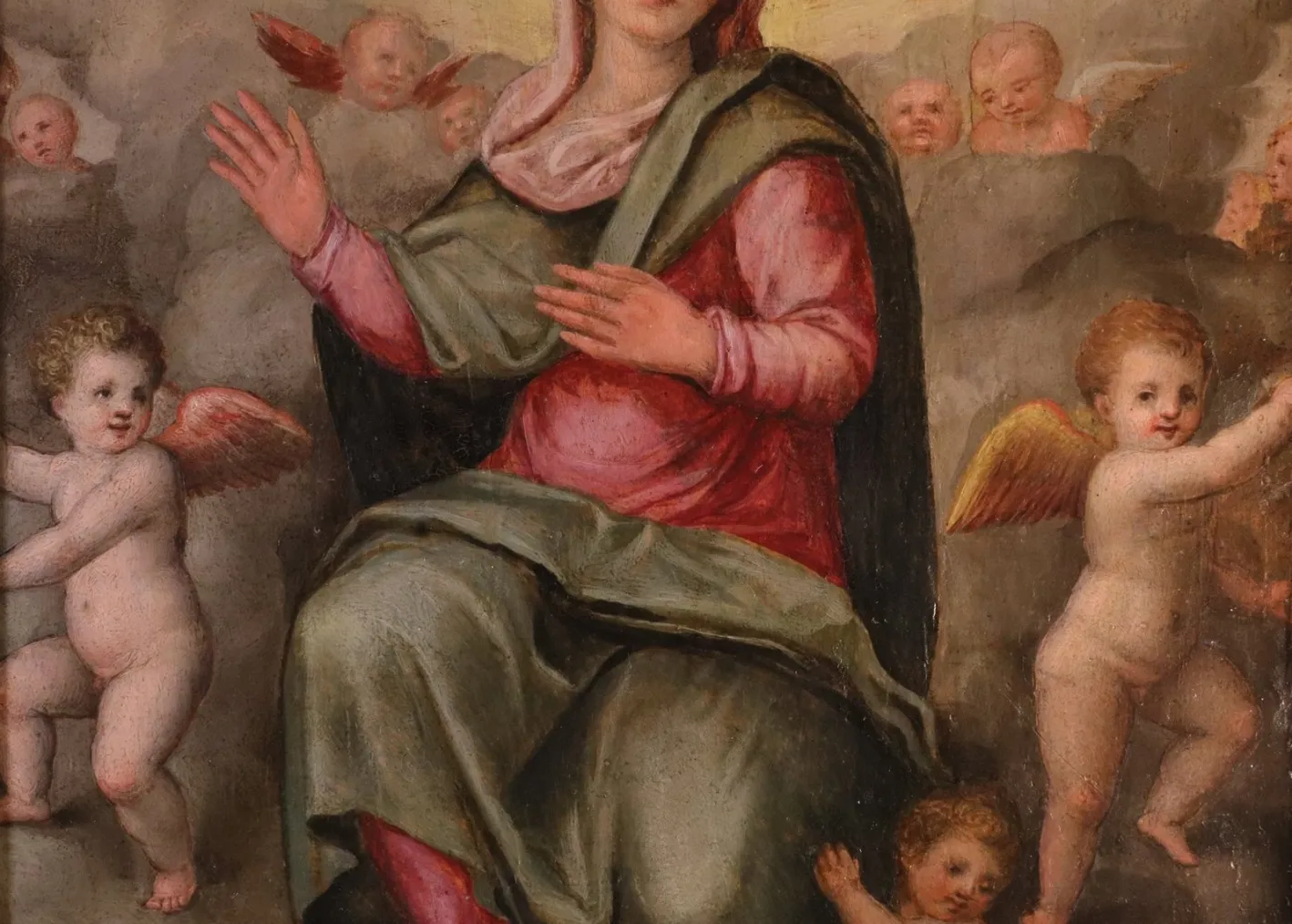
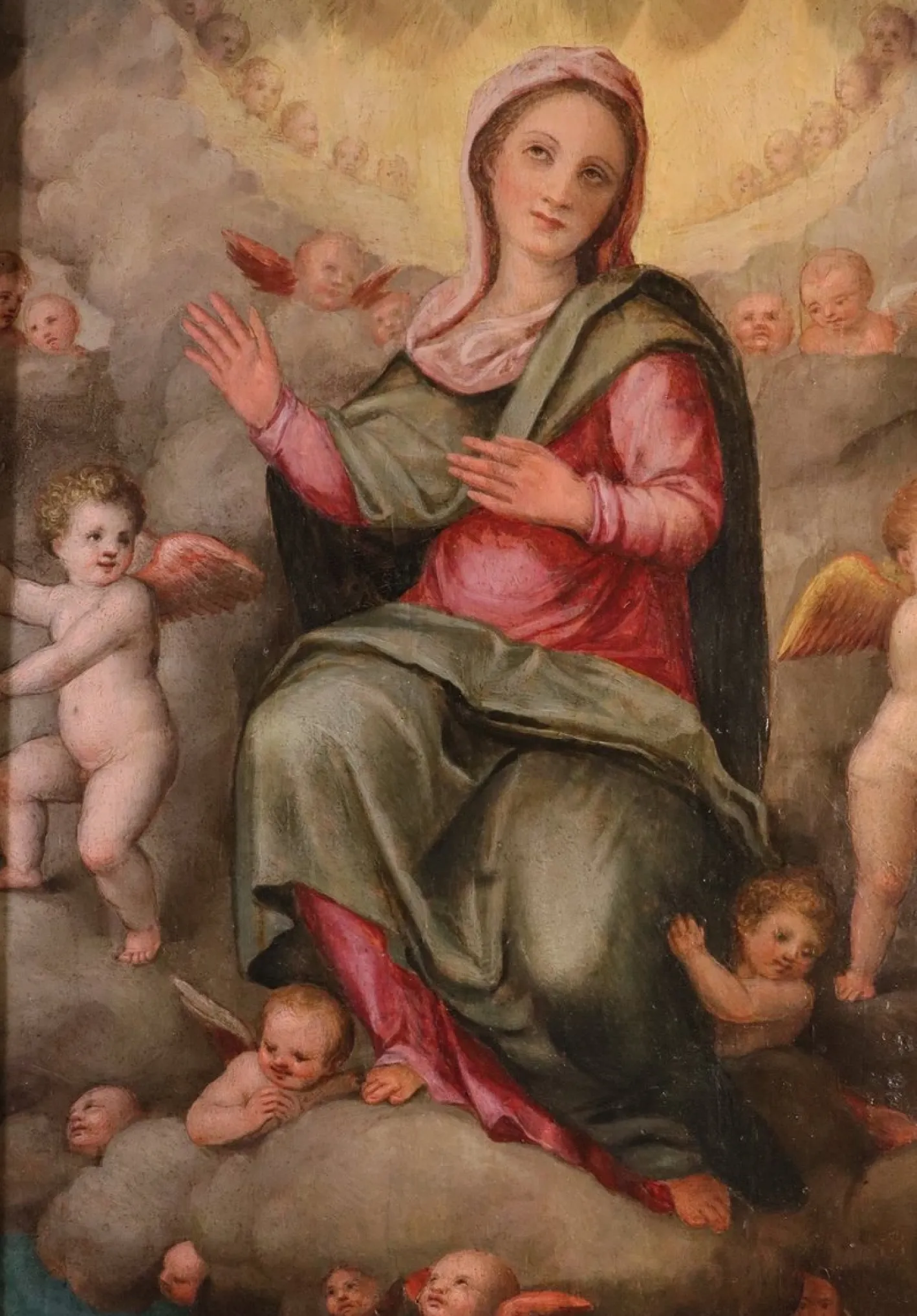
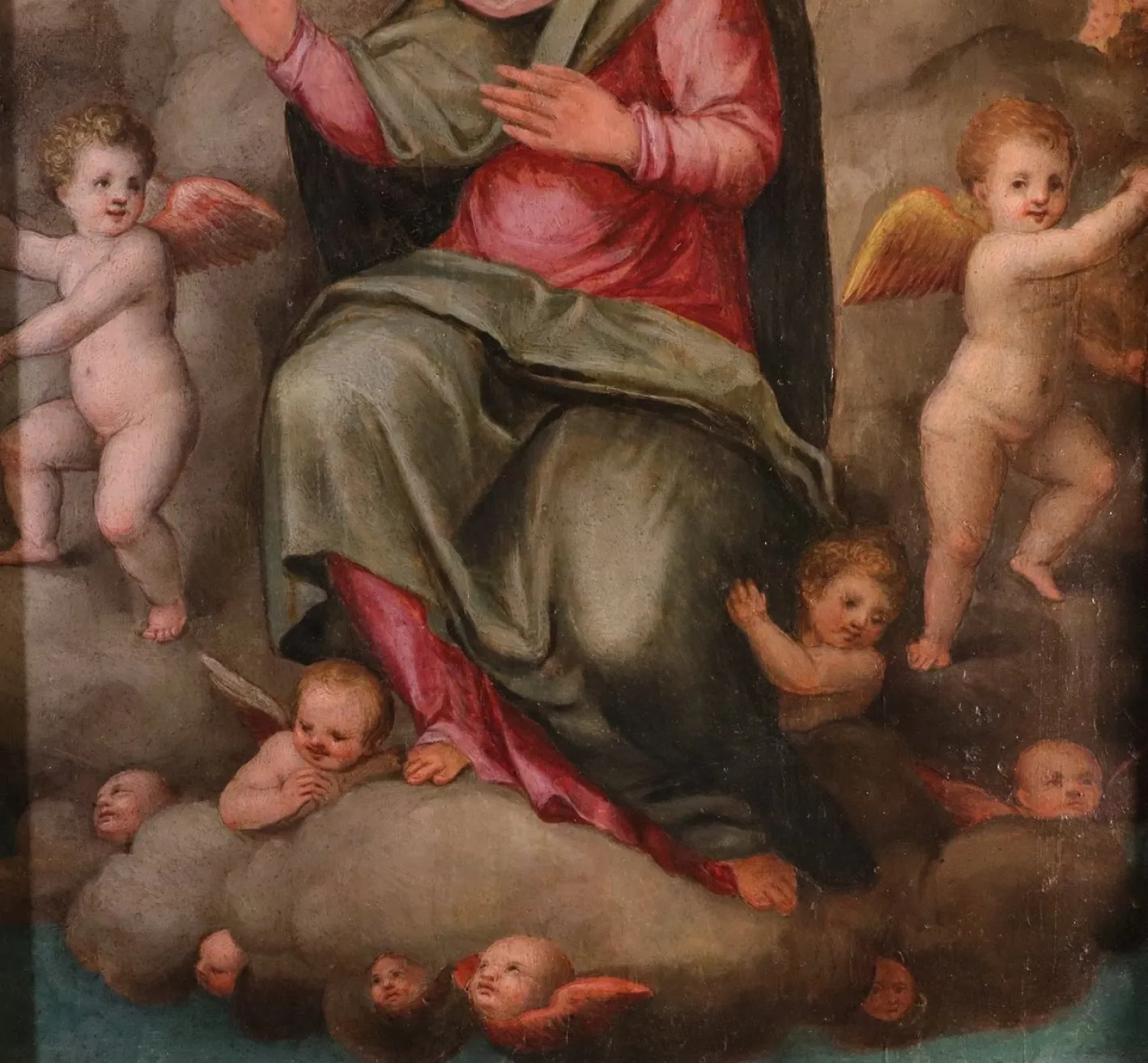
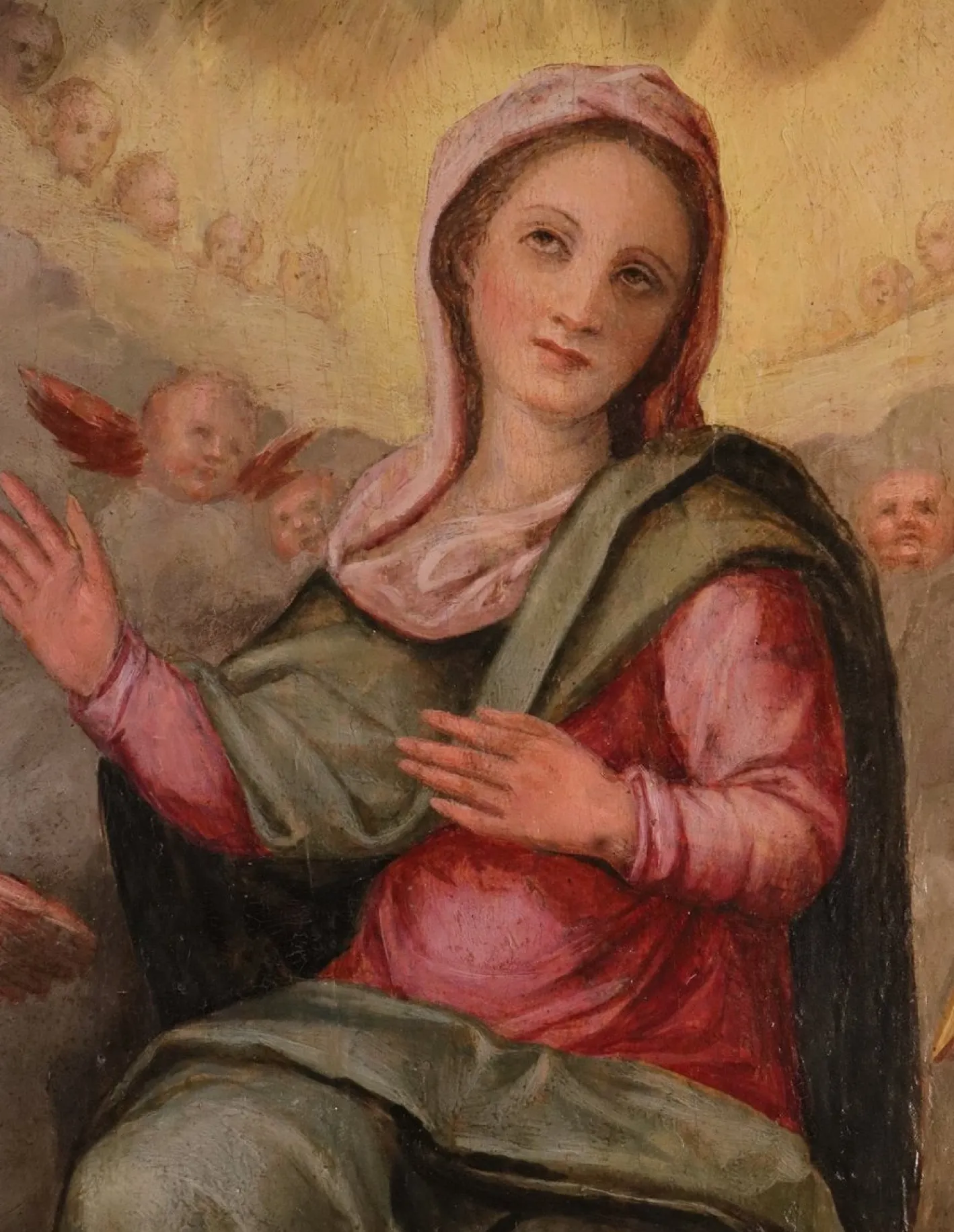
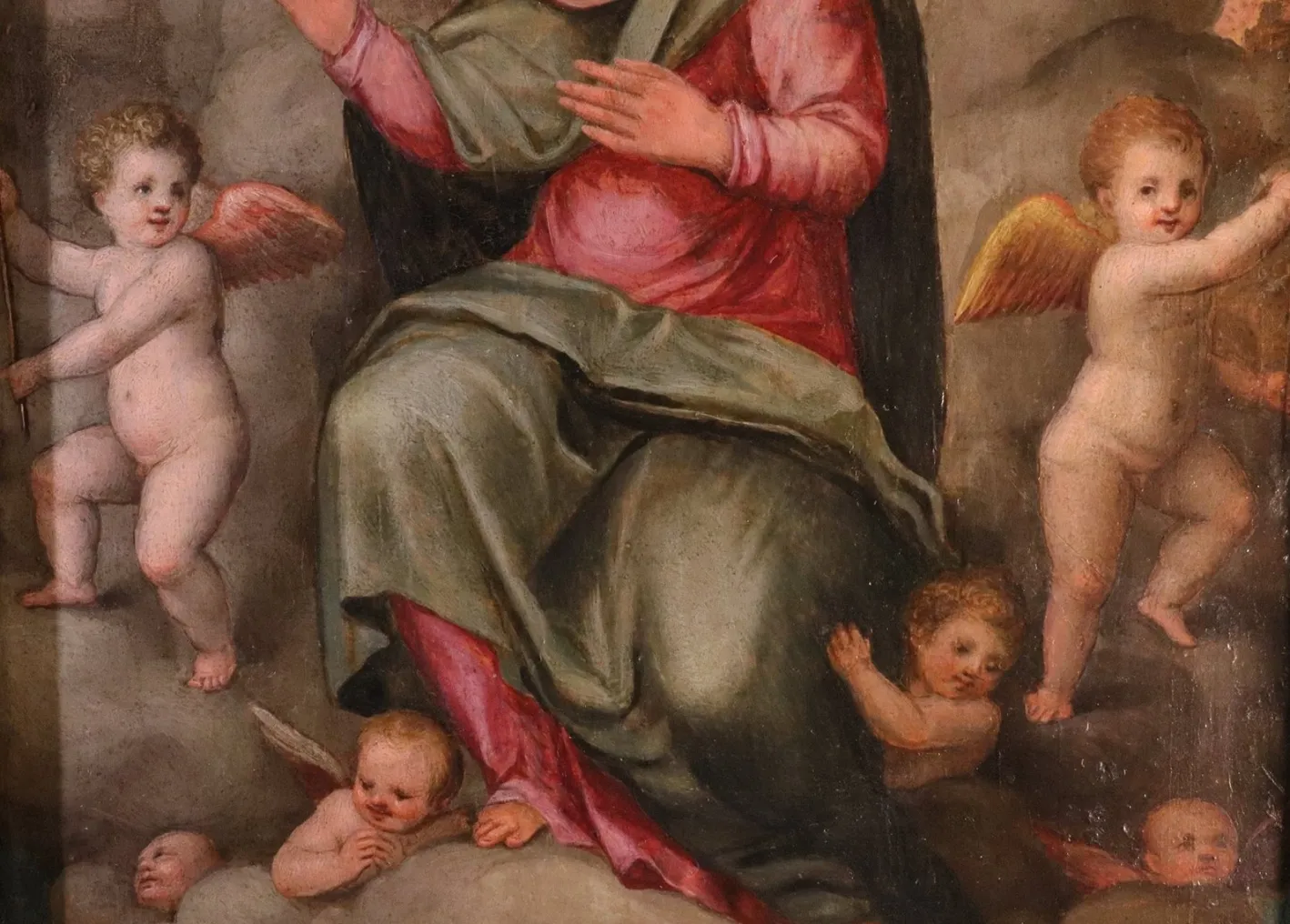
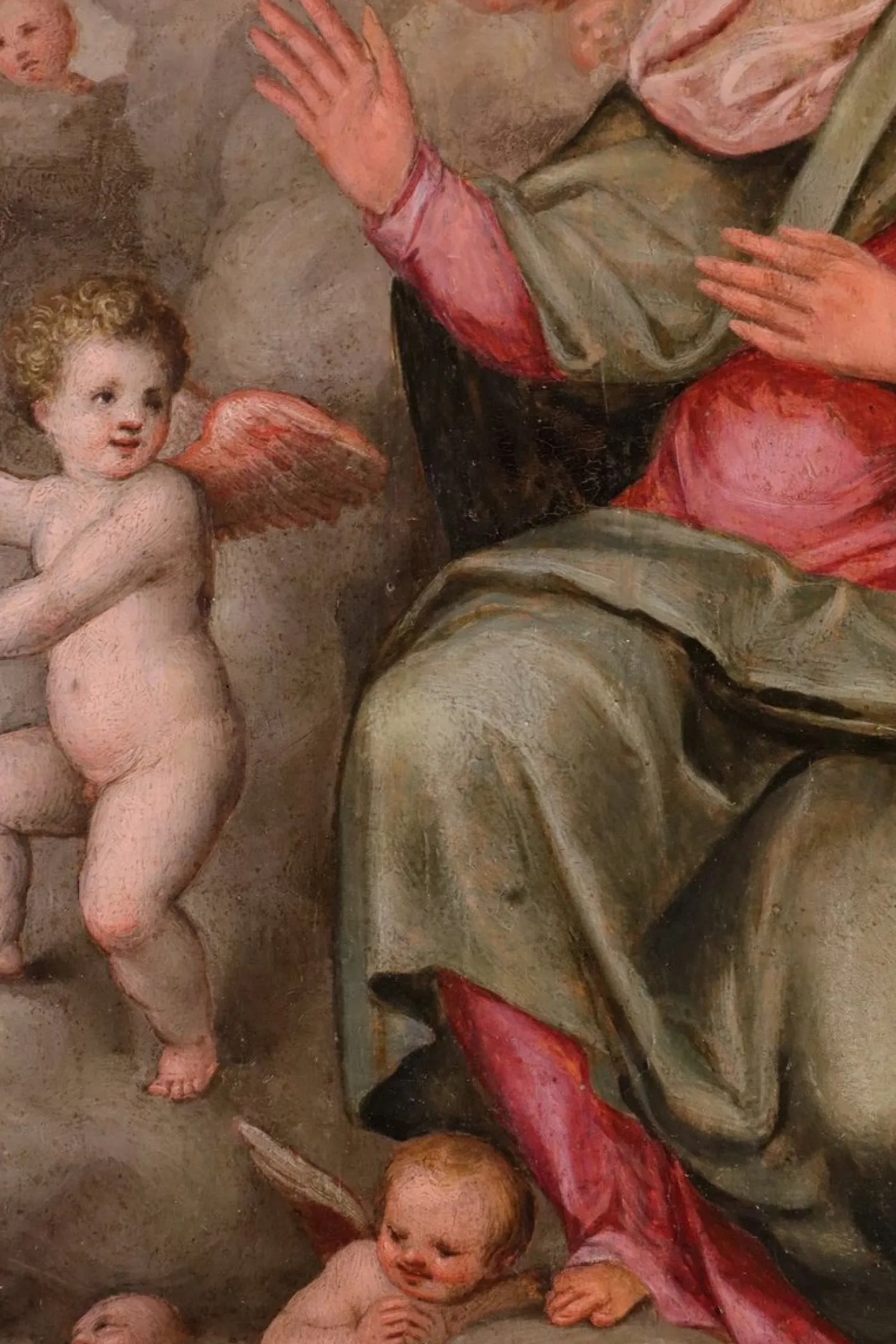
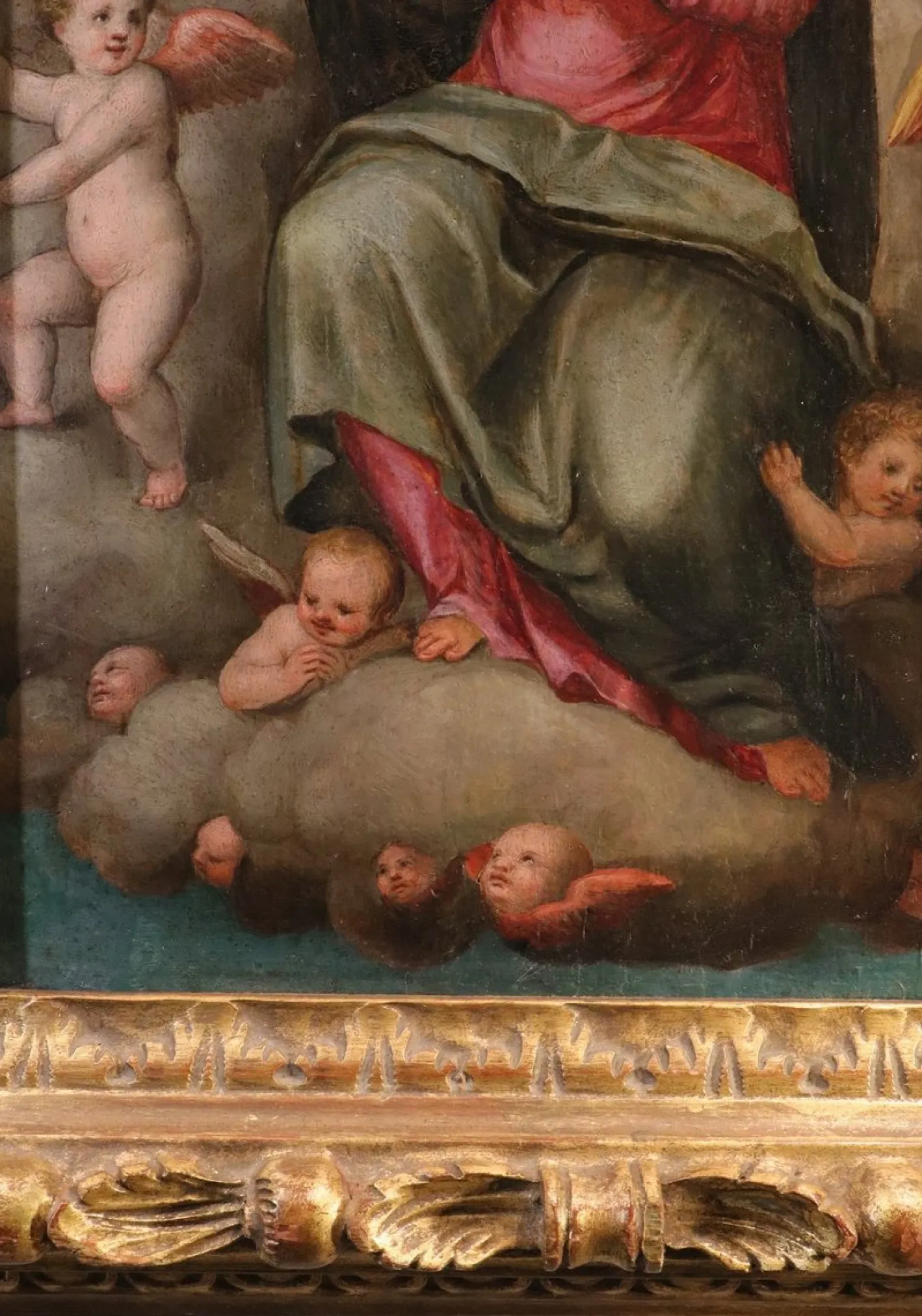
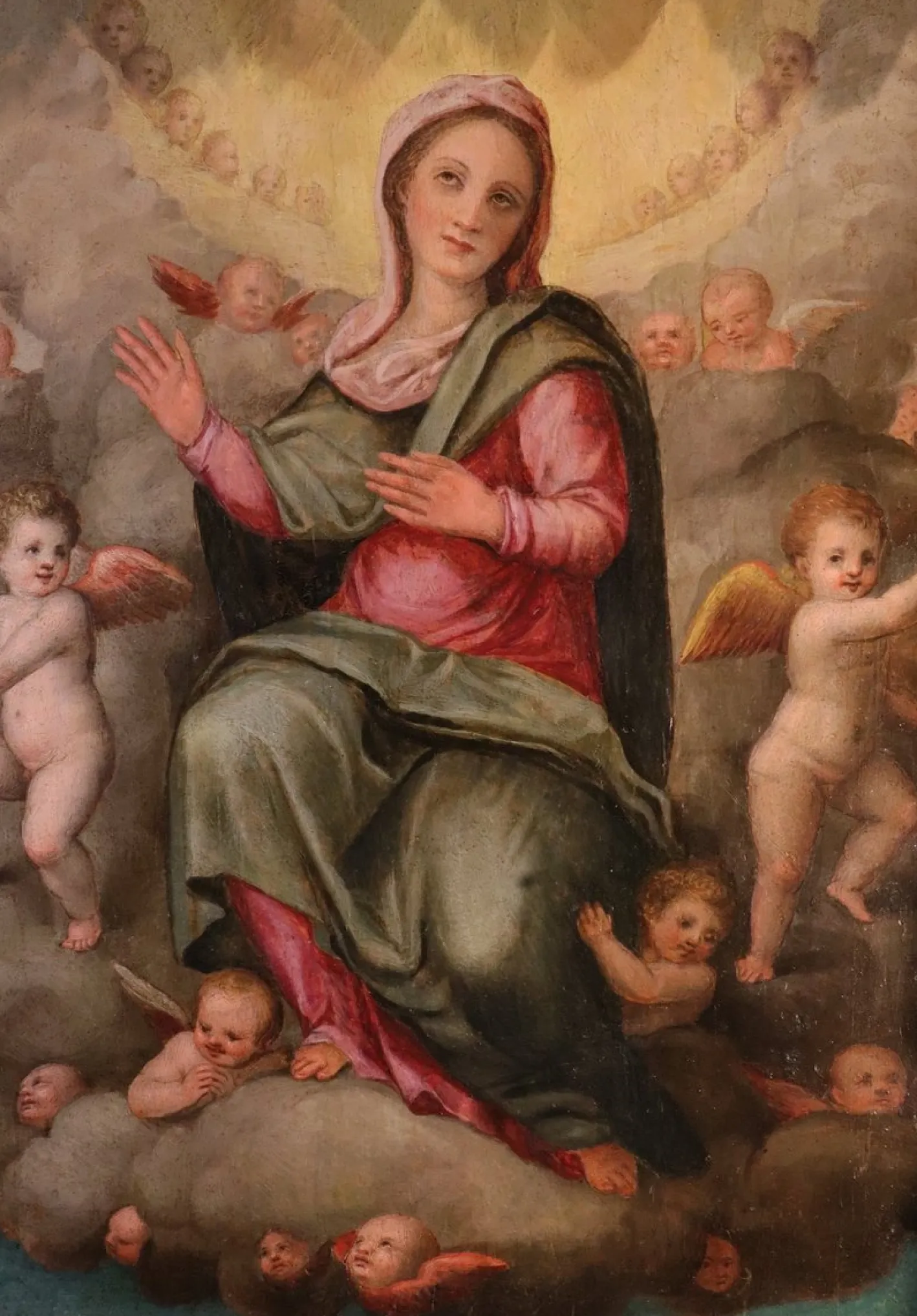
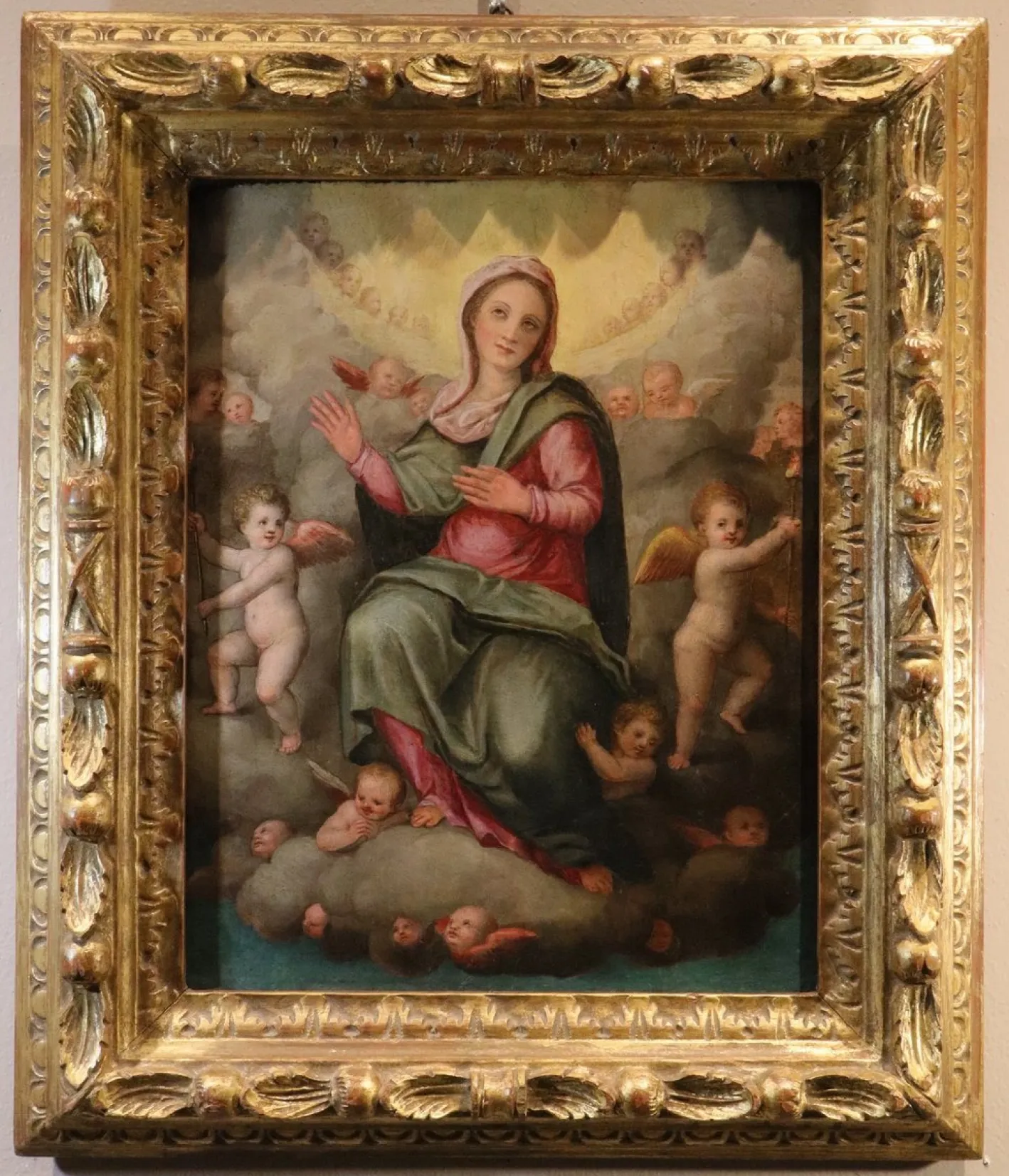
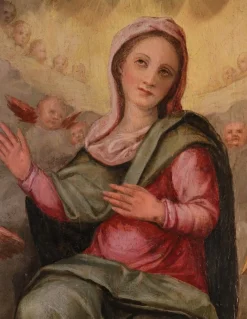
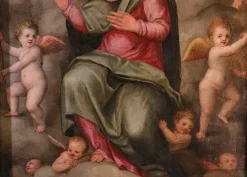
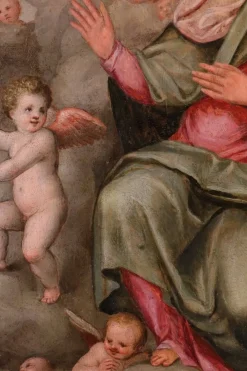
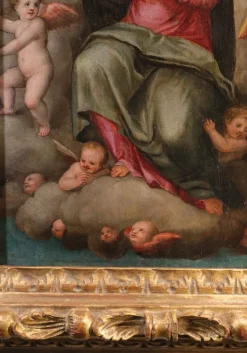
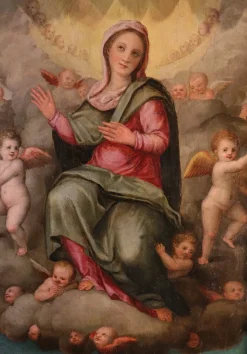
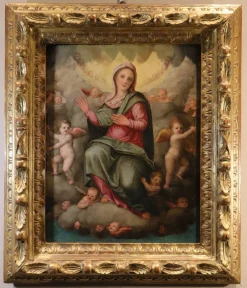
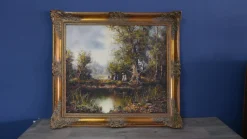
Giovanni Balducci Detto Il Cosci, Madonna in Glory Among the Angels, 1600, Öl an Bord
Original price was: €8,742.76.€114.29Current price is: €114.29.
Giovanni Balducci, known as Cosci (Florence, 1560 – Naples, after 1631)
Madonna in Glory with Angels
Oil on panel
48 x 37 cm. – Framed 68 x 57 cm.
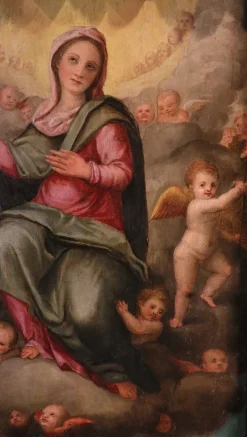
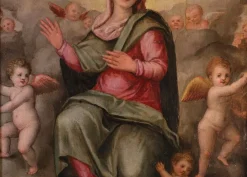
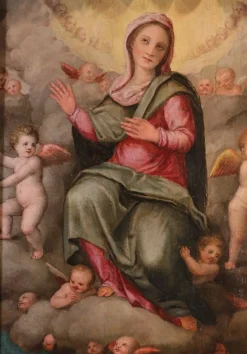
We offer in our gallery this splendid painting, of refined taste and pictorial value, depicting the Virgin of the Immaculate Conception in Glory with Angels.
The stylistic features of the painting clearly indicate a Tuscan painter working in the second half of the 16th century and adhering to the refined stylistic elements of Florentine Mannerism. In particular, we are inclined to connect its work to Giovanni Balducci, known as Cosci (Florence, 1560 – Naples, after 1631).
He trained in the workshop of Giovanni Battista Naldini, reflecting the influence of Giorgio Vasari and late Florentine Mannerism. However, as we can deduce from the proposed work, his style eschewed the virtuosic excesses of early Mannerism in favor of greater composure and a formal rigor that reflected the religious dictates of the Council of Trent.
from 1575 to 1579, he collaborated with Federico Zuccari on the completion of the frescoes of the Last Judgement in Santa Maria del Fiore in Florence. After three years in Rome, from 1577 to 1580, where he and his master decorated the Altoviti Chapel in the Church of Trinità dei Monti, he returned to Florence, where he took part in the project led by Alessandro Allori for the decoration of the ceilings of the corridors on the top floor of the Uffizi.
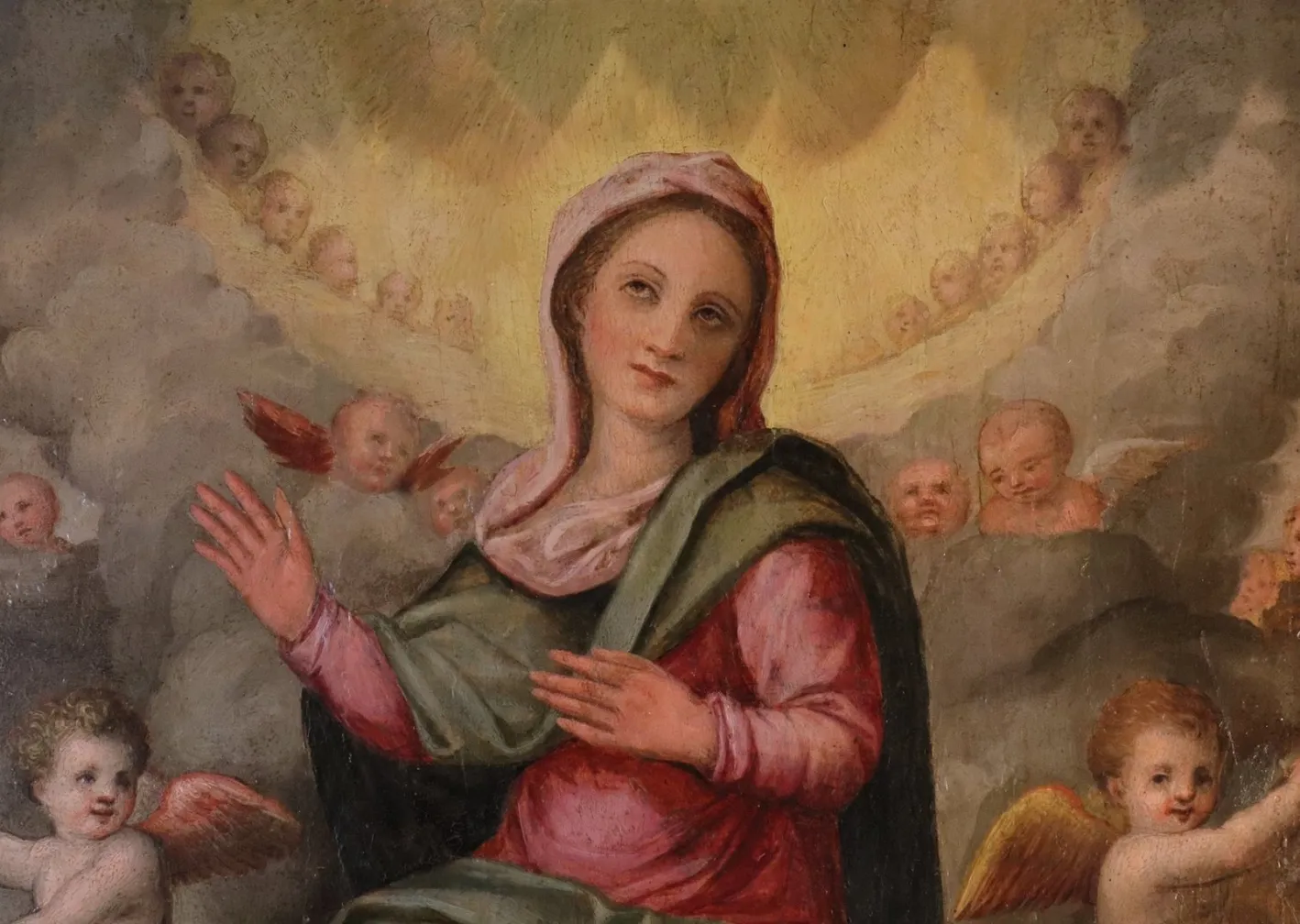
Observing the panel and its details, one is astonished by the quality of execution, which reveals the vividness of the colors and the marked figurative precision, so much so that it can clearly be attributed to the hand of the painter, celebrated for his painting, characterized by a balanced composition and a narrative vein that combines Florentine elegance with a religious severity that anticipates 17th-century trends.
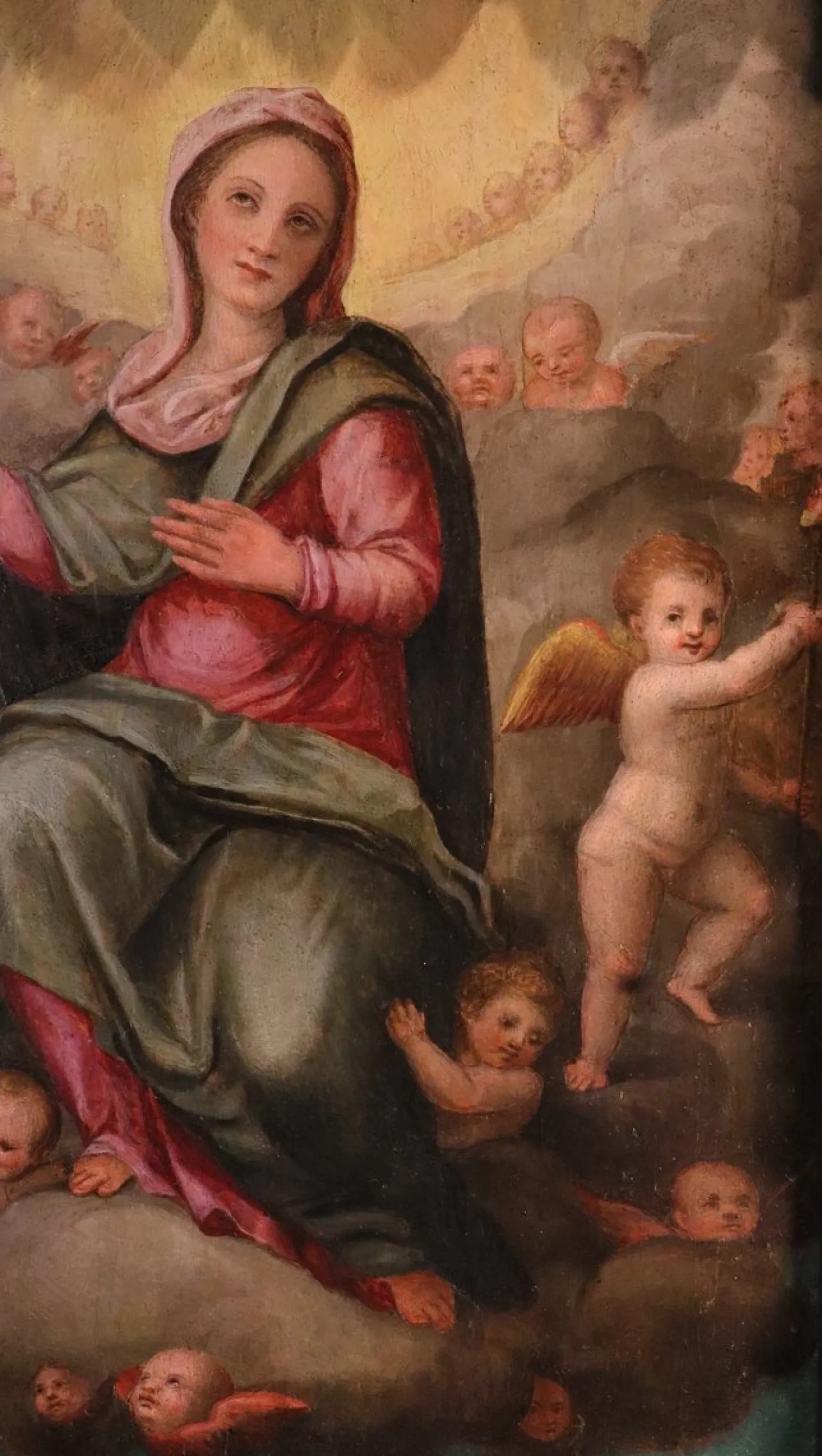
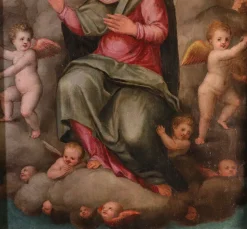
The master placed the triumphant figure of the Virgin at the center of the composition, a statuesque figure shrouded in clouds, depicted seated as if on a throne of clouds, gazing toward the heavens.
Before her is a jubilation of angels and cherubs, as if enveloping her figure and carrying her upward, while two of them correct lit torches, carrying with them a rich symbolism linked to light, spiritual guidance, and the passage between heaven and earth, symbolizing the accompaniment of the soul or body assumed into heaven.
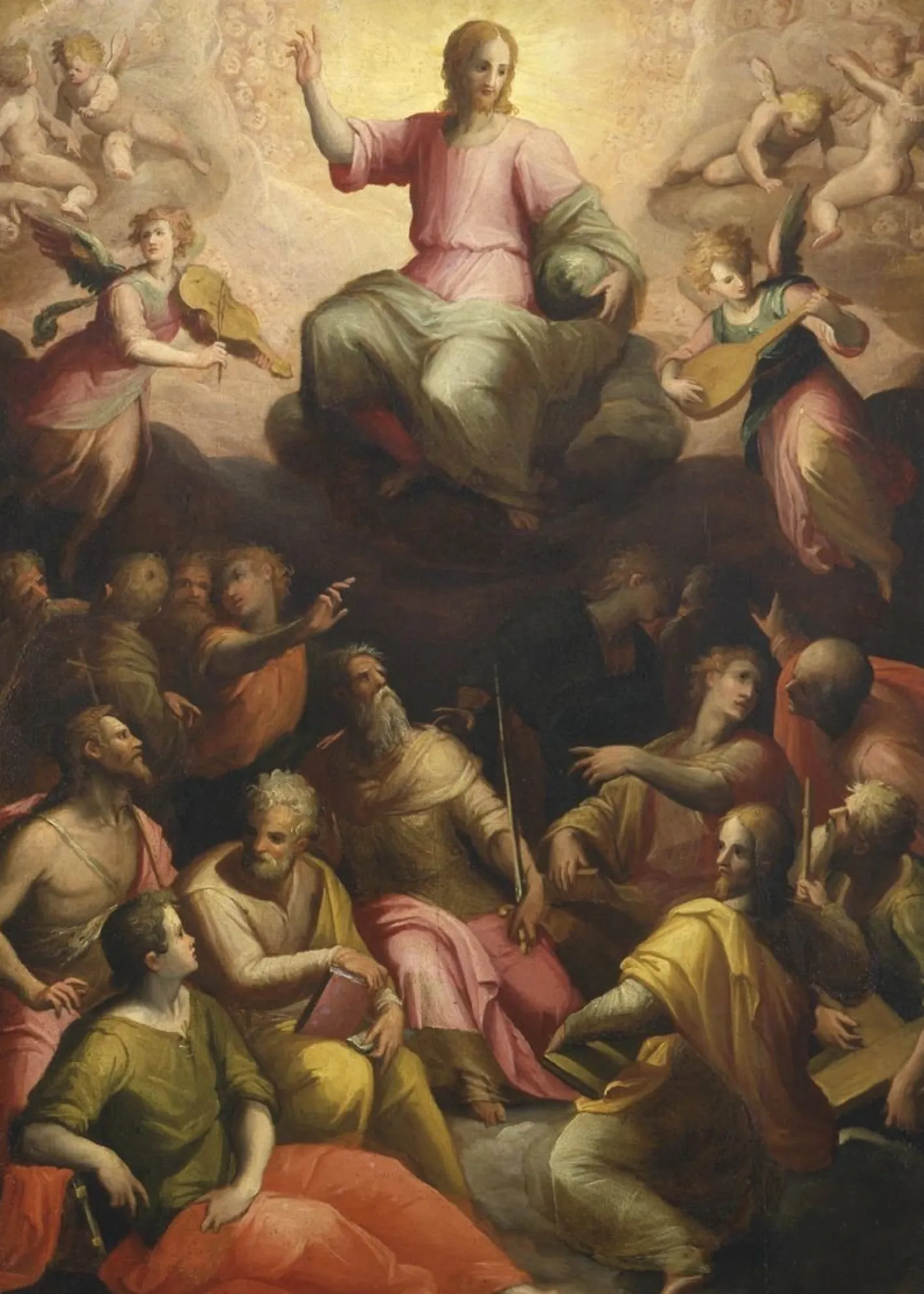
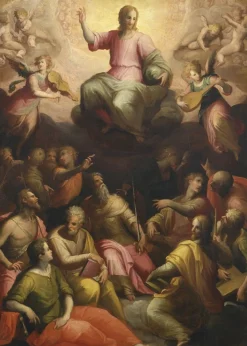
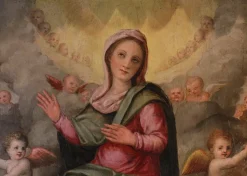
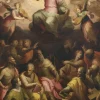
The lunette of light behind him is beautiful, its lower edge punctuated by the heads of cherubs, a device found in the „Christ in Glory with Apostles and Saints“ at the Palmer Museum of Art in Pennsylvania, dating back to around 1586, oil on panel.
Image 1 (upper detail)
Giovanni Balducci (1560–1631), Christ in Glory with the Apostles and Saints
c. 1586, oil on panel, 60.4 x 43.2 cm, Palmer Museum of Art
ADDITIONAL INFORMATION:
The work is sold complete with a gilded frame and comes with a certificate of authenticity and an iconographic.
Giovanni Balducci, bekannt als Cosci (Florenz, 1560 – Neapel, nach 1631)
Madonna in Herrlichkeit mit Engeln
Öl auf Holztafel
48 x 37 cm – gerahmt 68 x 57 cm
Wir bieten in unserer Galerie dieses herrliche Gemälde von raffiniertem Geschmack und hohem malerischem Wert an, das die Jungfrau der Unbefleckten Empfängnis in Glorie mit Engeln darstellt.
Die stilistischen Merkmale des Gemäldes weisen eindeutig auf einen toskanischen Maler hin, der in der zweiten Hälfte des 16. Jahrhunderts tätig war und sich an die raffinierten Stilelemente des florentinischen Manierismus hielt. Insbesondere neigen wir dazu, das Werk Giovanni Balducci, bekannt als Cosci (Florenz, 1560 – Neapel, nach 1631), zuzuschreiben.
Er wurde in der Werkstatt von Giovanni Battista Naldini ausgebildet, was den Einfluss von Giorgio Vasari und des späten florentinischen Manierismus widerspiegelt. Wie wir jedoch aus dem vorliegenden Werk ableiten können, verzichtete sein Stil auf die virtuosen Exzesse des frühen Manierismus zugunsten einer größeren Gelassenheit und einer formalen Strenge, die die religiösen Vorgaben des Konzils von Trient widerspiegelten.
Von 1575 bis 1579 arbeitete er mit Federico Zuccari an der Fertigstellung der Fresken des Jüngsten Gerichts in Santa Maria del Fiore in Florenz. Nach drei Jahren in Rom, von 1577 bis 1580, wo er und sein Meister die Altoviti-Kapelle in der Kirche Trinità dei Monti ausstatteten, kehrte er nach Florenz zurück, wo er an dem von Alessandro Allori geleiteten Projekt zur Ausschmückung der Decken der Korridore im obersten Stockwerk der Uffizien mitwirkte.
Betrachtet man die Tafel und ihre Details, ist man erstaunt über die Qualität der Ausführung, die die Lebendigkeit der Farben und die ausgeprägte figurative Präzision offenbart, so sehr, dass sie eindeutig der Hand des Malers zugeschrieben werden kann, der für seine Malerei berühmt ist, die sich durch eine ausgewogene Komposition und eine erzählerische Ader auszeichnet, die florentinische Eleganz mit einer religiösen Strenge verbindet, die Trends des 17. Jahrhunderts vorwegnimmt.
Der Meister platzierte die triumphierende Gestalt der Jungfrau in der Mitte der Komposition, eine statuenhafte, von Wolken umhüllte Figur, die wie auf einem Wolkenthron sitzend dargestellt ist und zum Himmel blickt.
Vor ihr befindet sich eine jubelnde Schar von Engeln und Cherubim, die ihre Gestalt zu umhüllen und emporzutragen scheinen, während zwei von ihnen brennende Fackeln halten, die eine reiche Symbolik in sich tragen, verbunden mit Licht, spiritueller Führung und dem Übergang zwischen Himmel und Erde, und die die Begleitung der in den Himmel aufgenommenen Seele oder des Körpers symbolisieren.
Die Lichtlunette hinter ihm ist wunderschön, ihr unterer Rand wird von Cherubköpfen unterbrochen – ein Stilmittel, das sich auch im Gemälde „Christus in Herrlichkeit mit Aposteln und Heiligen“ im Palmer Museum of Art in Pennsylvania findet, das um 1586 entstanden ist (Öl auf Holz).
Abbildung 1 (Detail oben)
Giovanni Balducci (1560–1631), Christus in Herrlichkeit mit den Aposteln und Heiligen
um 1586, Öl auf Holz, 60,4 x 43,2 cm, Palmer Museum of Art
WEITERE INFORMATIONEN:
Das Werk wird komplett mit einem vergoldeten Rahmen verkauft und wird mit einem Echtheitszertifikat sowie einer ikonografischen Beschreibung geliefert.
Klicken Sie hier für die vollständige BeschreibungSchließen
| Epoche | Vor 1890 |
|---|---|
| Jahr | 1600 |
| Produktionszeitraum | Vor 1890 |
| Hergestellt in | Italien |
| Kennzeichnung vorhanden | Dieses Objekt wird dem oben genannten Designer/Hersteller zugeschrieben. Es hat keine Kennzeichnung |
| Stil | Klassisch, Figurative, Gothic, Italian, Louis XIII, Medieval, Mediterranean, Alte Meister, Portraiture, Religious, Renaissance, Barock |
| Zustand | Gut — Dieser Vintage/antike Artikel kann einige Gebrauchsspuren wie Kratzer und andere Zeichen der Zeit aufweisen. |
| Details über Schäden und Restaurierungen |
Leichte altersbedingte Gebrauchsspuren, Altersbedingte Patina, Neu bezogen, Zum Teil restauriert
|
| Artikelnummer | CYT-2499814 |
| Material | Öl auf Karton |
| Farbe | Mehrfarbig |
| Breite | 57 cm 57 cm |
| Tiefe | 12 cm 12 cm |
| Höhe | 68 cm 68 cm |
Be the first to review “Giovanni Balducci Detto Il Cosci, Madonna in Glory Among the Angels, 1600, Öl an Bord”
Related products
Jugendstil
Impressionismus
Großes Victor Zolnierowicz, Winterlandschaft, 1950er Ölgemälde auf Leinwand, gerahmt


Abstraction

Arbeiten Auf Papier
Mikhail Larionov, Rayonist Composition, 1910, Gouache auf Papier

Druckgraphiken Und Multiples
Reviews
There are no reviews yet.