
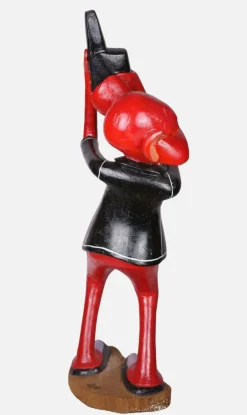
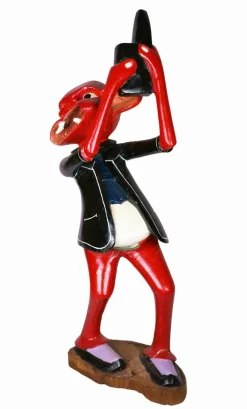
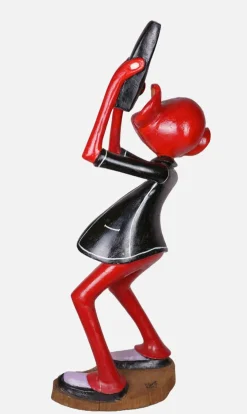
George Lilanga, Skulptur einer roten Figur, 1995, Holz
€104.05
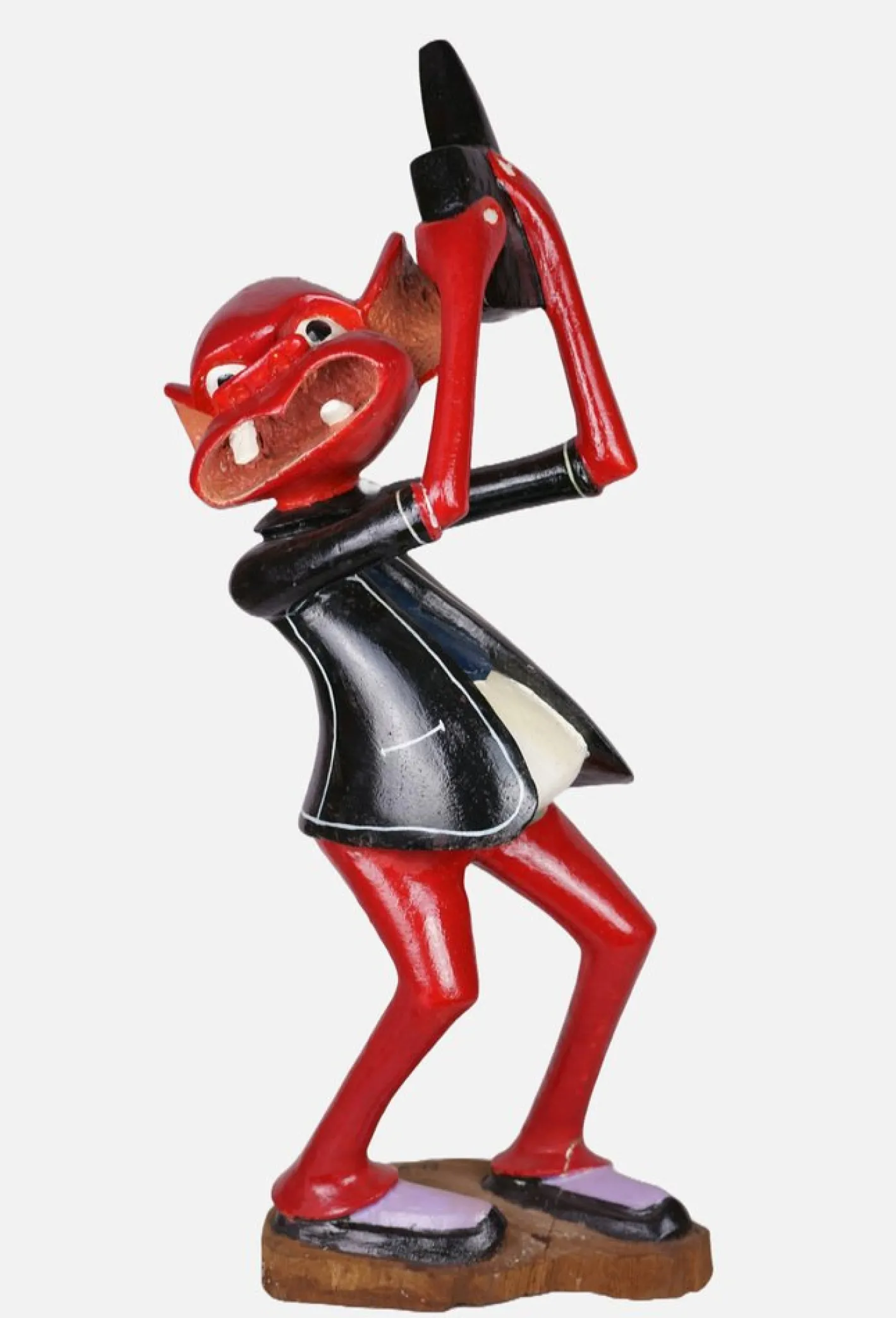
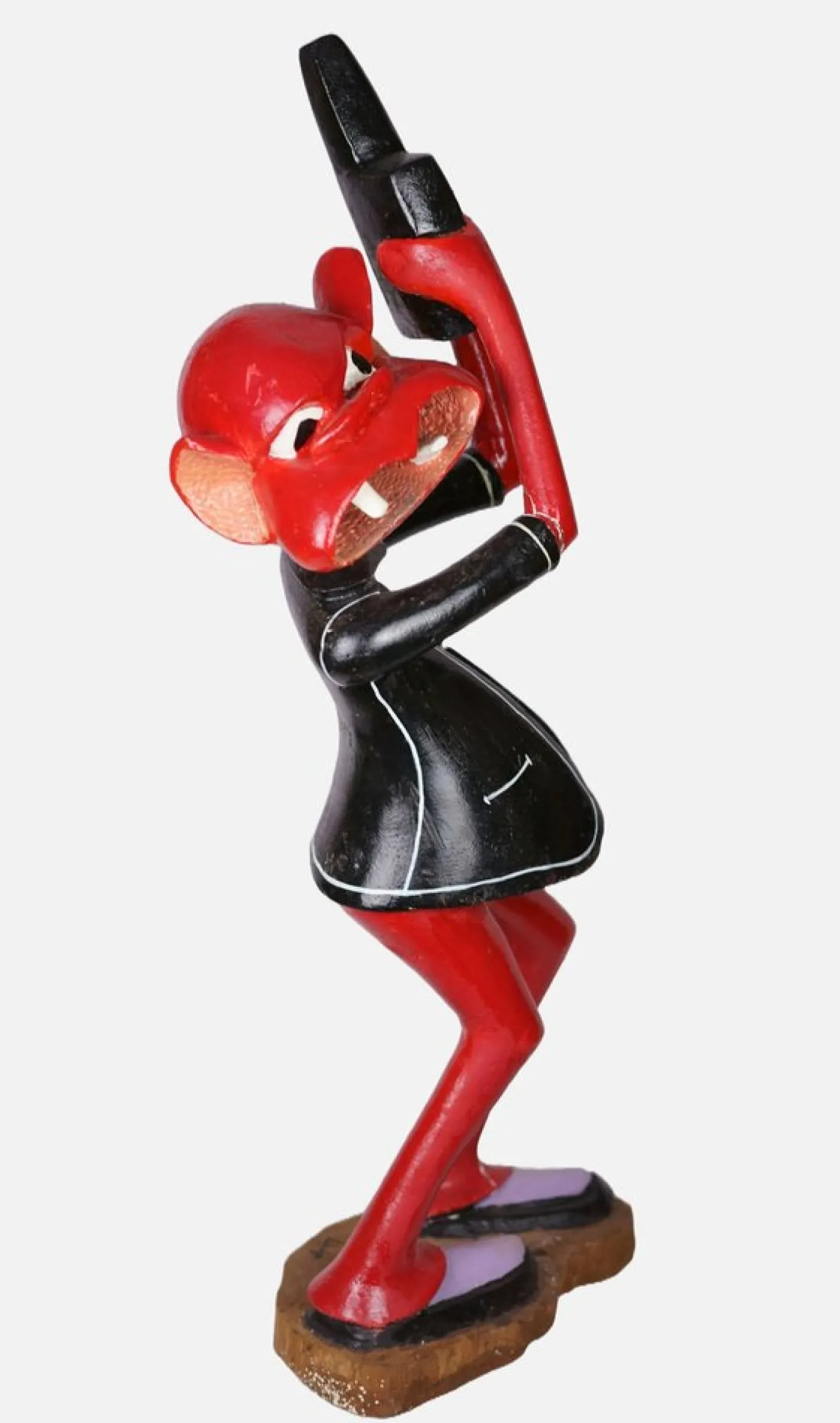
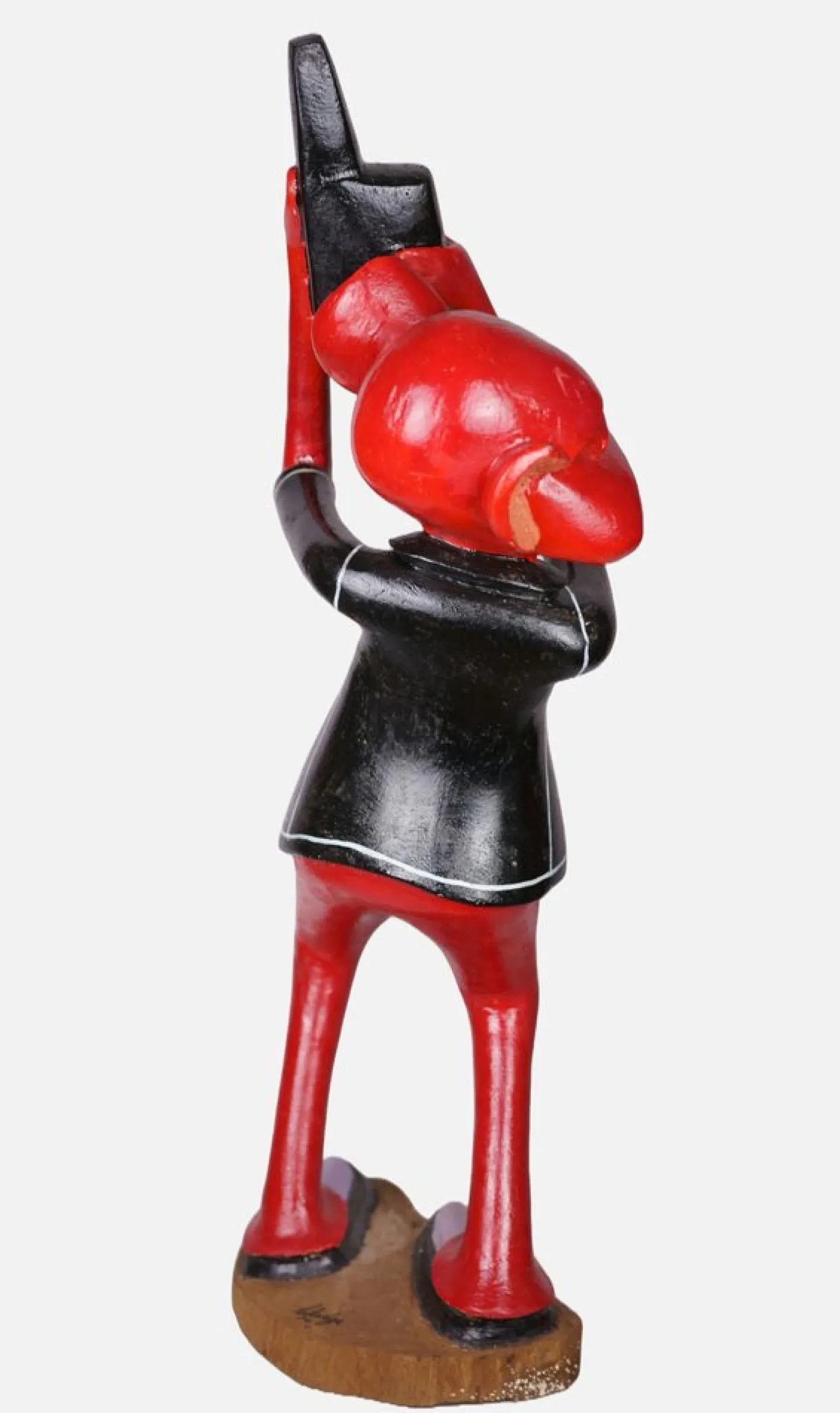
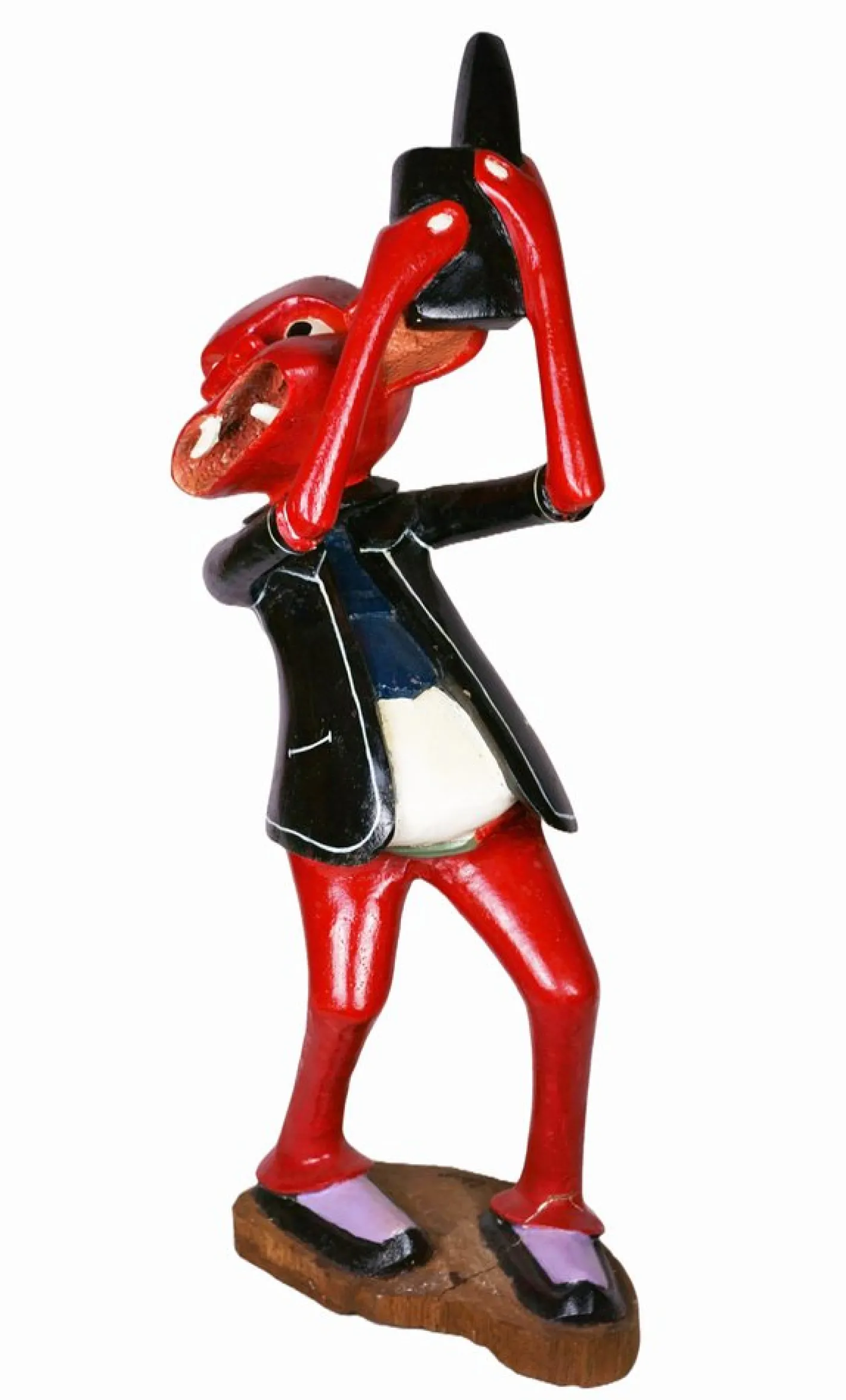
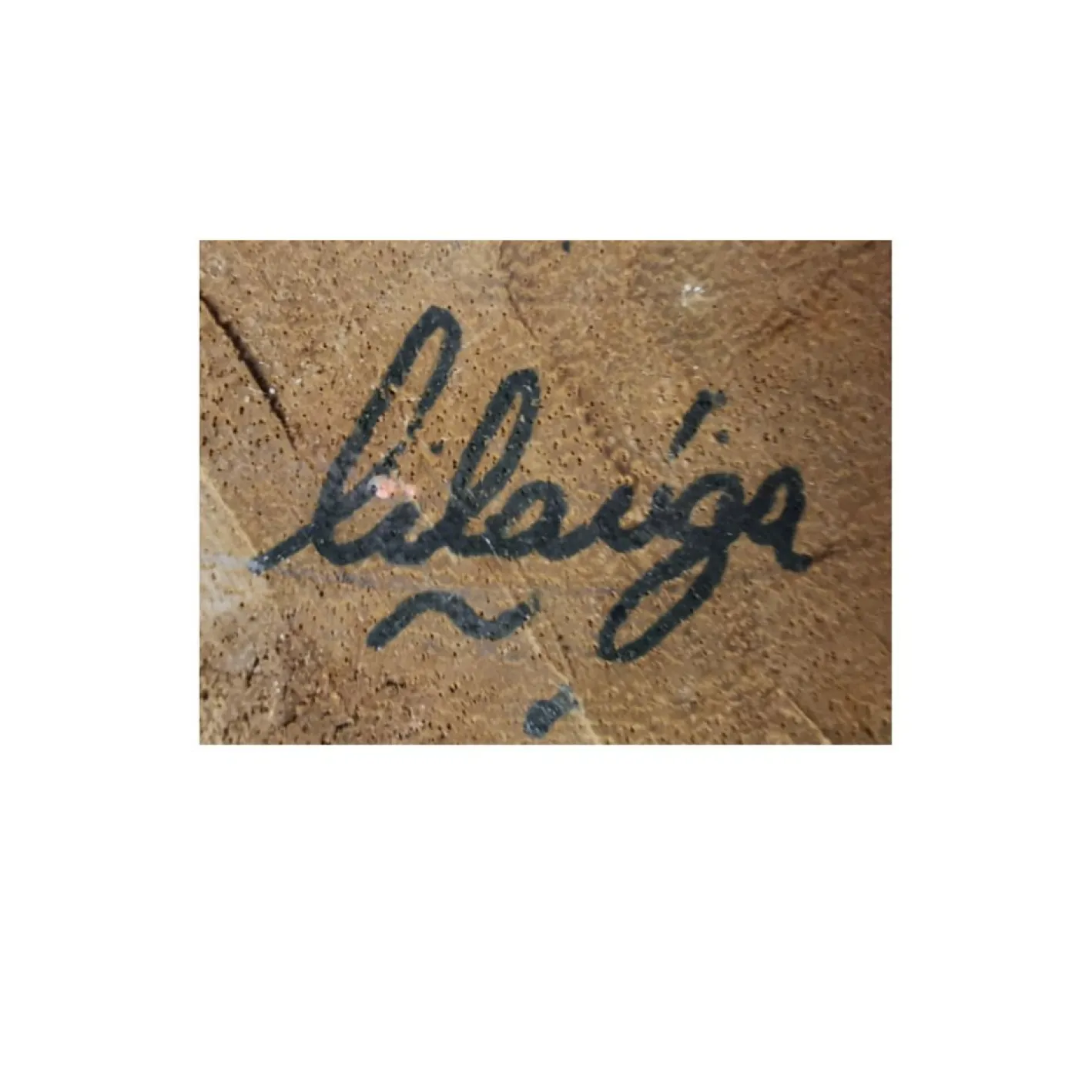
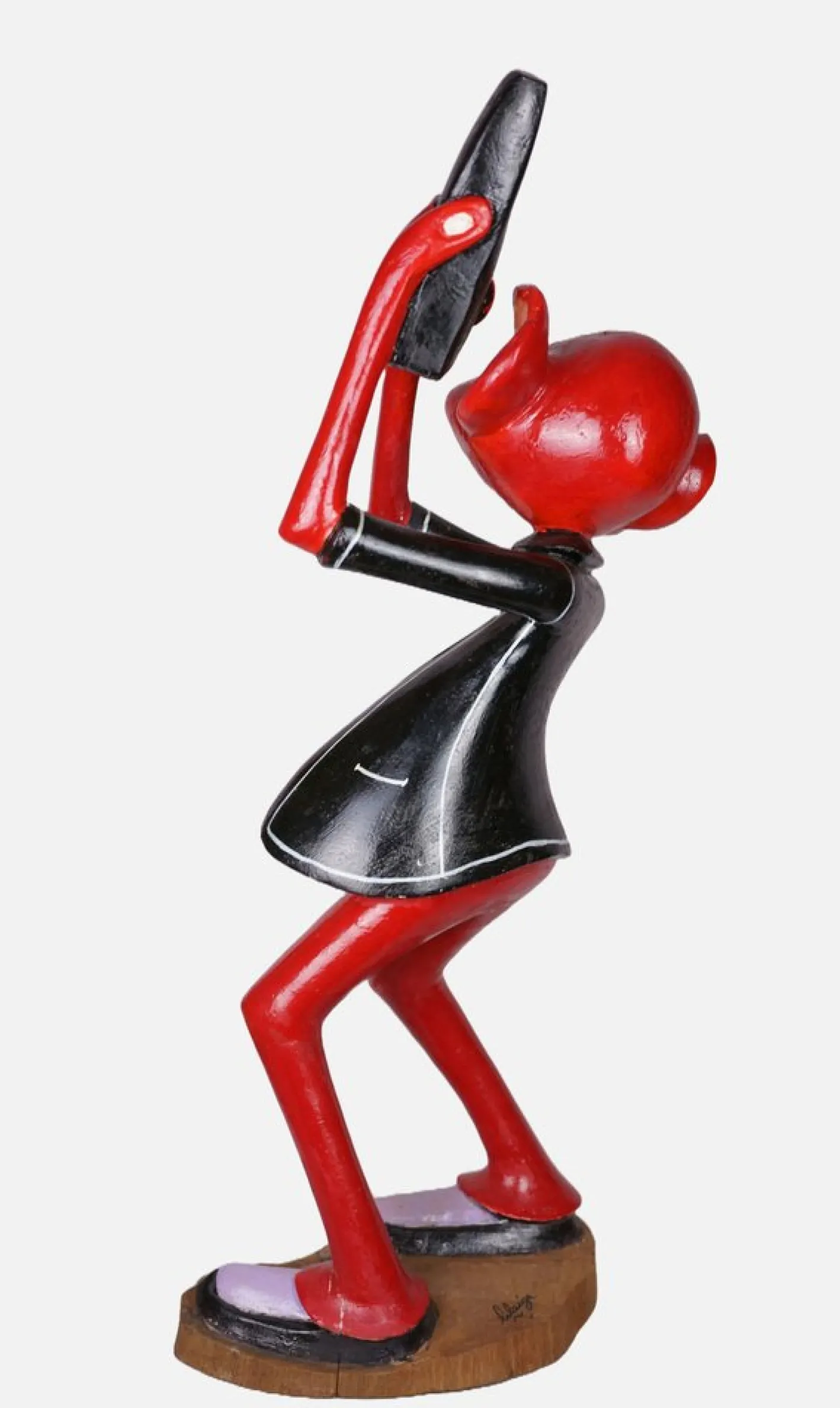
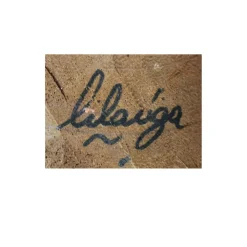
George Lilanga (1934 Kikwetu – 2005 Dar es Salaam), Sculpture of a red figure, circa 1995. Polychrome wood, 80 cm (height) x 40 cm (width) x 25 cm (depth), signed on the carved base plate.
– Left arm newly fixed, stress crack running through right foot
– The crazy dance of life –
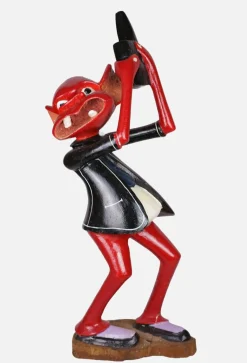
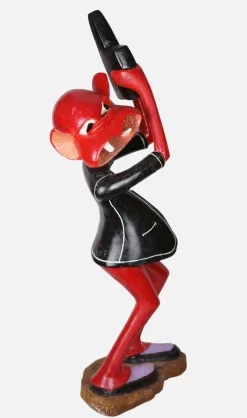
George Lilanga, who originally trained as a Makonde carver, takes up the Shetani spirits belonging to Makonde mythology in this sculpture and creates a bizarre, grotesque figure that looks upward in a dancing movement with its mouth open and two teeth exposed. A permanent state of affect, which is further intensified by the intensely bright colors. Yet the eerie and frightening creature is simultaneously banished and tamed by the artwork, so that it appears almost comical. As a transformation of mythological tradition, the figure holding up what appears to be a cell phone is also a metaphor for one’s own existence and the “absurdity” of life, and therefore also a work of modern art.
About the artist
George Lilanga di Nyama (1934-2005) was an important Tanzanian sculptor and painter of the Makonde people and is considered one of the most important representatives of contemporary East African art. After training as a Makonde woodcarver, he moved to Dar es Salaam in 1972 and worked at the Nyumba ya Sanaa art center.
In 1980, he was strongly influenced by the Tingatinga school and developed his own distinctive style based on this. He combined traditional Makonde carving with colourful designs for the first time and created paintings and painted wooden sculptures. His works often depict figures from Makonde mythology (Shetani spirits), but also contain socially critical and caricaturing elements.
Lilanga, considered the “Picasso of Africa,” was a style-defining artist who combined traditional African art with modern individuality.
ENGLISH VERSION
George Lilanga (1934 Kikwetu – 2005 Daressalaam), Skulptur einer roten Gestalt, um 1995. Holz polychromiert, 80 cm (Höhe) x 40 cm (Breite) x 25 cm (Tiefe), auf der geschnitzten Bodenplatte signiert.
– der linke Arm neu fixiert, Spannungsriss den rechten Fuß durchlaufend
– Der irre Tanz des Lebens –
George Lilanga, der sich zum ursprünglich zum Makonde-Schnitzer hat ausbilden lassen, greift mit dieser Skulptur die zur Mythologie der Makonde gehörenden Shetani-Geister auf und schafft eine bizarr-groteske Figur, die in einer tänzerischen Bewegung mit aufgerissenem Mund und zwei entblößten Zähnen nach oben schaut. Ein permanenter Affektzustand, der von den intensiv-leuchtenden Farben noch verstärkt wird. Doch das darstellte unheimlich-erschreckende Wesen ist durch das Kunstwerk zugleich gebannt und gezähmt, so dass es beinahe drollig wirkt. Als Transformation der mythologischen Tradition ist die wohl ein Funktelefon emporhaltende Figur aber auch eine Metapher für die eigene Existenz und die ‚Absurdität‘ des Lebens und daher zugleich ein Kunstwerk der Moderne.
zum Künstler
George Lilanga di Nyama (1934-2005) war ein bedeutender tansanischer Bildhauer und Maler des Makonde-Volkes und zählt zu den wichtigsten Vertretern zeitgenössischer ostafrikanischer Kunst. Nach seiner Ausbildung als Makonde-Schnitzer zog er 1972 nach Daressalaam und arbeitete am Kunstzentrum Nyumba ya Sanaa.
1980 wurde er stark von der Tingatinga-Schule beeinflusst und entwickelte darauf aufbauend seinen eigenen, unverwechselbaren Stil. Er verband traditionelle Makonde-Schnitzkunst erstmals mit farbiger Gestaltung und schuf Gemälde sowie bemalte Holzskulpturen. Seine Werke zeigen häufig Figuren aus der Makonde-Mythologie (Shetani-Geister), enthalten aber auch sozialkritische und karikierende Elemente.
Lilanga, der als ‚Picasso Afrikas‘ gilt, war ein stilprägender Künstler, der traditionelle afrikanische Kunst mit moderner Individualität verband.
Klicken Sie hier für die vollständige BeschreibungSchließen
| Epoche | 1990 bis 1999 |
|---|---|
| Produktionszeitraum | 1990 bis 1999 |
| Hergestellt in | Tansania |
| Stil | Surrealismus |
| Zustand | Gut — Dieser Vintage/antike Artikel kann einige Gebrauchsspuren wie Kratzer und andere Zeichen der Zeit aufweisen. |
| Details über Schäden und Restaurierungen |
Leichte altersbedingte Gebrauchsspuren, Linker Arm repariert, Spannungsriss im rechten Fuß
Left arm repaired, Stress crack through right foot
Automatisch generierte Übersetzung |
| Artikelnummer | TPH-2466770 |
| Material | Farbe |
| Farbe | Purpurrot |
| Breite | 40 cm 40 cm |
| Tiefe | 25 cm 25 cm |
| Höhe | 80 cm 80 cm |
Be the first to review “George Lilanga, Skulptur einer roten Figur, 1995, Holz”
Related products
Arbeiten Auf Papier
Mikhail Larionov, Rayonist Composition, 1910, Gouache auf Papier
Abstraction
Jugendstil


Reviews
There are no reviews yet.