
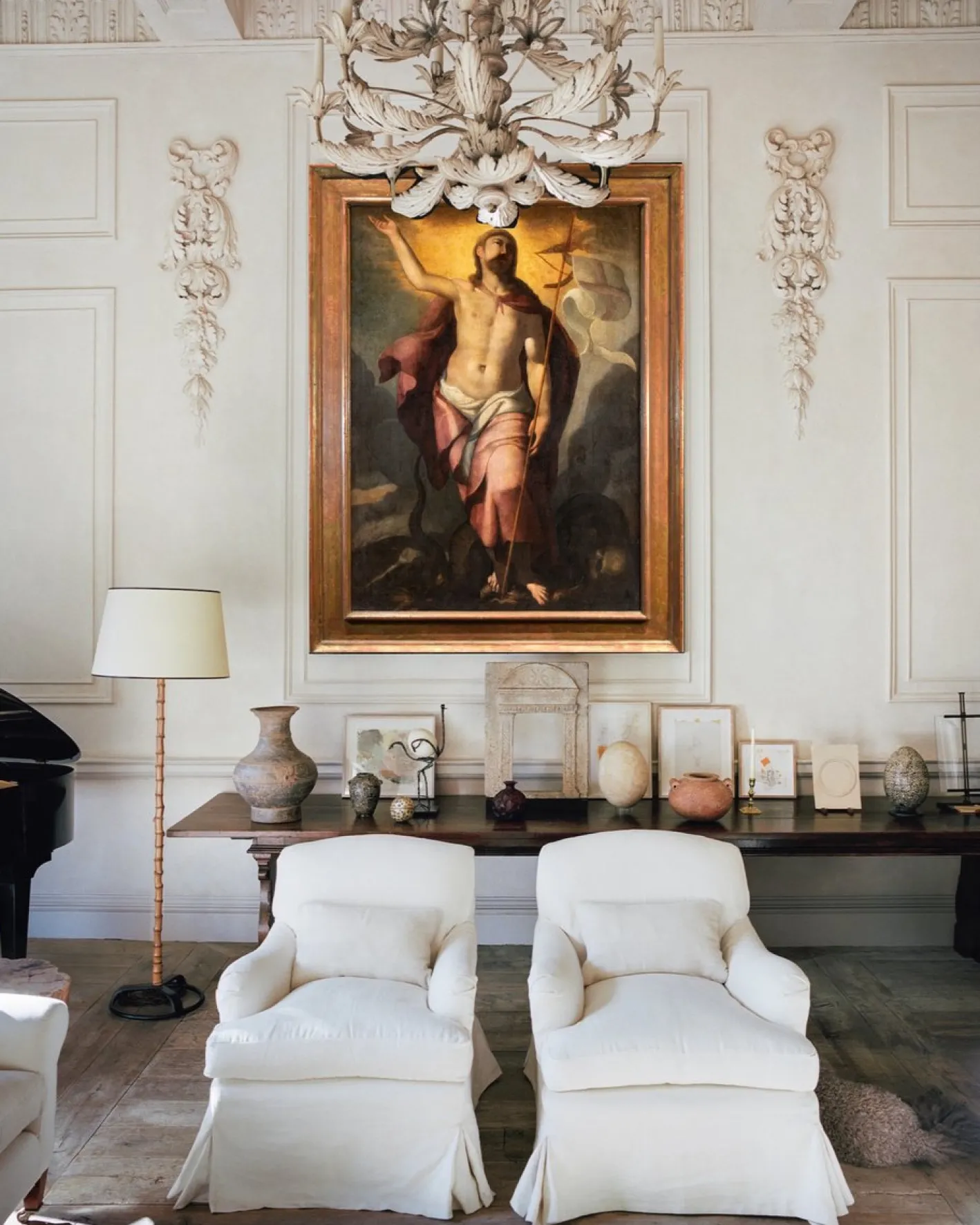
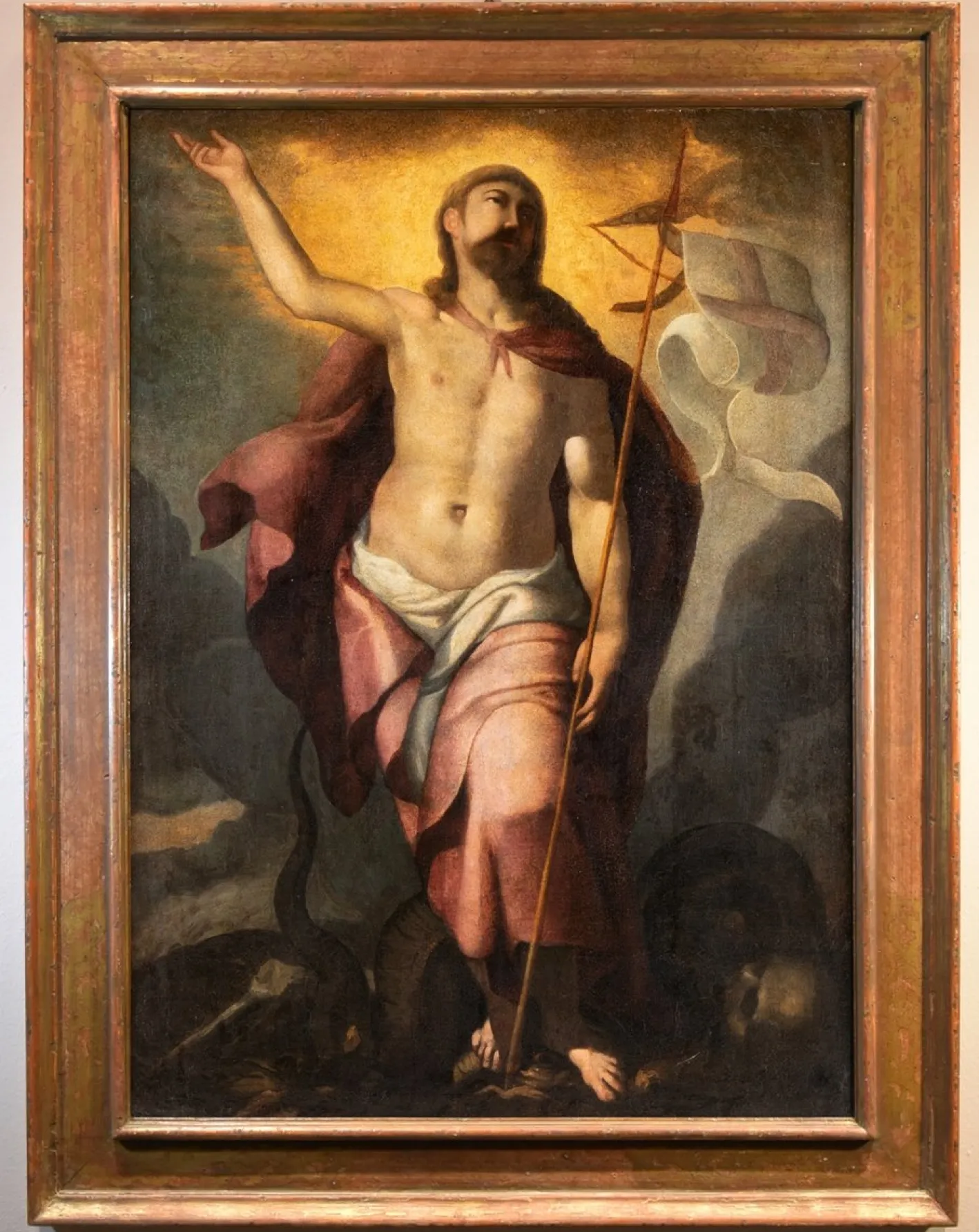
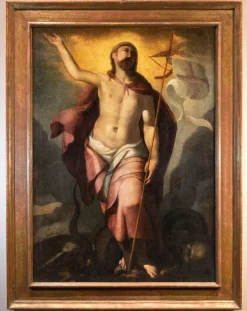
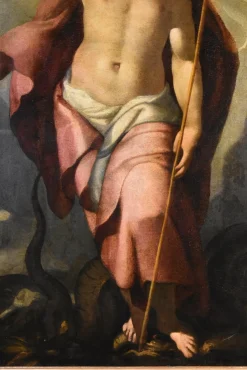
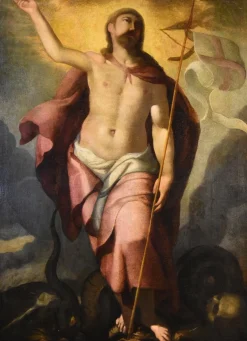
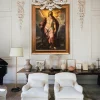
Nachfolger von Tiziano Vecellio, Auferstehung Christi, 1600, Öl auf Leinwand
€110.85
The Resurrection of Christ
Follower of Titian (Pieve di Cadore 1490 – Venice 1576)
Venetian School, late 16th/early 17th century
Oil on canvas (108 x 78 cm – Framed 129 x 99 cm)
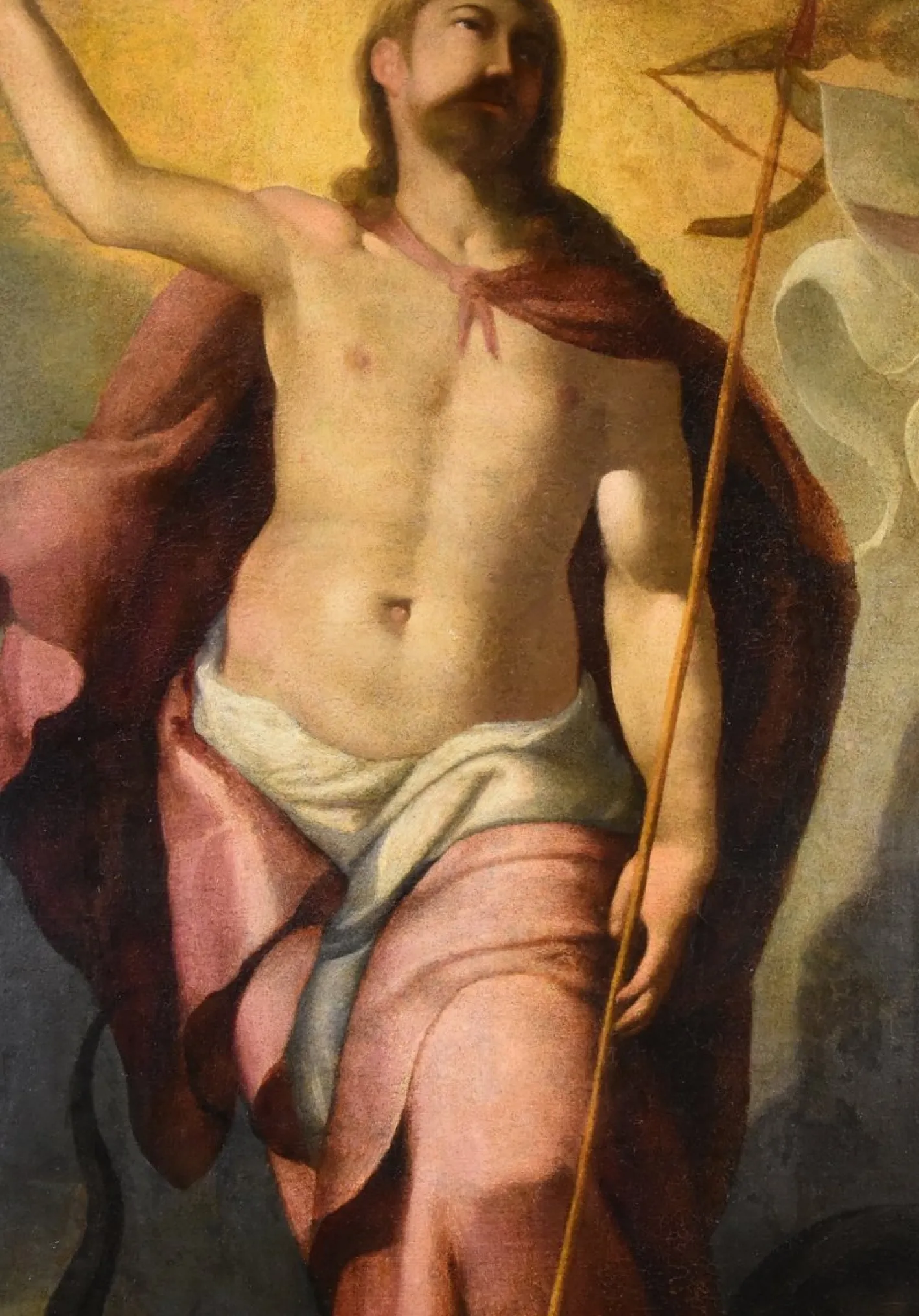
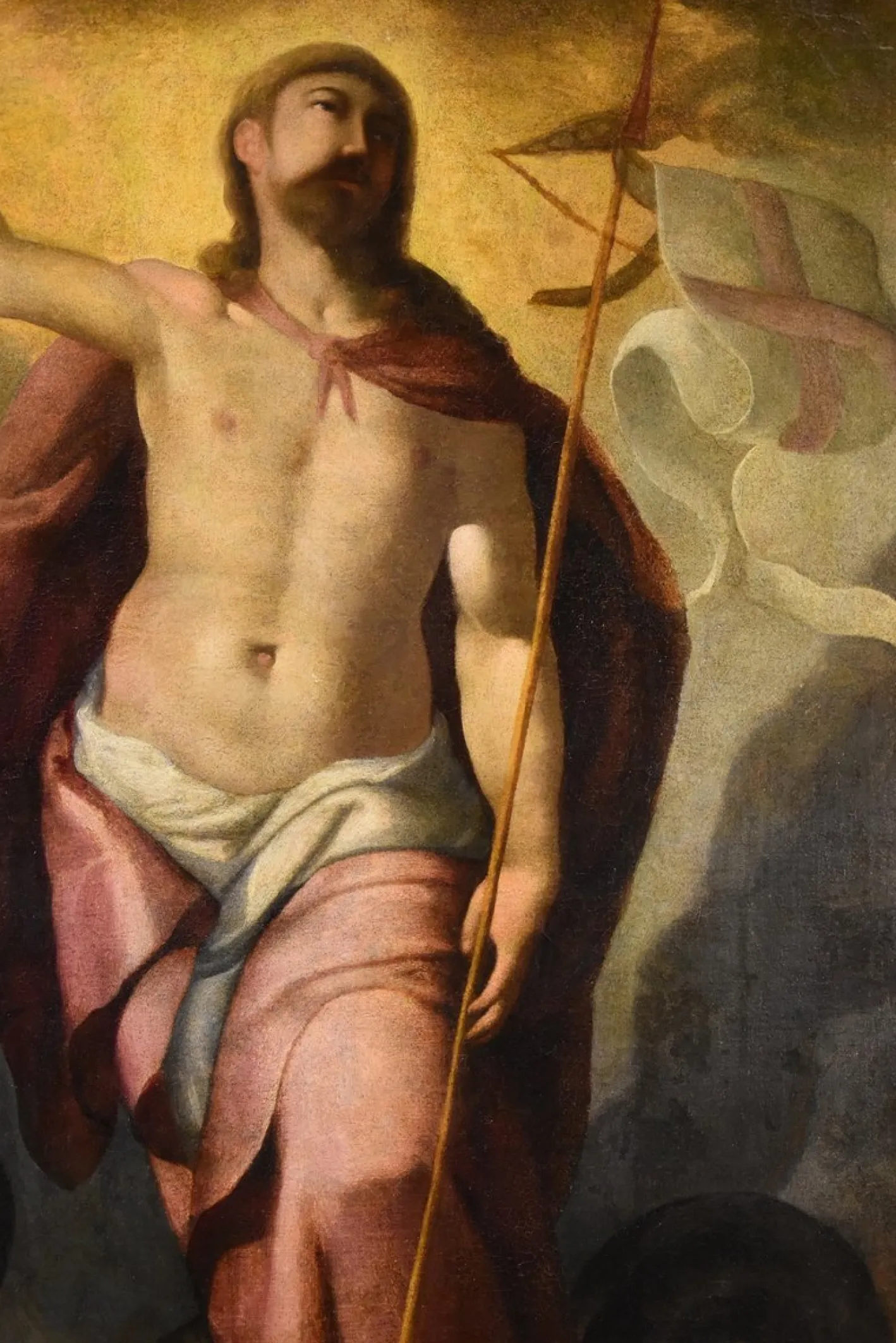
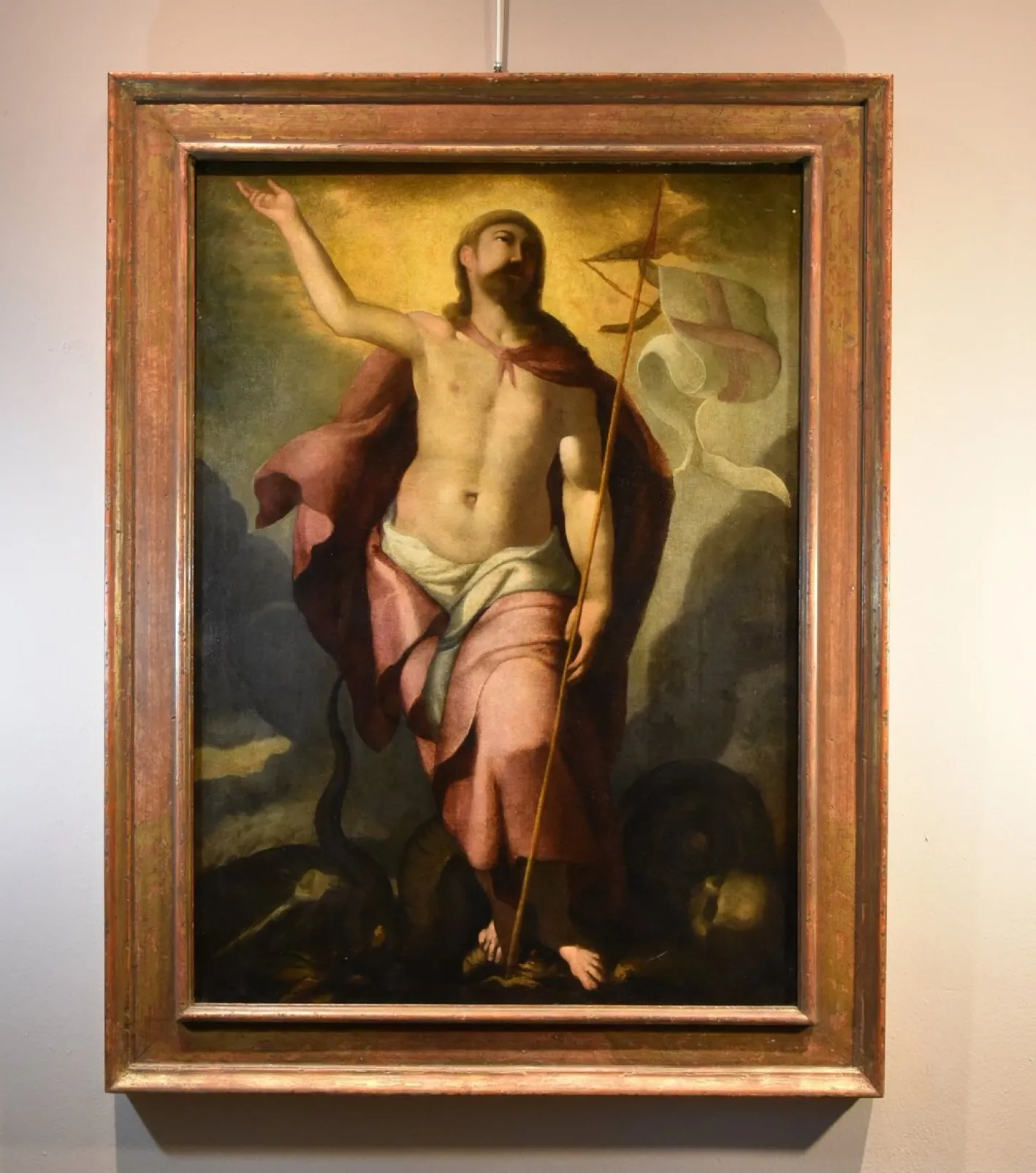
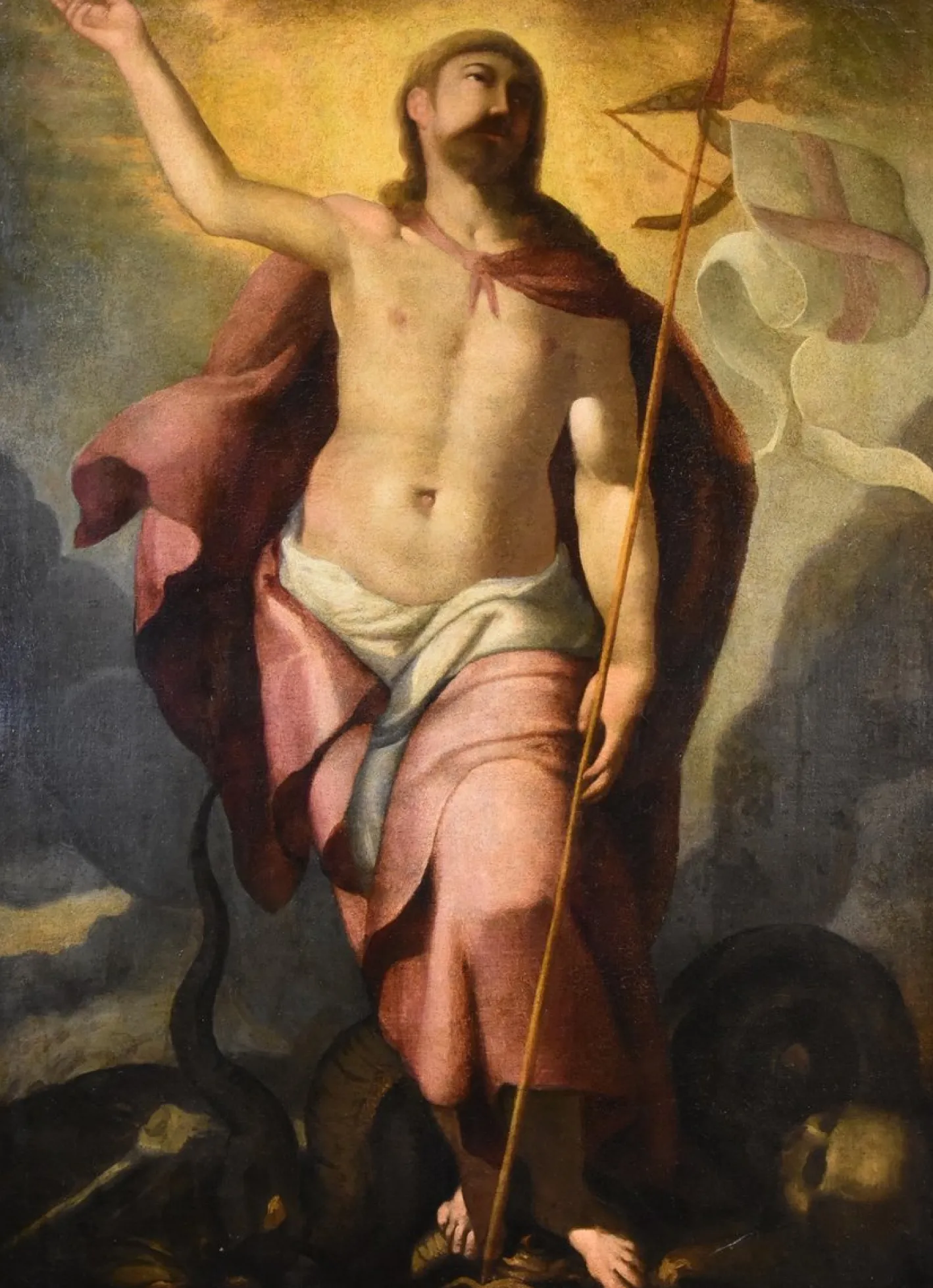
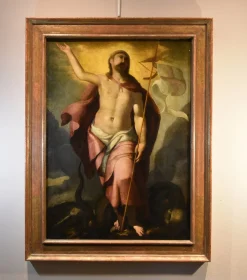
This gem of the Venetian School, a work executed between the 16th and 17th centuries by a Venetian artist, illustrates the episode of Christ’s Resurrection: as reported in the Gospel of Matthew (Mt 28:1-7), the event is accompanied by an explosion of light and flashes, with the figure of Christ rising into the heavens.
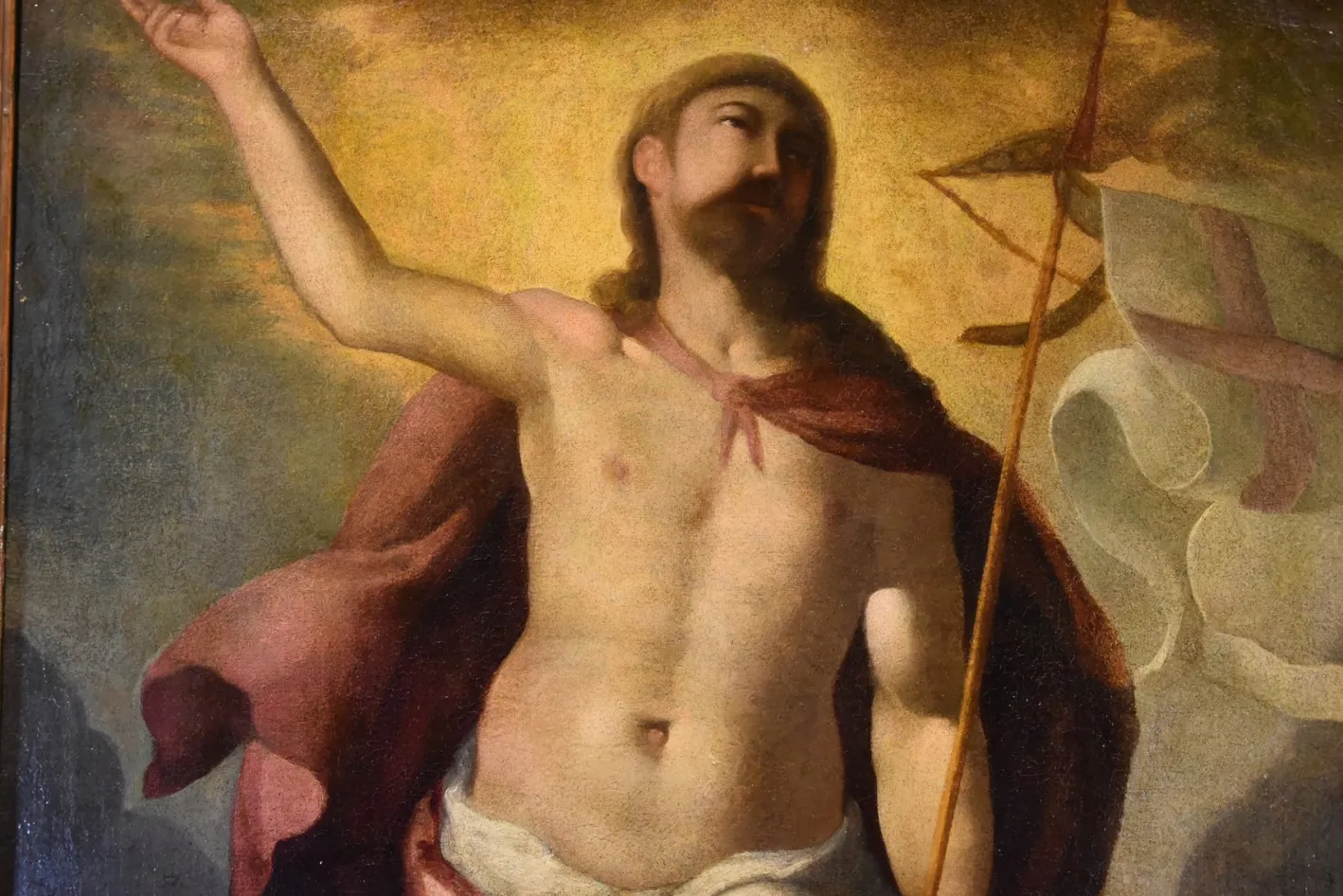
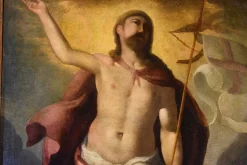
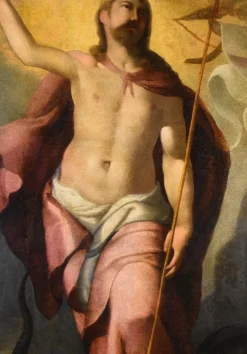
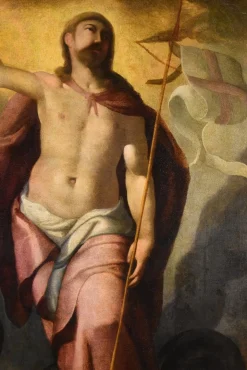
Christ’s face, serene and victorious, gazes upward toward the Light and the Infinite, contrasting with his majestic figure, here constructed with the appearance of a classical sculpture, contrasted by an intensely luminous background.
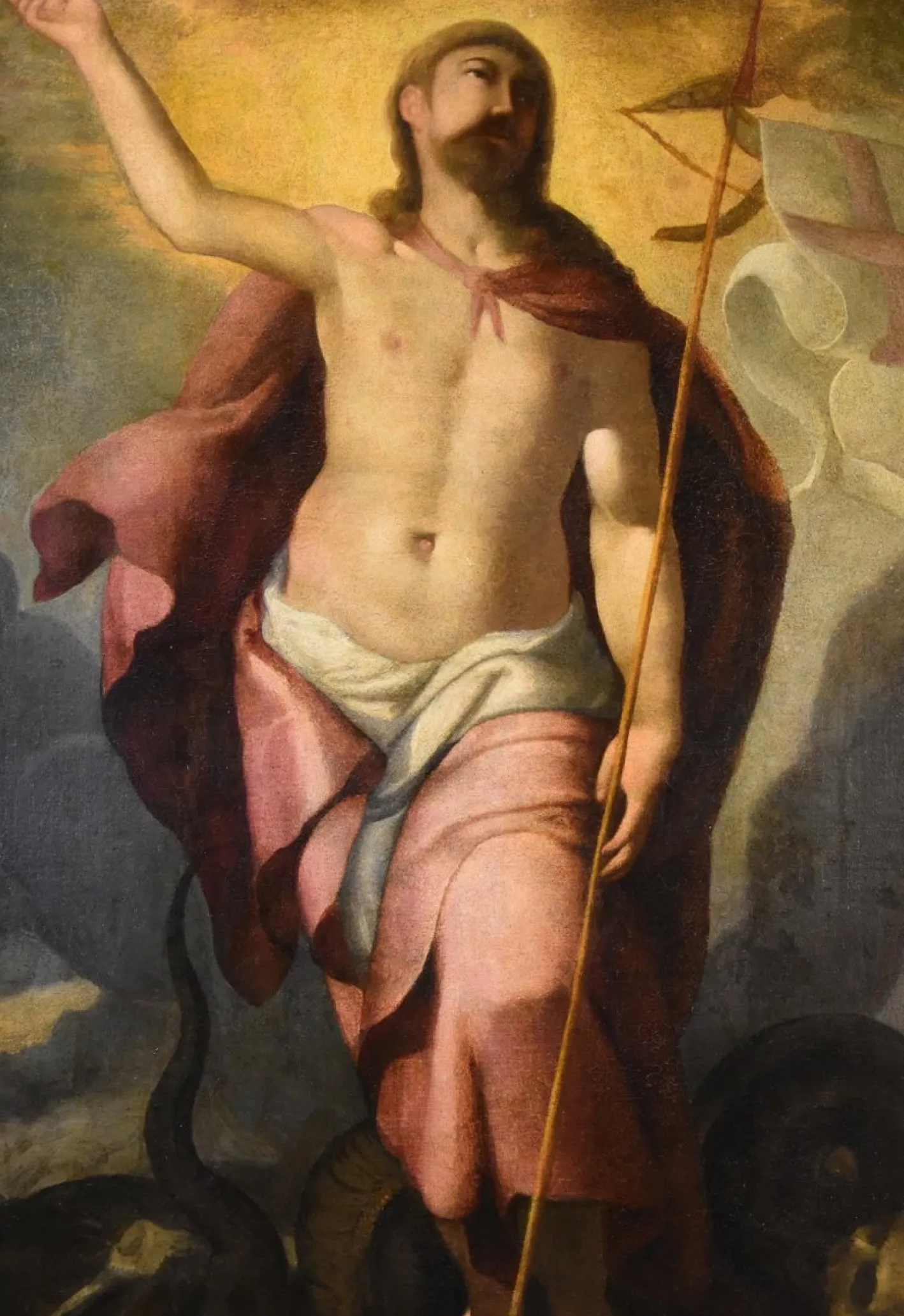
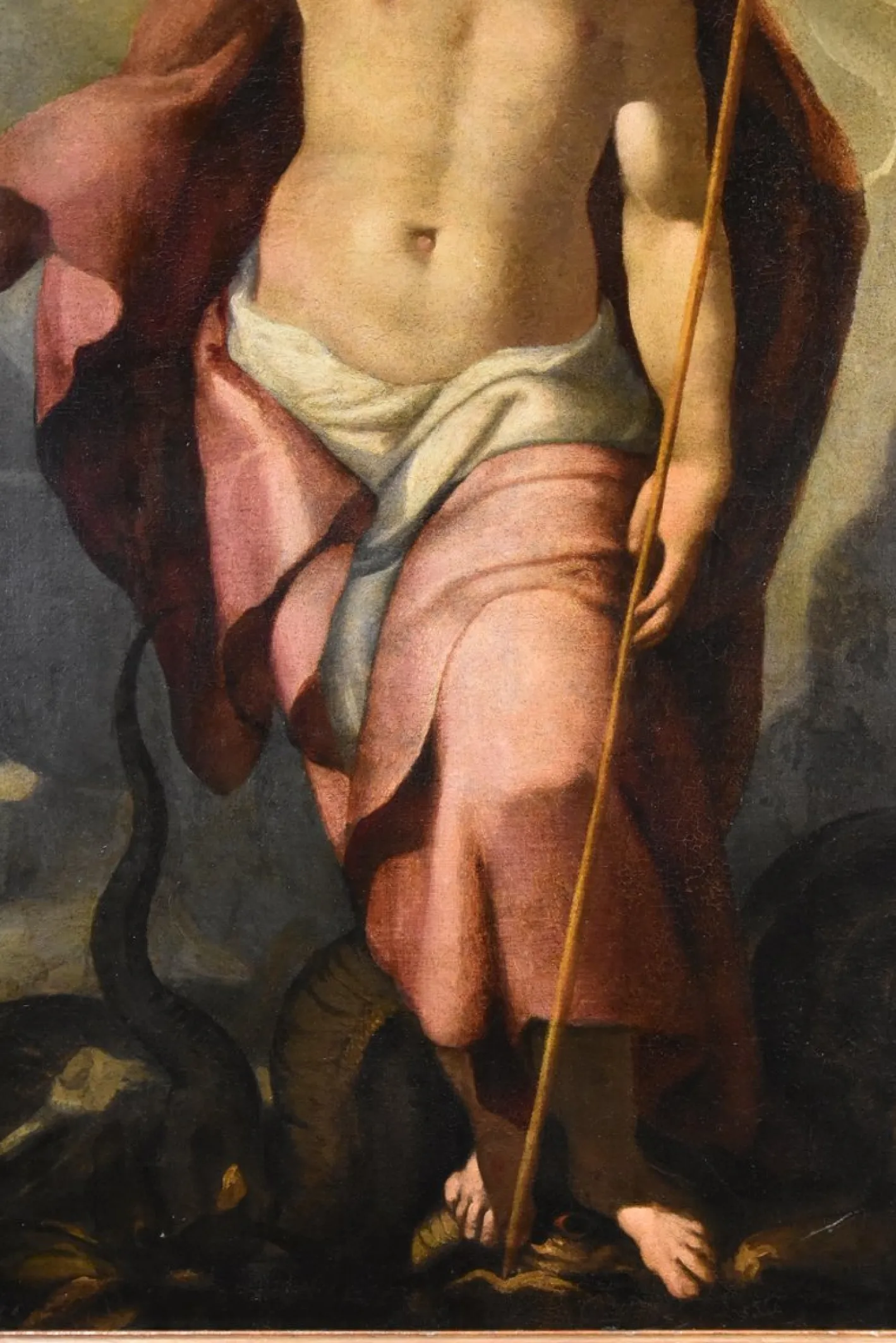
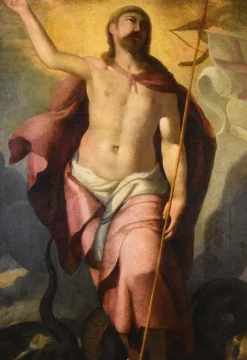
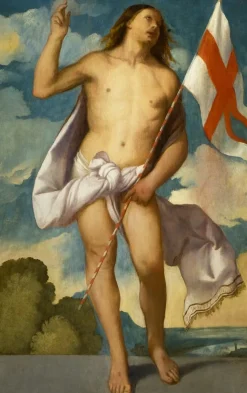
The Risen Christ firmly holds the banner (white with a red cross) of the Resurrection, also known as the flag of Saint George, which iconographically represents His victory over death, while raising his right hand in blessing. with his feet, he crushes a serpent and a skull, a symbol of Christ’s triumph over sin and death.
The painting is part of the Venetian school and clearly echoes the works of Titian (Pieve di Cadore 1490 – Venice 1576), which allows us to attribute it to a follower of the master, based on its style and pictorial direction.
The extraordinary luminosity that envelops the scene in a skillful chiaroscuro is clearly Titian-inspired: the composition is pervaded by an intense glow that illuminates Christ’s body, emphasizing a rather sober and very luminous color palette.
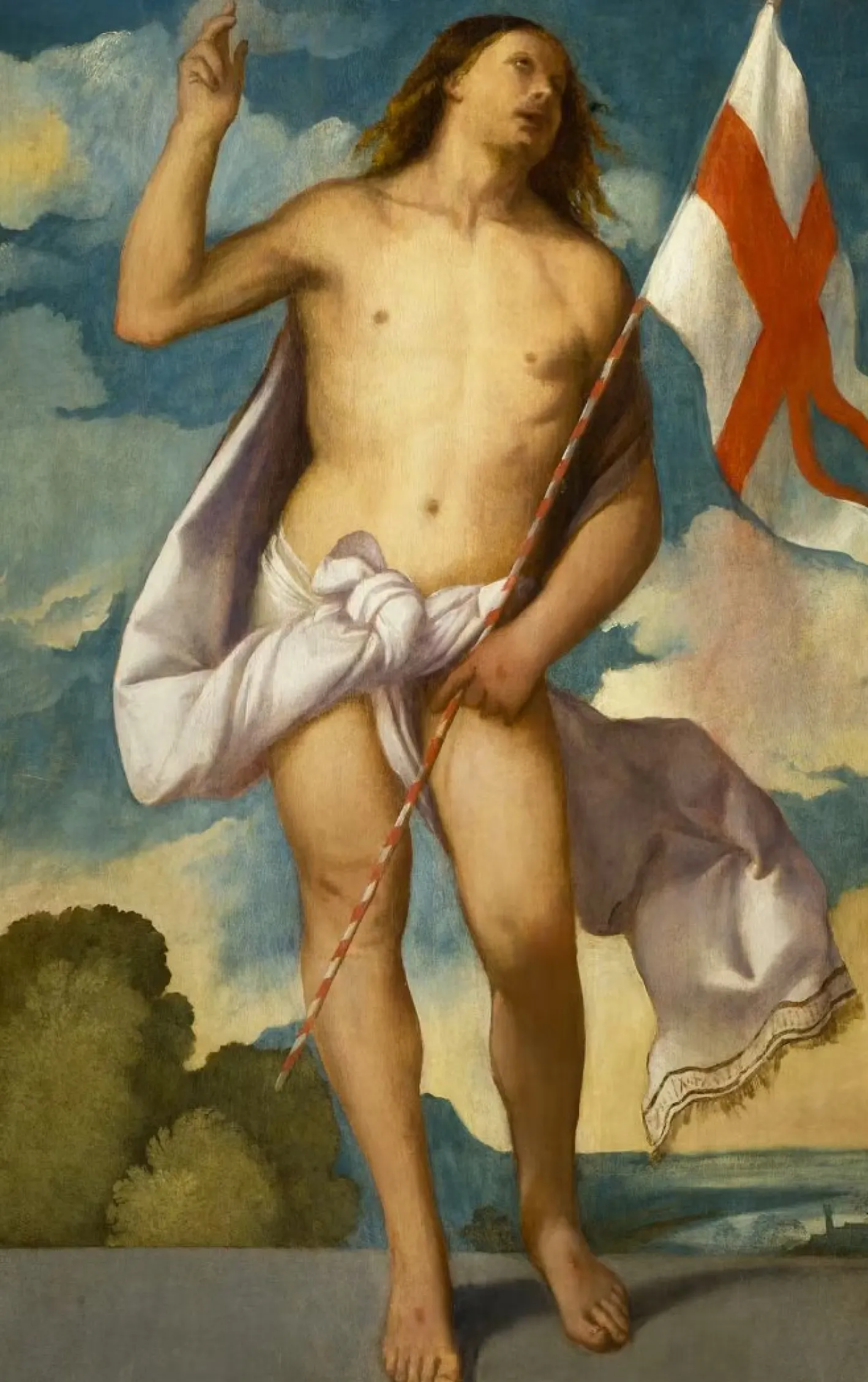
To better understand the model, our composition is compared to Tatian’s Risen Christ, now in the Uffizi Gallery, where the same layout is found (https://www.uffizi.it/mostre-virtuali/pasqua-2019#39).
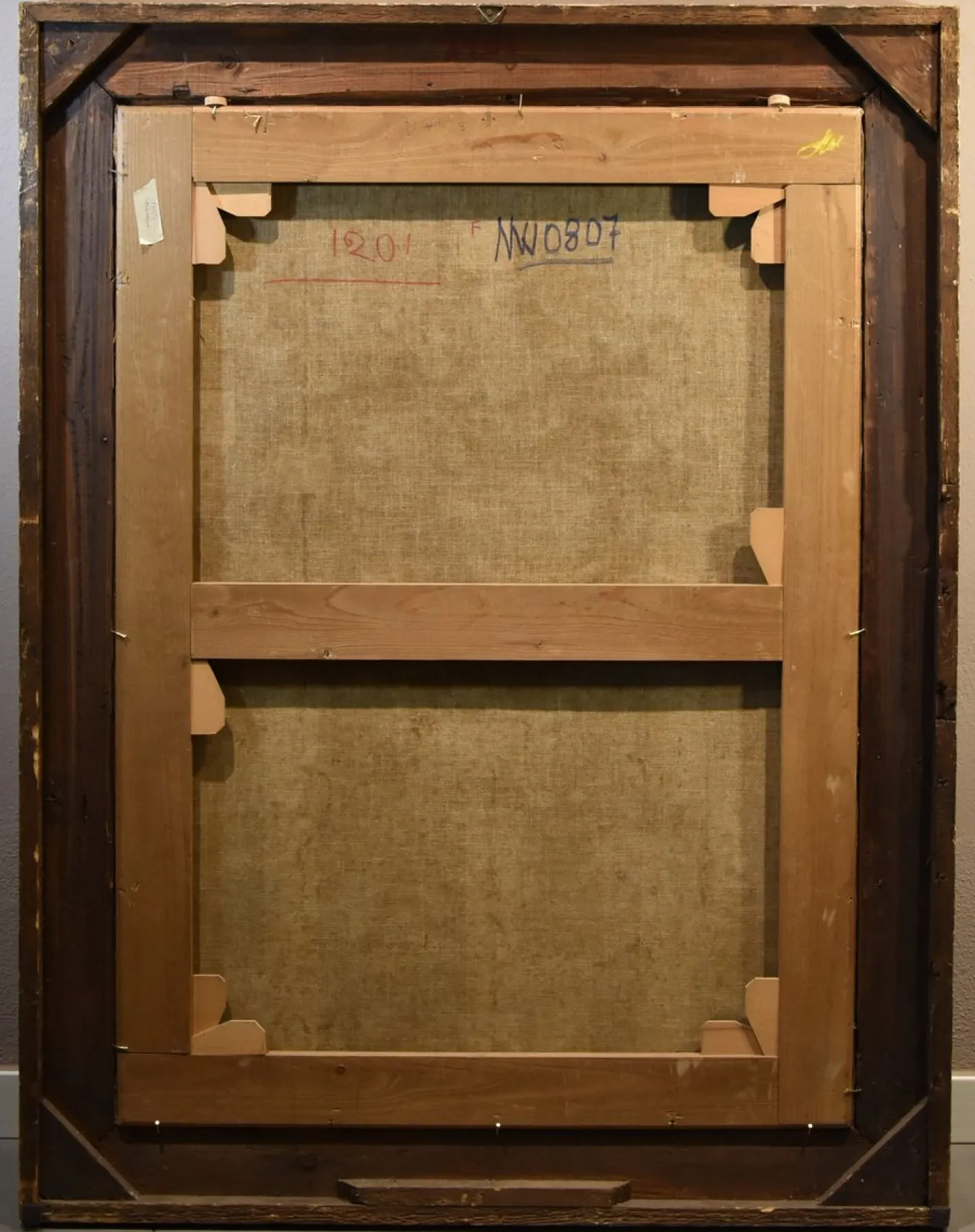
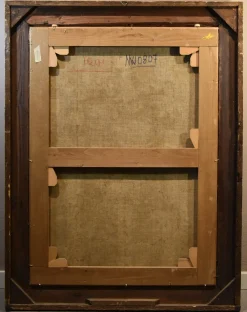
Condition: The canvas is in good condition considering its age; it has an old re-lining. It comes with a gilded and lacquered frame.
ADDITIONAL INFORMATION:
The painting is sold with a certificate of authenticity and a descriptive iconographic sheet.
Die Auferstehung Christi
Anhänger von Tizian (Pieve di Cadore 1490 – Venedig 1576)
Venezianische Schule, Ende 16./Anfang 17. Jahrhundert
Öl auf Leinwand (108 x 78 cm – Gerahmt 129 x 99 cm)
Dieses Juwel der venezianischen Schule, ein Werk, das zwischen dem 16. und 17. Jahrhundert von einem venezianischen Künstler geschaffen wurde, stellt die Episode der Auferstehung Christi dar: Wie im Matthäus-Evangelium (Mt 28,1-7) berichtet wird, wird das Ereignis von einer Lichtexplosion und Blitzen begleitet, und die Gestalt Christi steigt in den Himmel auf.
Das Gesicht Christi, gelassen und siegreich, blickt zum Licht und zum Unendlichen empor und steht im Kontrast zu seiner majestätischen Gestalt, die hier wie eine klassische Skulptur aufgebaut ist und von einem intensiv leuchtenden Hintergrund kontrastiert wird.
Der Auferstandene hält das Banner der Auferstehung (weiß mit rotem Kreuz), das auch als Fahne des Heiligen Georg bekannt ist und ikonografisch seinen Sieg über den Tod darstellt, fest in der Hand, während er seine rechte Hand zum Segen erhebt. Mit seinen Füßen zertritt er eine Schlange und einen Schädel, ein Symbol für den Triumph Christi über Sünde und Tod.
Das Gemälde gehört zur venezianischen Schule und weist deutliche Anklänge an die Werke Tizians (Pieve di Cadore 1490 – Venedig 1576) auf, so dass man es aufgrund seines Stils und seiner malerischen Ausrichtung einem Nachfolger des Meisters zuschreiben kann.
Die außergewöhnliche Leuchtkraft, die die Szene in ein gekonntes Hell-Dunkel hüllt, ist eindeutig von Tizian inspiriert: Die Komposition ist von einem intensiven Leuchten durchdrungen, das den Körper Christi erhellt und eine eher nüchterne und sehr leuchtende Farbpalette hervorhebt.
Um das Modell besser zu verstehen, vergleichen wir unsere Komposition mit dem auferstandenen Christus von Tizian, der sich heute in den Uffizien befindet, wo das gleiche Layout zu finden ist (https://www.uffizi.it/mostre-virtuali/pasqua-2019#39).
Zustand: Die Leinwand ist in einem für ihr Alter guten Zustand; sie hat eine alte Unterfütterung. Sie wird mit einem vergoldeten und lackierten Rahmen geliefert.
ZUSÄTZLICHE INFORMATIONEN:
Das Gemälde wird mit einem Echtheitszertifikat und einem ikonografischen Beschreibungsblatt verkauft.
Klicken Sie hier für die vollständige BeschreibungSchließen
| Epoche | Vor 1890 |
|---|---|
| Jahr | 1600 |
| Produktionszeitraum | Vor 1890 |
| Hergestellt in | Italien |
| Kennzeichnung vorhanden | Dieses Objekt wird dem oben genannten Designer/Hersteller zugeschrieben. Es hat keine Kennzeichnung |
| Stil | Klassisch, Figurative, Gothic, Italian, Louis XIII, Medieval, Mediterranean, Alte Meister, Portraiture, Religious, Antik, Barock |
| Zustand | Gut — Dieser Vintage/antike Artikel kann einige Gebrauchsspuren wie Kratzer und andere Zeichen der Zeit aufweisen. |
| Details über Schäden und Restaurierungen |
Leichte altersbedingte Gebrauchsspuren, Altersbedingte Patina, Zum Teil restauriert, Neu bezogen
|
| Artikelnummer | CYT-2311063 |
| Material | Öl auf Leinwand |
| Farbe | Mehrfarbig |
| Breite | 99 cm 99 cm |
| Tiefe | 12 cm 12 cm |
| Höhe | 129 cm 129 cm |
Be the first to review “Nachfolger von Tiziano Vecellio, Auferstehung Christi, 1600, Öl auf Leinwand”
Related products



Abstraction






Arbeiten Auf Papier

Abstrakte Notizen

Kollektionen
Artur Debat, Surreal Minimal Architecture mit Geometric Volumes und Psychedelic Colors, Fotografie


Impressionismus
Großes Victor Zolnierowicz, Winterlandschaft, 1950er Ölgemälde auf Leinwand, gerahmt
Reviews
There are no reviews yet.