
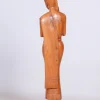
Asiatische Skulptur aus lackiertem Holz, 1950er
€109.21
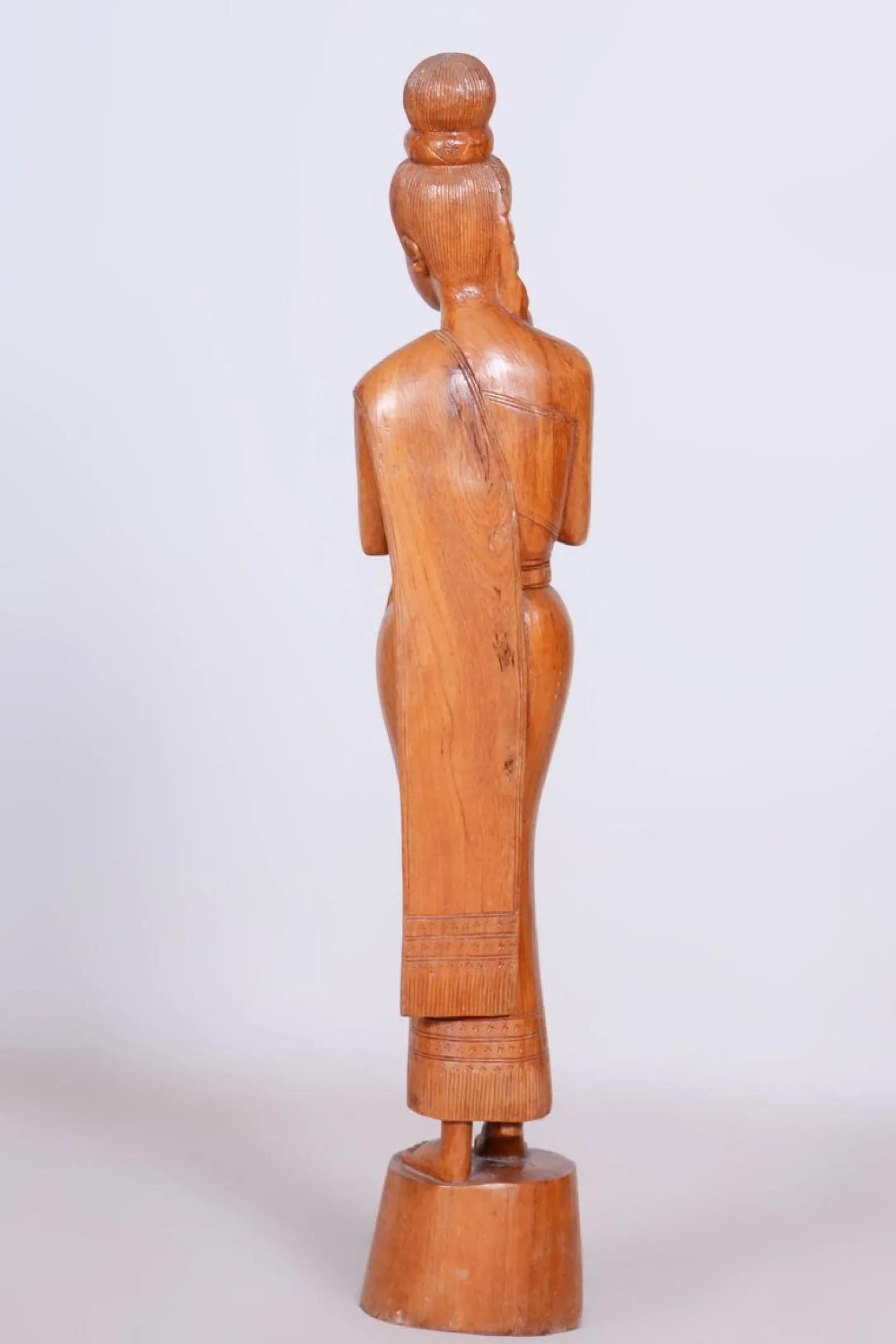
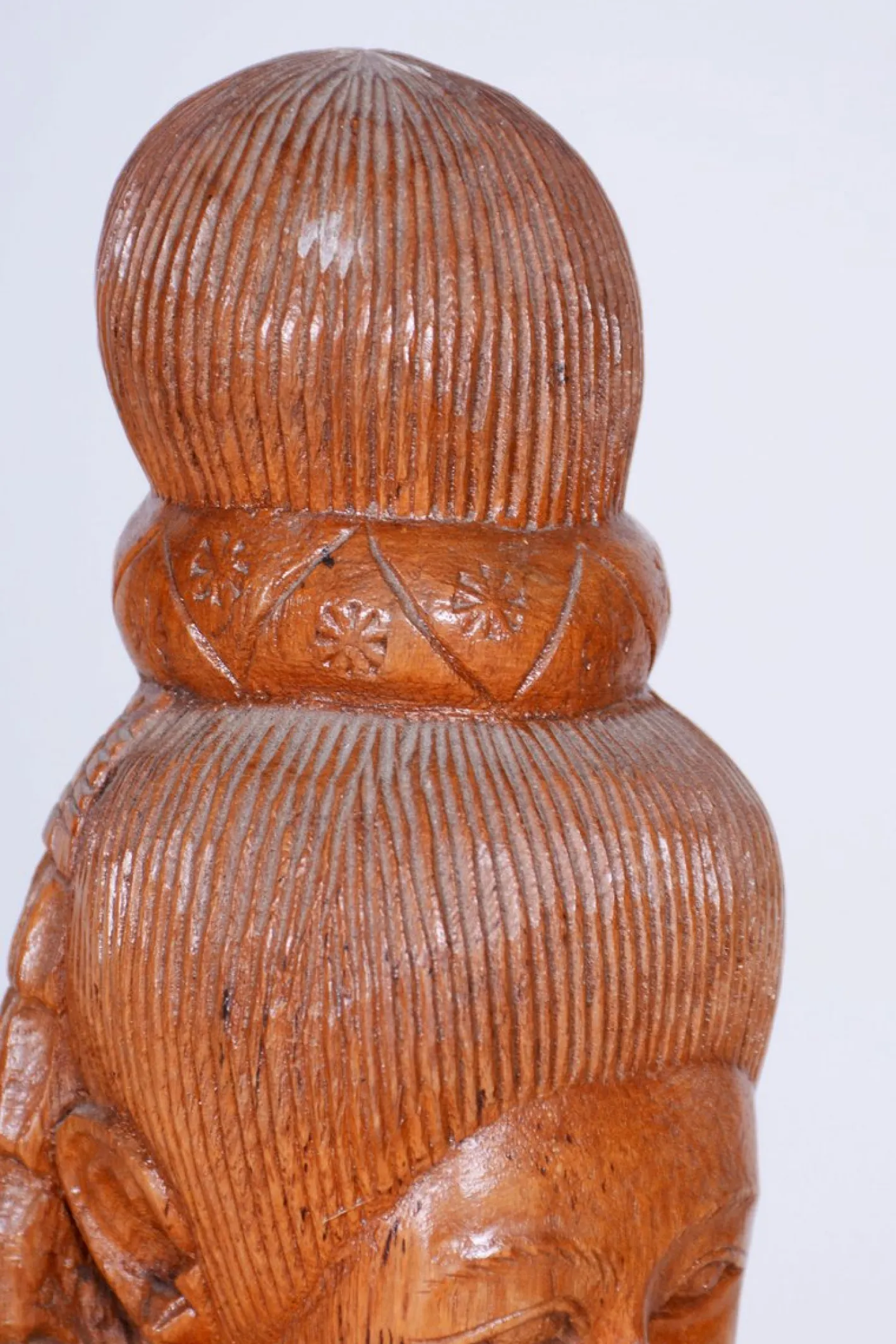
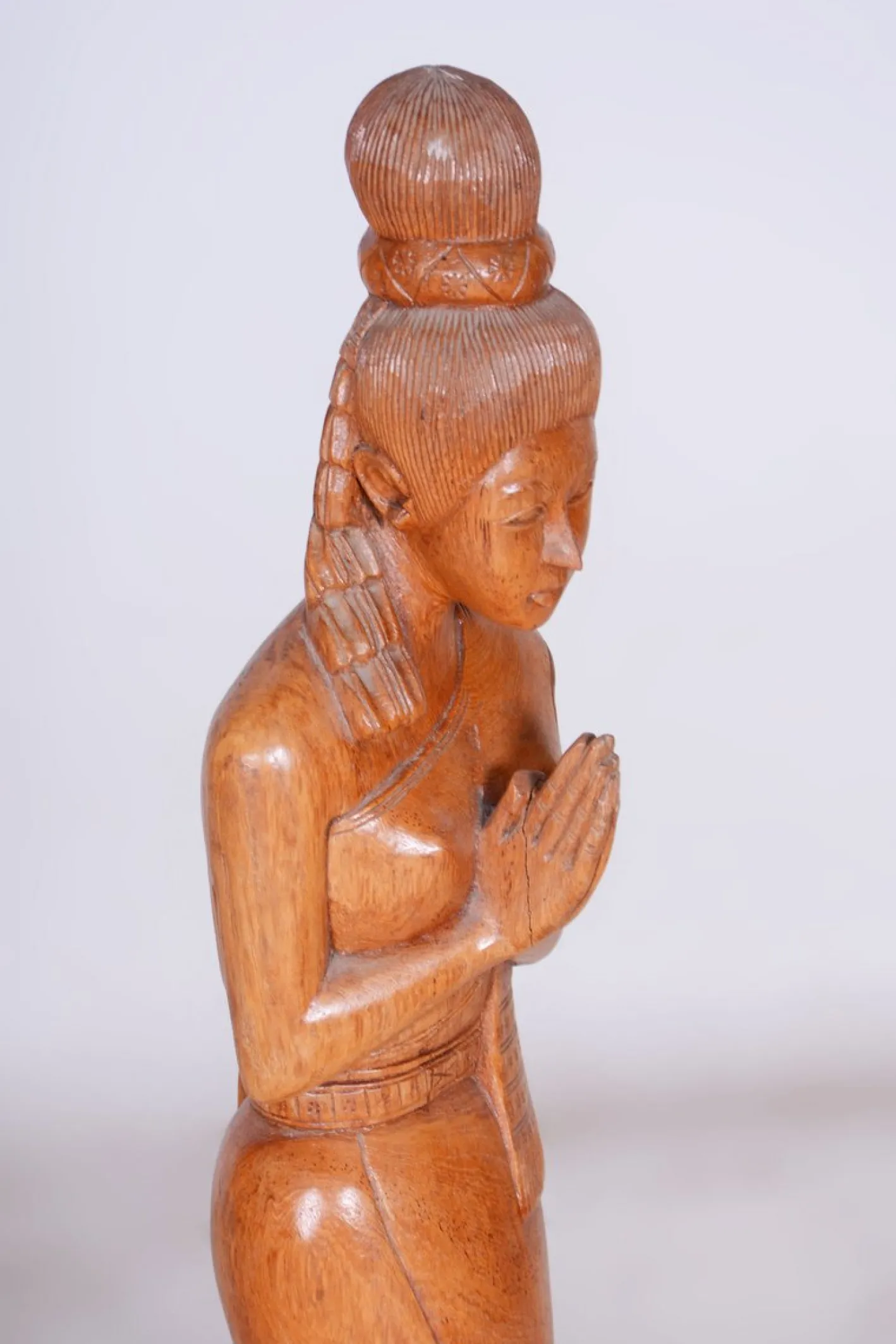
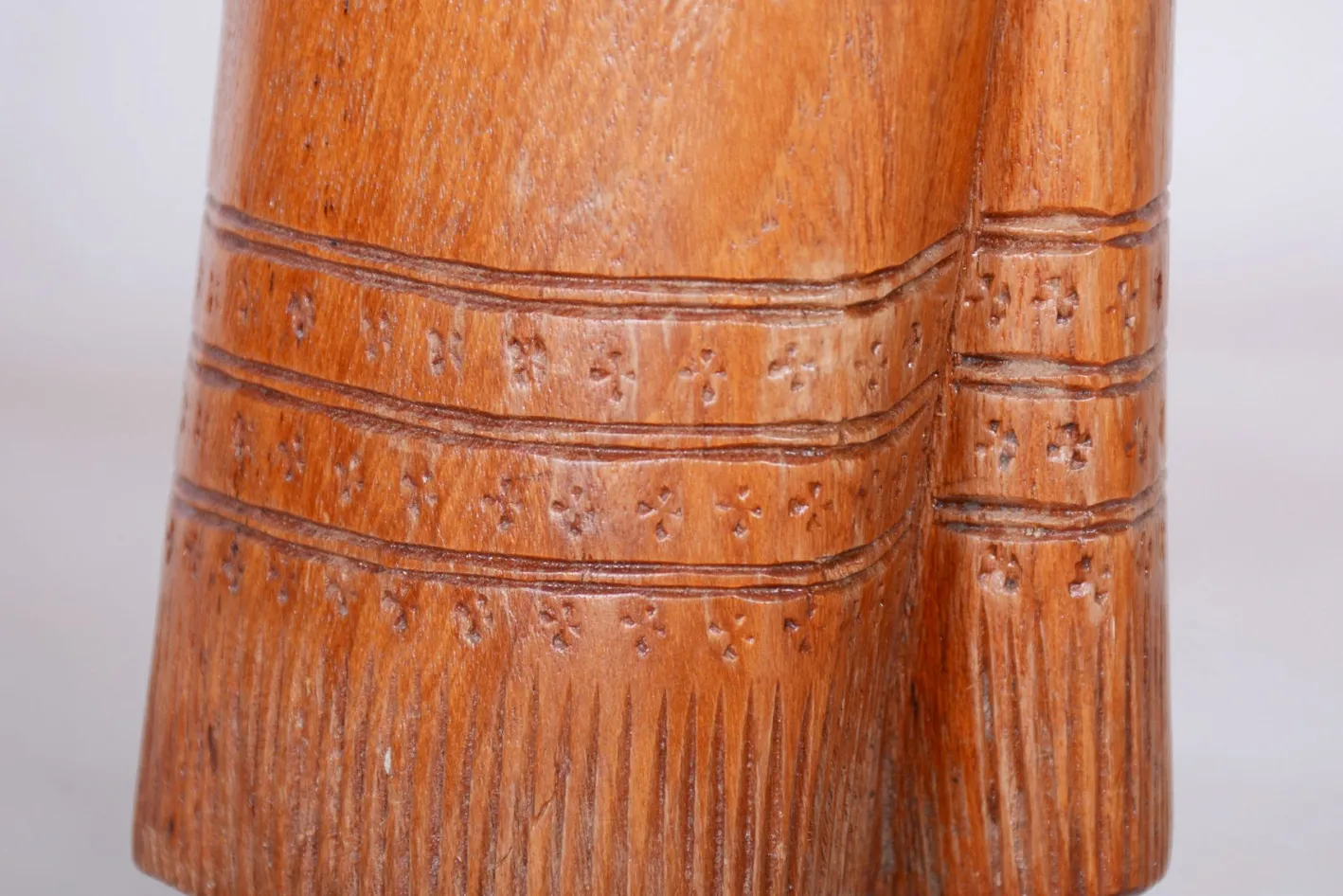
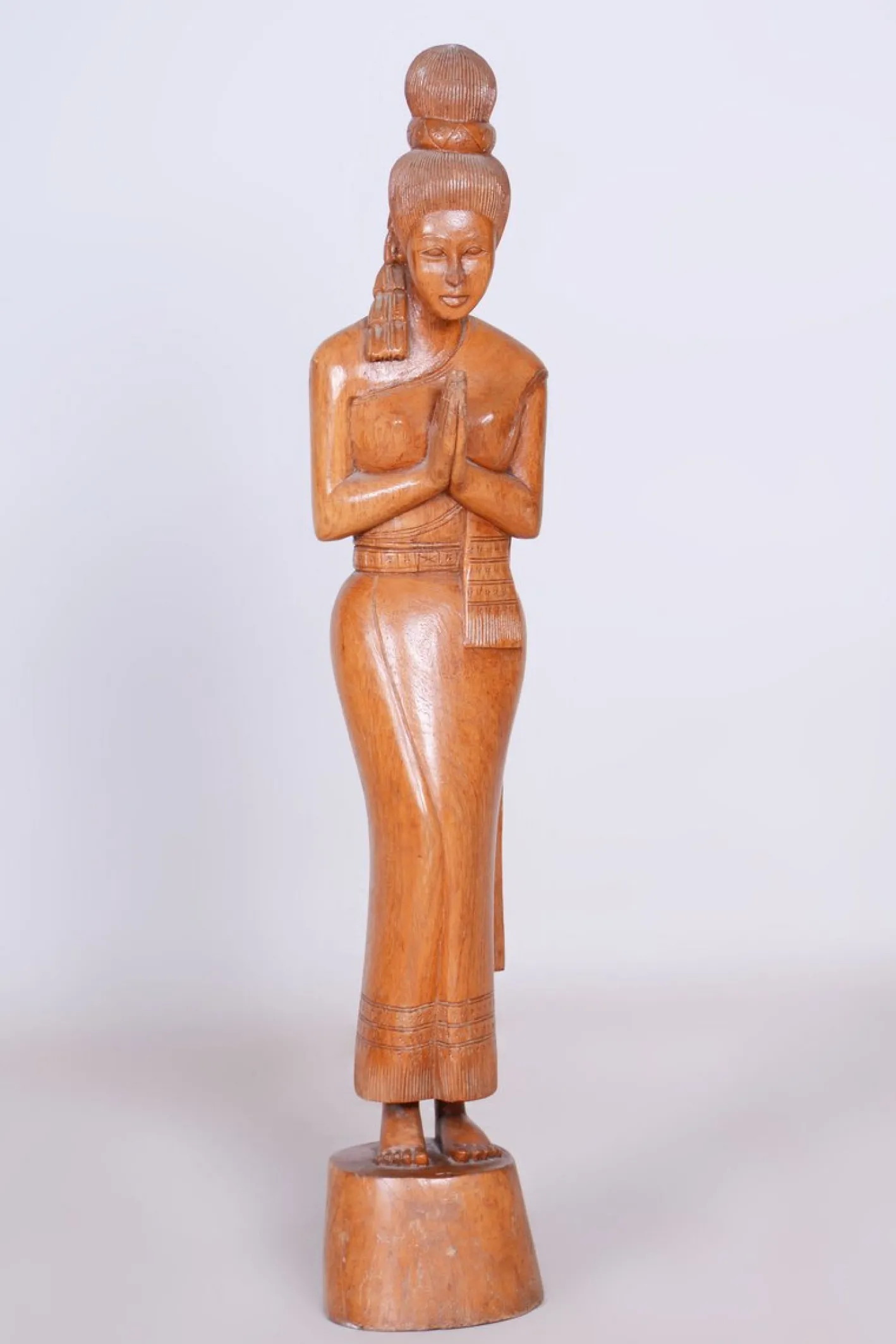
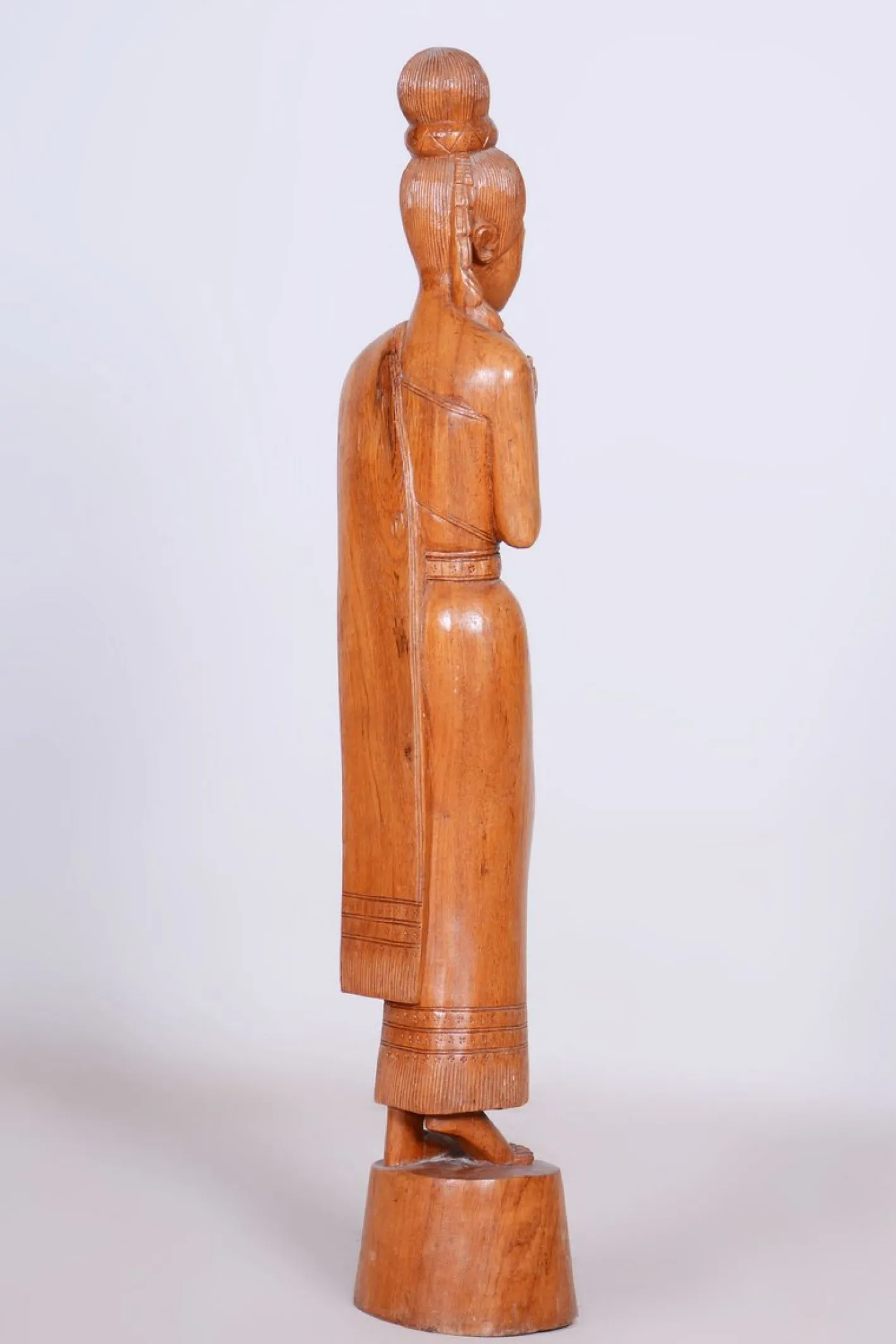
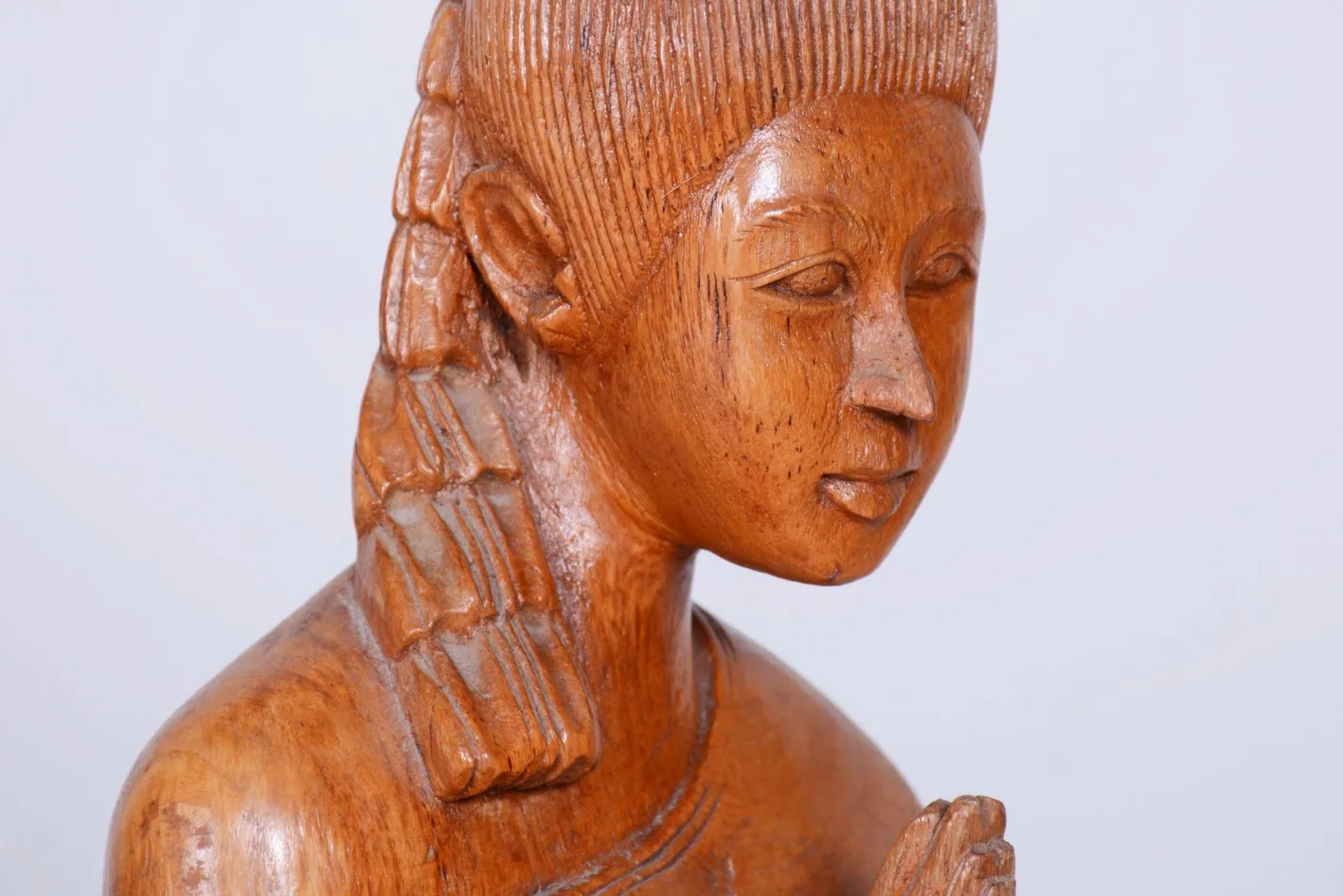
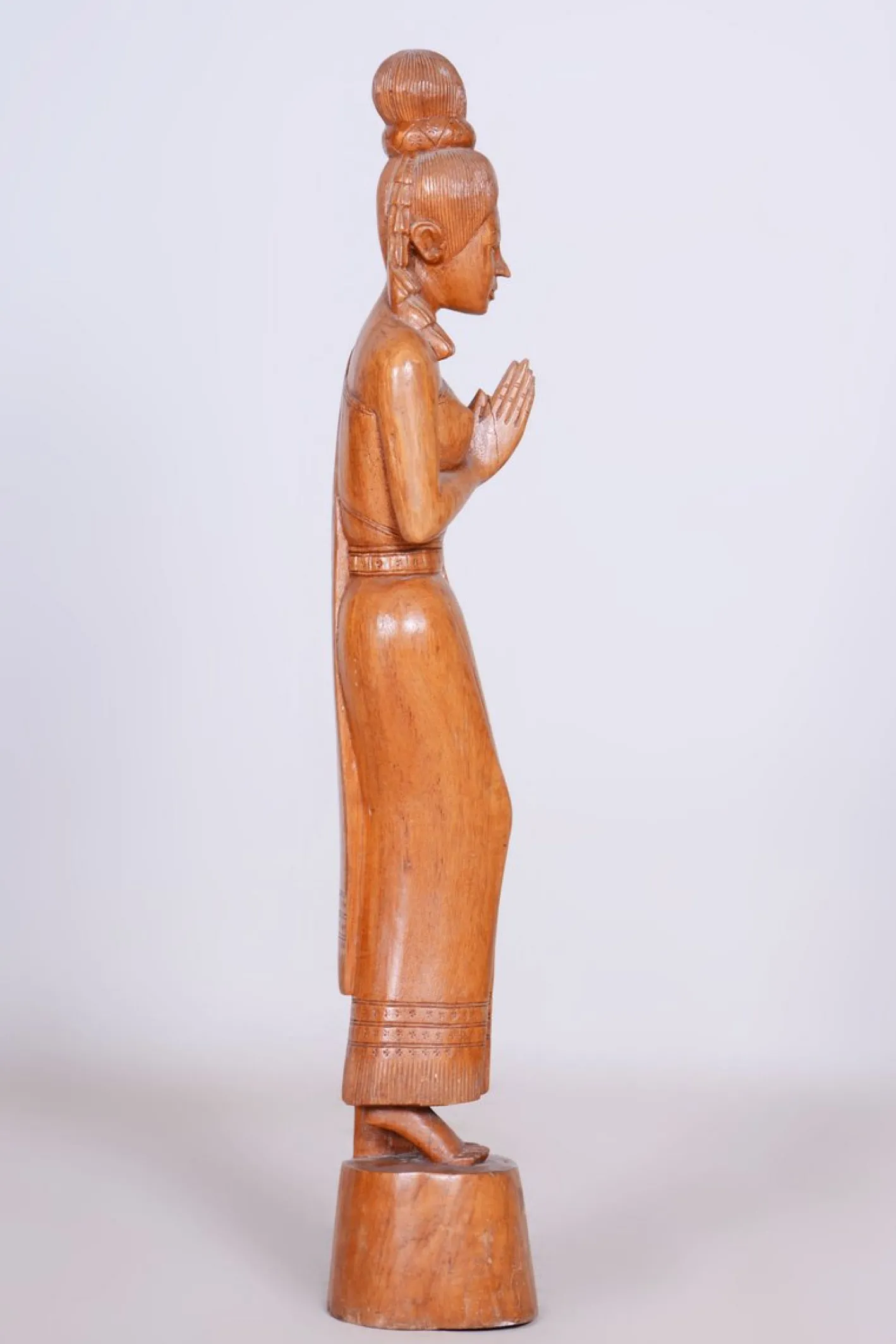
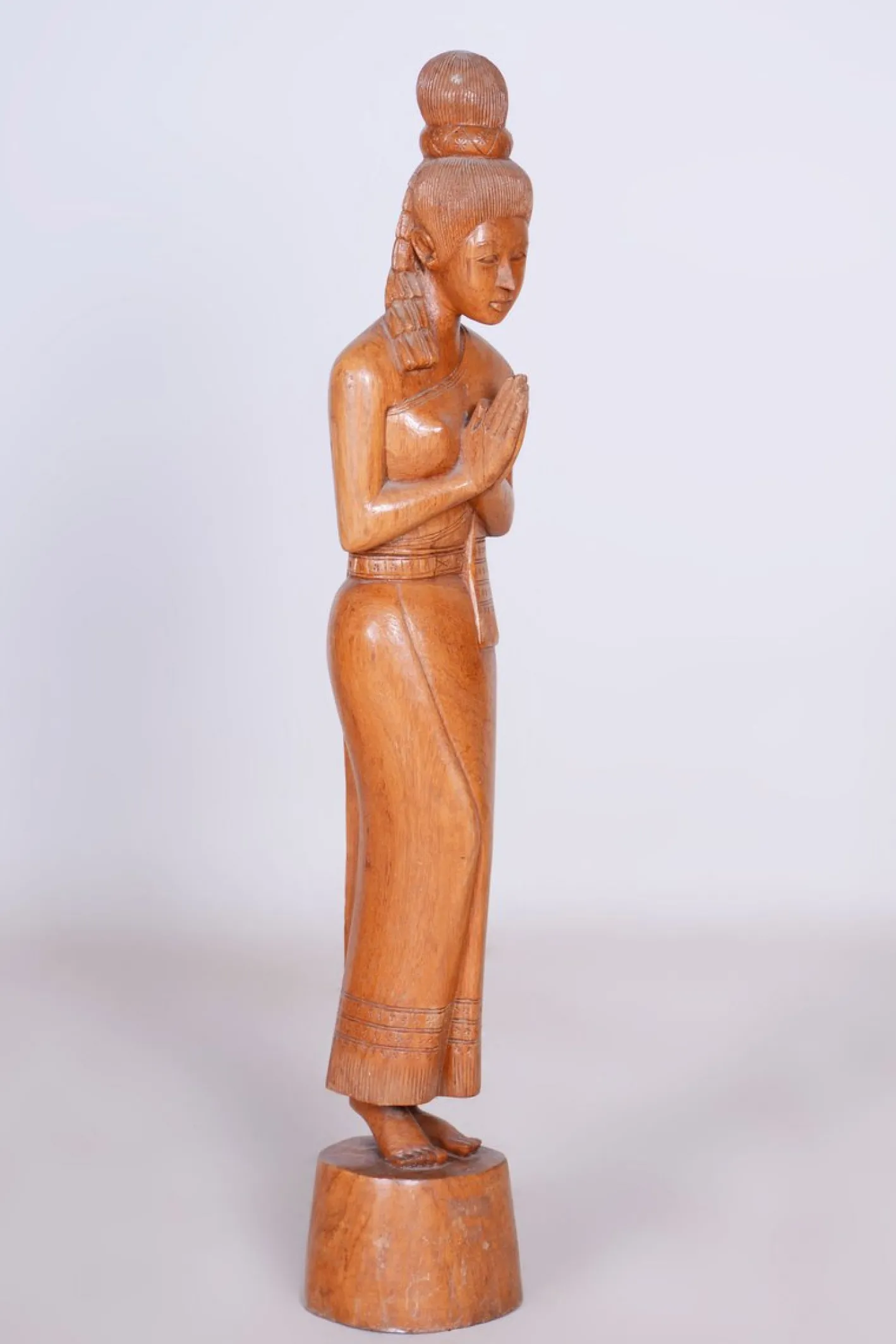
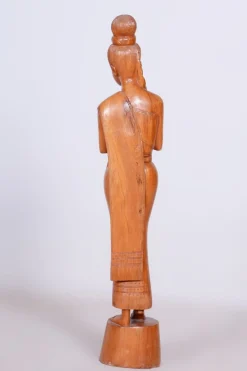
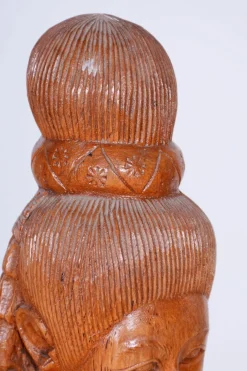
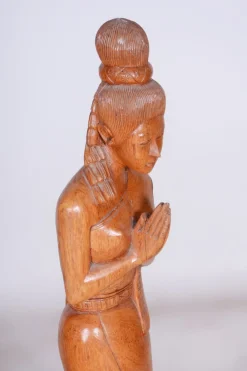
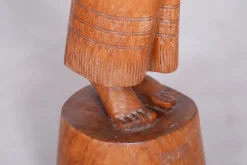
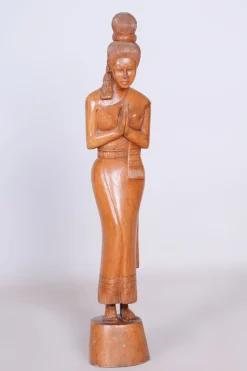
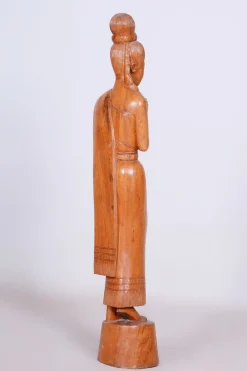
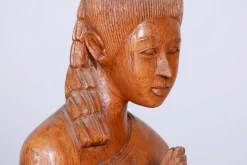
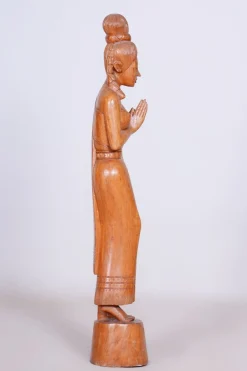
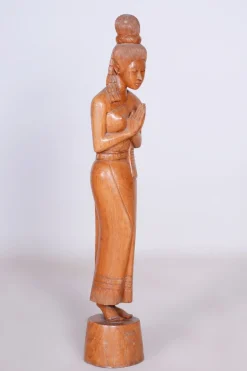
This elegant sculpture dates back to the mid-20th century and is an example of traditional Asian wood carving that carries deep cultural roots. The work depicts a figure in the traditional „wai“ greeting, a gesture expressing respect, humility, and politeness typical of many Asian cultures. The aesthetics of the sculpture lie in the graceful curves of the clothing and the detailed treatment of the hairstyle, while the lighter shade of the wood allows the fine carving details to stand out, underscoring an authentic cultural signature.
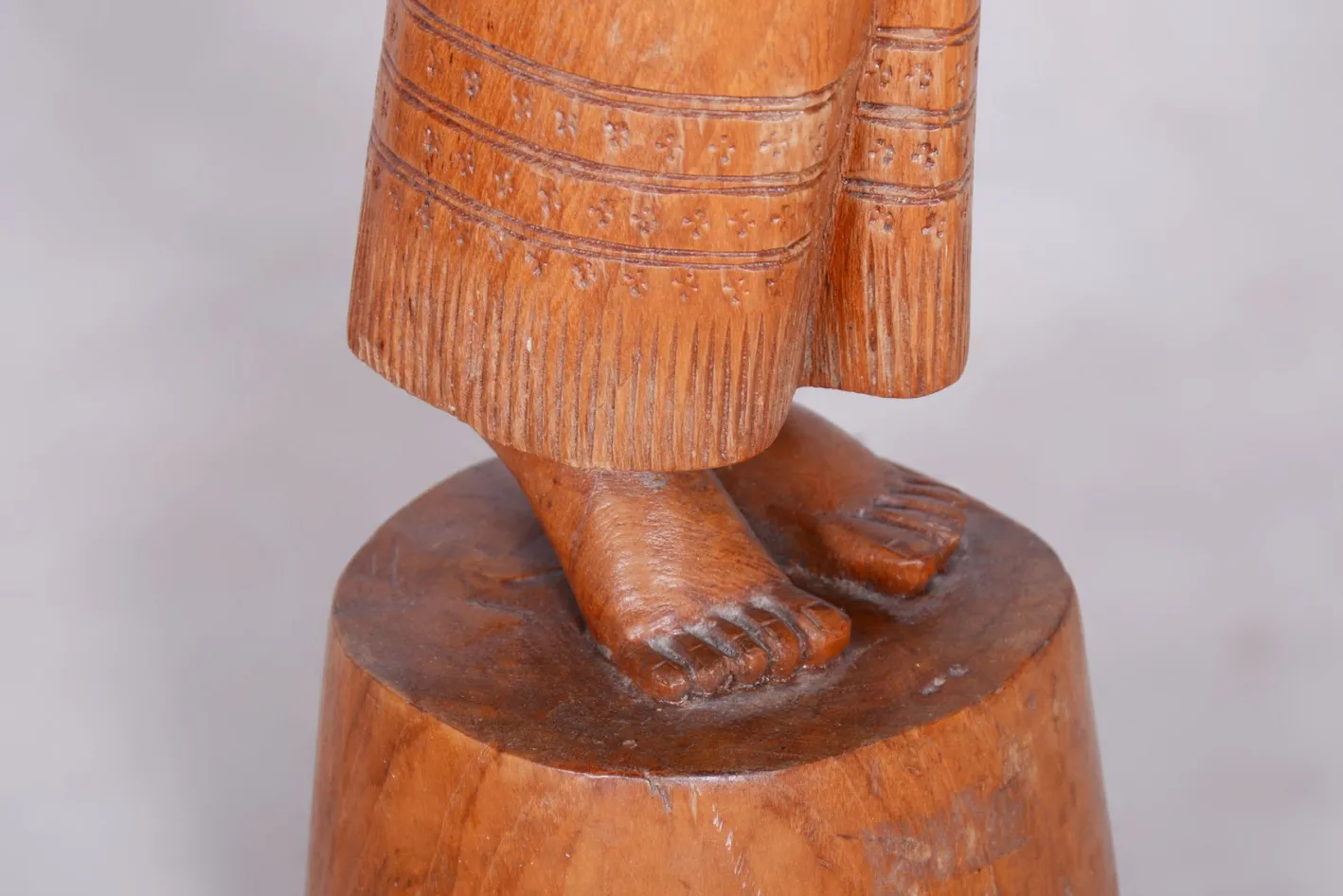
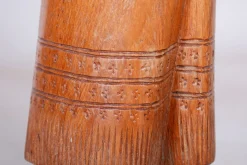
The symbolism of this work is closely linked to the spiritual and social life of the region, where such figures served as a reminder of values such as harmony and peace. The careful carving of the facial features and the texture of the textile shows a high level of craftsmanship that was characteristic of the production of that time. The sculpture is thus not just a decorative object but also a carrier of a specific cultural legacy that brings an atmosphere of calm and contemplation to an interior.
Given that the sculpture has been preserved in its original, well-maintained condition, it represents a valuable artifact with historical continuity for collectors. Its value is determined not only by the quality of the craftsmanship but also by its ability to bring an element of exotic elegance and spiritual dimension to a space. As a distinctive solitaire, this object will act in any modern or stylish interior as a timeless element that reflects respect for the traditional art of the mid-20th century.
Diese elegante Skulptur stammt aus der Mitte des 20. Jahrhunderts und ist ein Beispiel für traditionelle asiatische Holzschnitzkunst, die tief in der Kultur verwurzelt ist. Das Werk zeigt eine Figur in der traditionellen „Wai“-Begrüßungsgeste, die Respekt, Demut und Höflichkeit zum Ausdruck bringt und für viele asiatische Kulturen typisch ist. Die Ästhetik der Skulptur liegt in den anmutigen Kurven der Kleidung und der detailreichen Gestaltung der Frisur, während der hellere Farbton des Holzes die feinen Schnitzdetails hervorhebt und so den authentischen kulturellen Charakter unterstreicht.
Die Symbolik dieses Werks ist eng mit dem spirituellen und gesellschaftlichen Leben der Region verbunden, in der solche Figuren als Erinnerung an Werte wie Harmonie und Frieden dienten. Die sorgfältige Schnitzarbeit der Gesichtszüge und die Textur des Stoffes zeugen von einem hohen handwerklichen Niveau, das für die Produktion jener Zeit charakteristisch war. Die Skulptur ist somit nicht nur ein Dekorationsobjekt, sondern auch Träger eines spezifischen kulturellen Erbes, das eine Atmosphäre der Ruhe und Besinnlichkeit in einen Raum bringt.
Da sich die Skulptur in ihrem ursprünglichen, gut erhaltenen Zustand befindet, stellt sie für Sammler ein wertvolles Artefakt mit historischer Kontinuität dar. Ihr Wert bestimmt sich nicht nur durch die Qualität der handwerklichen Ausführung, sondern auch durch ihre Fähigkeit, einem Raum ein Element exotischer Eleganz und spiritueller Tiefe zu verleihen. Als markantes Einzelstück wird dieses Objekt in jedem modernen oder stilvollen Interieur als zeitloses Element wirken, das den Respekt vor der traditionellen Kunst der Mitte des 20. Jahrhunderts widerspiegelt.
Klicken Sie hier für die vollständige BeschreibungSchließen
| Epoche | 1950 bis 1959 |
|---|---|
| Produktionszeitraum | 1950 bis 1959 |
| Hergestellt in | Tschechische Republik |
| Stil | Asian |
| Zustand | Sehr gut — Dieser Vintage/antike Artikel hat keine Mängel, kann jedoch leichte Gebrauchsspuren aufweisen. |
| Details über Schäden und Restaurierungen |
Oberfläche wurde aufgearbeitet
|
| Artikelnummer | WHY-2591399 |
| Material | Lack, Holz |
| Farbe | Braun |
| Breite | 16 cm 16 cm |
| Tiefe | 13 cm 13 cm |
| Höhe | 78 cm 78 cm |
Be the first to review “Asiatische Skulptur aus lackiertem Holz, 1950er”
Related products


Abstraction
Abstrakte Notizen
Druckgraphiken Und Multiples
Johnny Friedlaender, Edition von 135 ohne Titel, 1970er, Radierung

Arbeiten Auf Papier
Mikhail Larionov, Rayonist Composition, 1910, Gouache auf Papier
Arbeiten Auf Papier
Reviews
There are no reviews yet.